


Apatinib inhibits paclitaxel resistance of gastric carcinoma cells through VEGFR2 pathway
- PMID: 35173861
- PMCID: PMC8829625
Apatinib inhibits paclitaxel resistance of gastric carcinoma cells through VEGFR2 pathway
Abstract
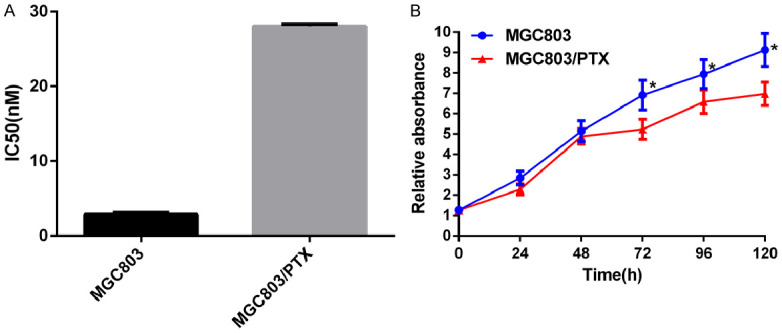
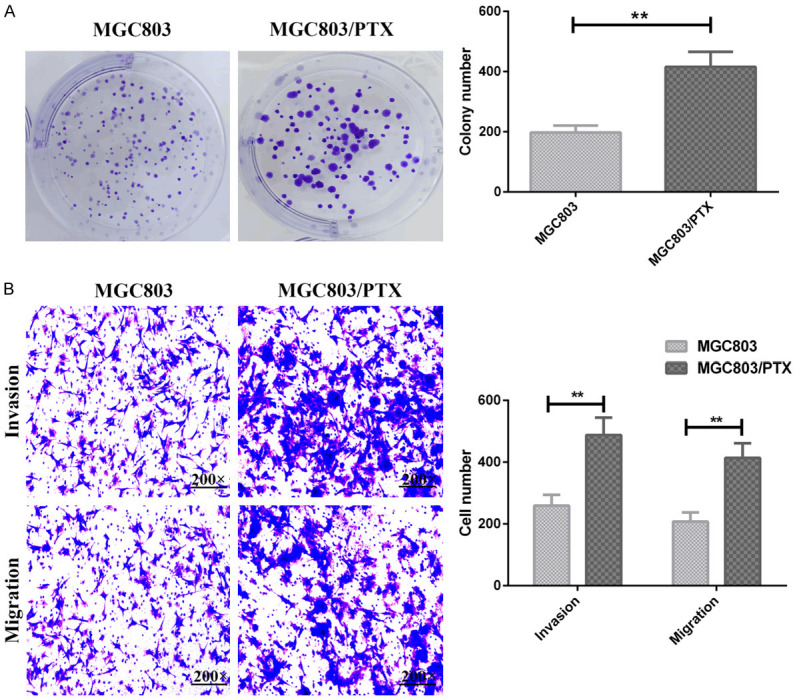
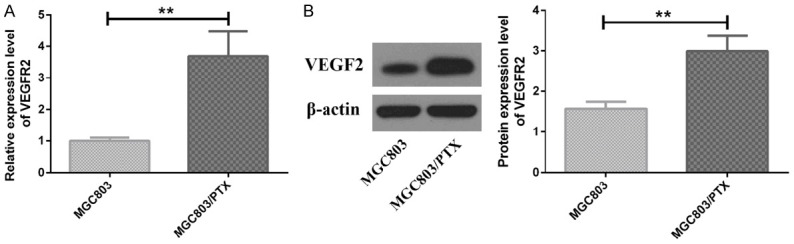
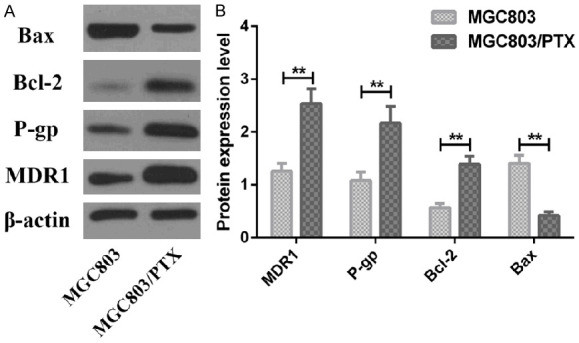
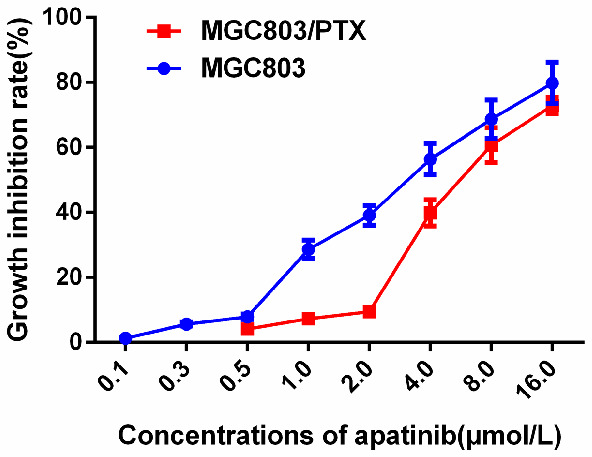
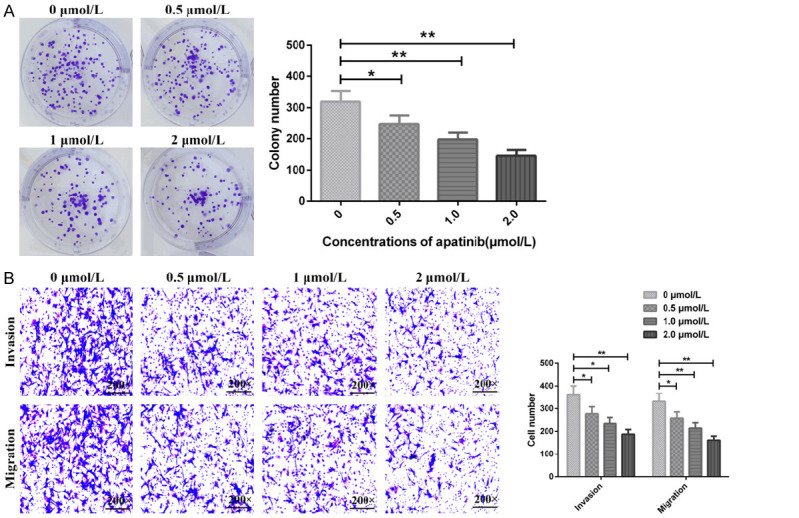
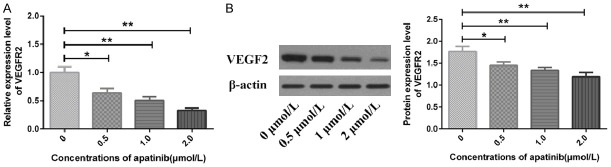
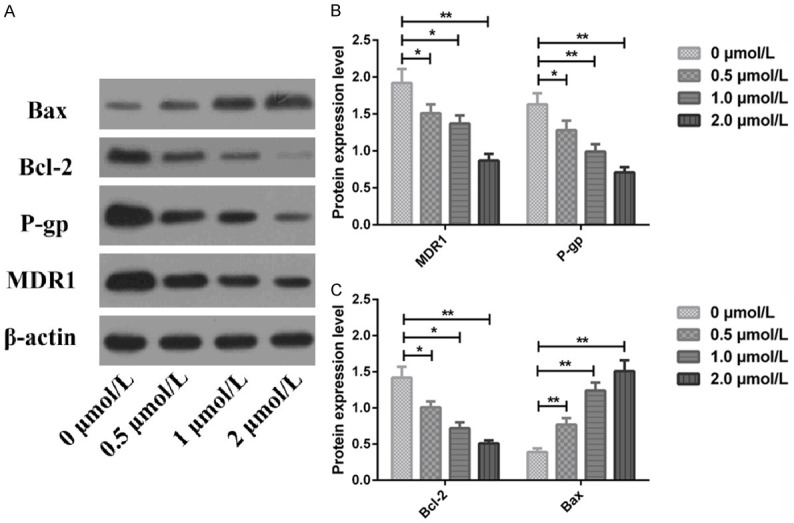
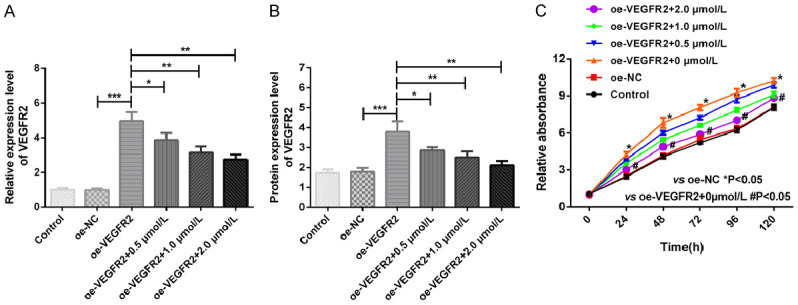
Drug resistance of gastric carcinoma (GC) is a burning question in the medical field. This study aimed to investigating the ameliorative effect of apatinib (Apa) on paclitaxel (PTX) resistance in GC. In this research, PTX-resistant MGC803 cells were intervened by Apa. Cell proliferation was detected by cell counting kit-8 (CCK-8) assay, and cell migration and invasion was determined by Transwell assays. The levels of apoptosis-related proteins (Bcl-2, Bax), drug resistance-related proteins (MDR1, P-gp) and VEGFR2 protein were measure by Western blot, and the mRNA expression of VEGFR2 was tested by real-time quantitative polymerase chain reaction (RT-qPCR). Then VEGFR2 was overexpressed to examine the role of Apa in PTX-resistant MGC803 cells. The results identified a significantly reduced growth rate of MGC803/PTX cells after PTX induction, obviously increased invasive and migrated cells, and evidently enhanced proliferation capacity of MGC803/PTX cells as compared to MGC803 cells. In MGC803/PTX cells, VEGFR2, MDR1, P-gp and Bcl-2 were all up-regulated while Bax was down-regulated. After Apa intervention, PTX-resistant MGC803 cells showed decreased cell migration, invasion and proliferation, reduced MDR1, P-gp and VEGFR2 levels, and increased Bax protein level. Overexpression of VEGFR2 can offset the rescue effect of Apa on PTX-induced drug resistance of MGC803 cells. Taken together, Apa may inhibit PTX resistance of MGC803 cells via the VEGFR2 signaling pathway.
Keywords: Apatinib; VEGFR2; gastric carcinoma; paclitaxel; tumor resistance.
AJTR Copyright © 2022.
Conflict of interest statement
None.
Figures
References
LinkOut - more resources
Full Text Sources
Research Materials
Miscellaneous