


Assessing Hispanic/Latino and Non-Hispanic White Social Determinants of Obesity Among a Community Sample of Residents in the Rural Southeast US
- PMID: 35174428
- PMCID: PMC9980419
- DOI: 10.1007/s10903-022-01334-8
Assessing Hispanic/Latino and Non-Hispanic White Social Determinants of Obesity Among a Community Sample of Residents in the Rural Southeast US
Abstract
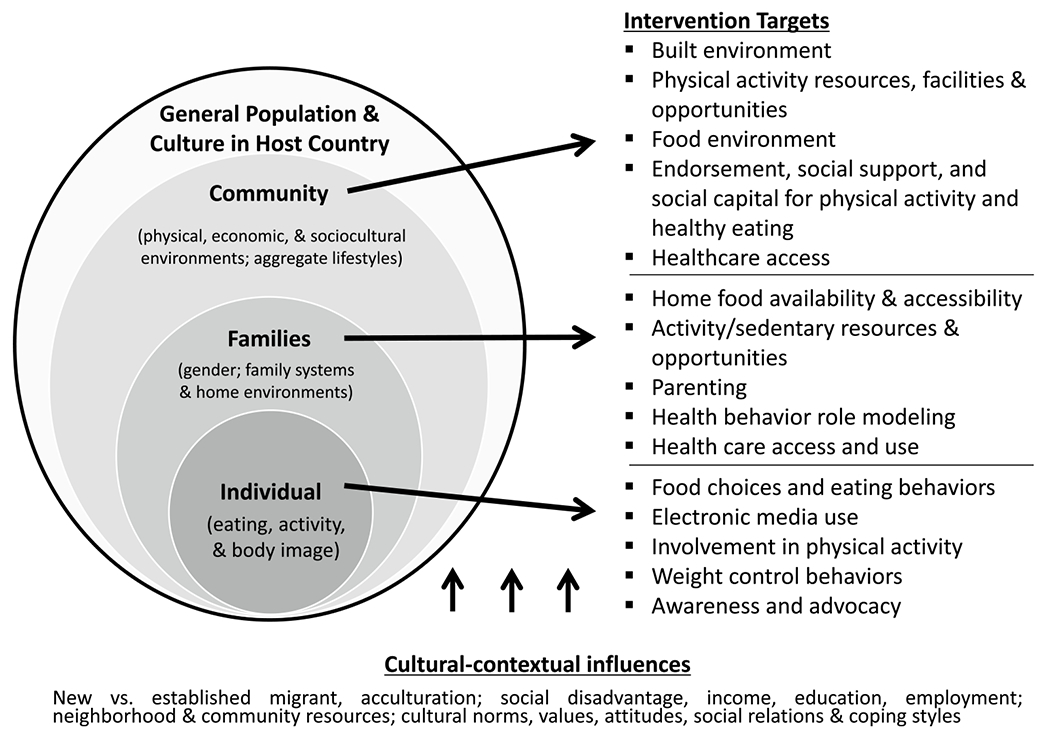
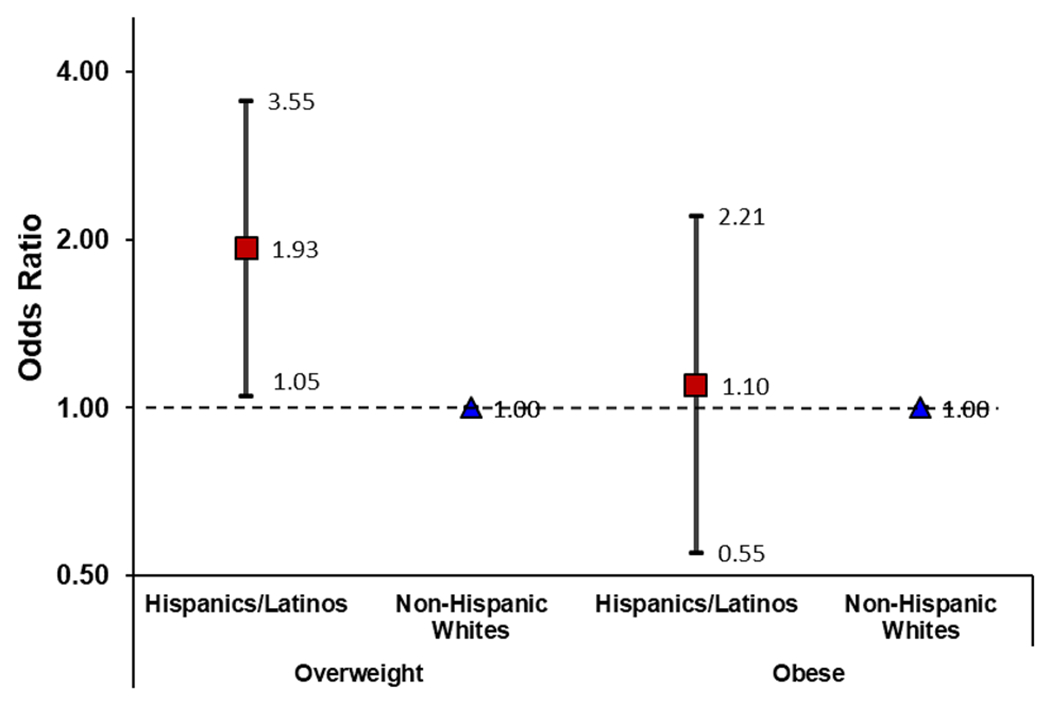
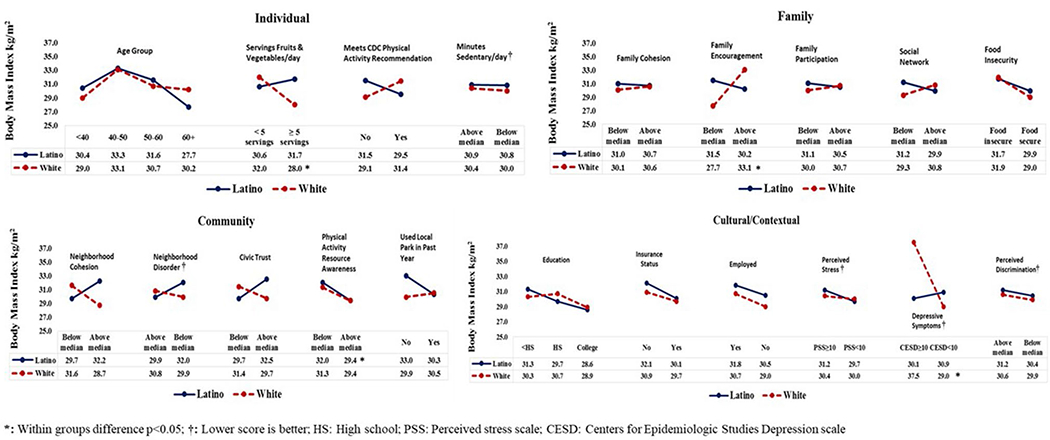
Employing an ecological approach, we sought to identify social determinants of obesity among Hispanics/Latinos and non-Hispanic whites living in the Southeast US. Data on social determinants of obesity (individual, family, community and cultural/contextual) were collected from 217 participants [106 Hispanics/Latinos; 111 non-Hispanic whites]; height and weight were objectively measured. We compared prevalence of overweight and obese between ethnic groups and BMI values within each group by social determinants. Hispanics had a 1.9-fold increase (OR 1.93, 95% CI: 1.05-3.55) in overweight prevalence compared to non-Hispanic whites after adjusting for age and gender. We found positive estimates between unfavorable family-level determinants and BMI among Hispanic/Latinos. In contrast, non-Hispanic whites who reported unfavorable neighborhood characteristics had higher BMI's. Findings highlight the need for targeted approaches for the prevention and control of obesity.
Keywords: Health disparity; Hispanic/Latino; Obesity; Obesogenic environment; Social determinants of health.
© 2022. The Author(s), under exclusive licence to Springer Science+Business Media, LLC, part of Springer Nature.
Figures
References
-
- World Health Organization. Obesity and Overweight Fact Sheet No. 311. 2013. [cited 2020 October 27]. http://www.who.int/mediacentre/factsheets/fs311/en/index.html.
-
- Hales CM CM, Fryar CD, Ogden CL Prevalence of obesity among adults and youth: United States, 2015–2016. Hyattsville, MD: National Center for Health Statistics; 2017. Report No.: 288.
-
- Benavides-Vaello S Cultural influences on the dietary practices of Mexican Americans: a review of the literature. Hispanic Health Care Int. 2005;3:27–35.
-
- Kaplan MS, Huguet N, Newsom JT, McFarland BH The association between length of residence and obesity among Hispanic immigrants. Am J Prev Med. 2004;27(4):323–6. - PubMed
-
- Perez-Escamilla R, Putnik P The role of acculturation in nutrition, lifestyle, and incidence of type 2 diabetes among Latinos. J Nutr. 2007;137(4):860–70. - PubMed
MeSH terms
Grants and funding
LinkOut - more resources
Full Text Sources
