


Beyond protein modification: the rise of non-canonical ADP-ribosylation
- PMID: 35175282
- PMCID: PMC8883491
- DOI: 10.1042/BCJ20210280
Beyond protein modification: the rise of non-canonical ADP-ribosylation
Abstract
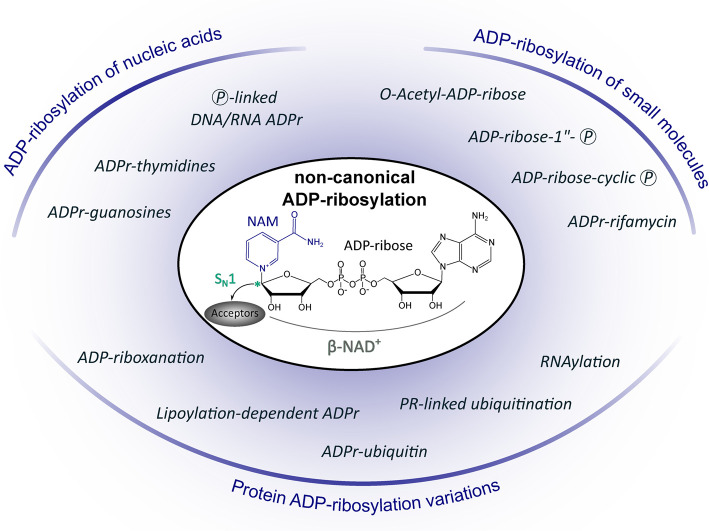
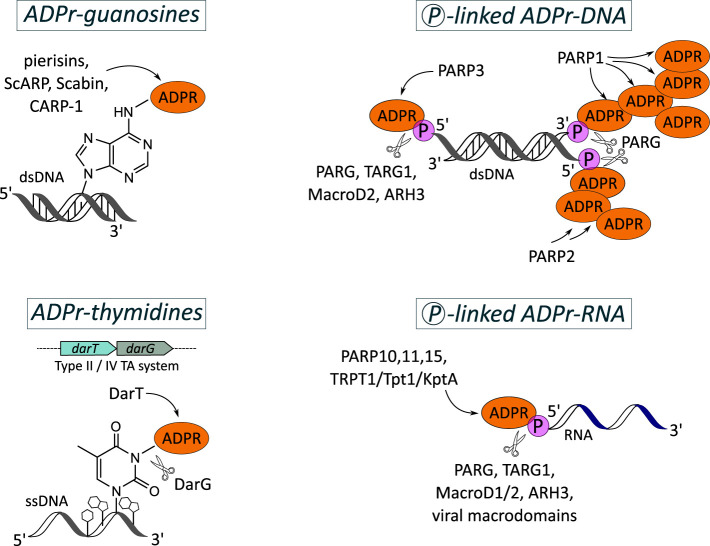
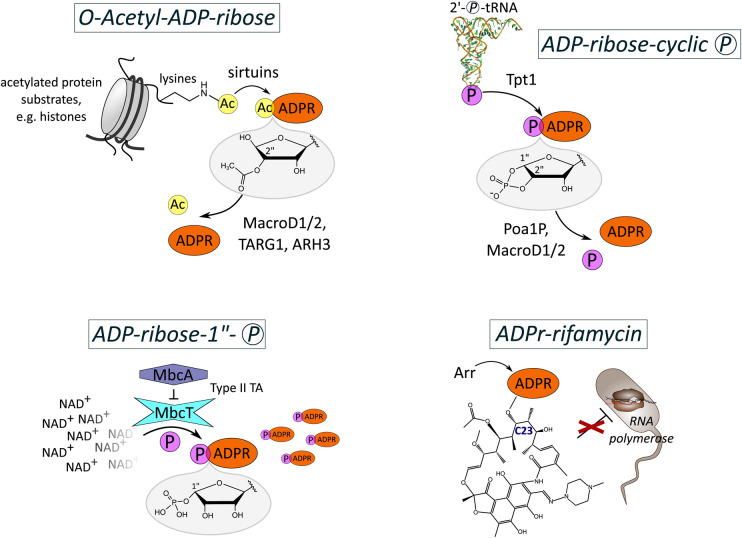
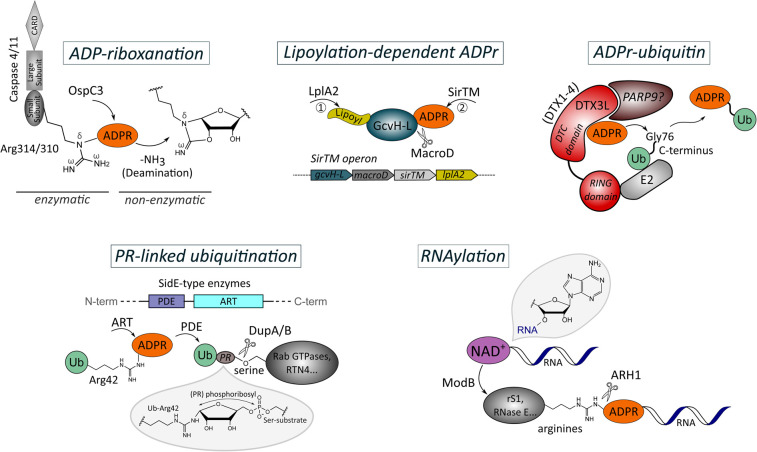
ADP-ribosylation has primarily been known as post-translational modification of proteins. As signalling strategy conserved in all domains of life, it modulates substrate activity, localisation, stability or interactions, thereby regulating a variety of cellular processes and microbial pathogenicity. Yet over the last years, there is increasing evidence of non-canonical forms of ADP-ribosylation that are catalysed by certain members of the ADP-ribosyltransferase family and go beyond traditional protein ADP-ribosylation signalling. New macromolecular targets such as nucleic acids and new ADP-ribose derivatives have been established, notably extending the repertoire of ADP-ribosylation signalling. Based on the physiological relevance known so far, non-canonical ADP-ribosylation deserves its recognition next to the traditional protein ADP-ribosylation modification and which we therefore review in the following.
Keywords: ADP-ribosylation; PARP; nucleic acids; protein modification.
© 2022 The Author(s).
Conflict of interest statement
The authors declare that there are no competing interests associated with the manuscript.
Figures
References
Publication types
MeSH terms
Substances
Grants and funding
LinkOut - more resources
Full Text Sources
