Review
. 2022 Feb 18;130(4):652-672.
doi: 10.1161/CIRCRESAHA.121.319895. Epub 2022 Feb 17.

Pregnancy and Reproductive Risk Factors for Cardiovascular Disease in Women

Affiliations
Review

Pregnancy and Reproductive Risk Factors for Cardiovascular Disease in Women

Anna C O'Kelly et al. Circ Res. .

Abstract

Beyond conventional risk factors for cardiovascular disease, women face an additional burden of sex-specific risk factors. Key stages of a woman's reproductive history may influence or reveal short- and long-term cardiometabolic and cardiovascular trajectories. Early and late menarche, polycystic ovary syndrome, infertility, adverse pregnancy outcomes (eg, hypertensive disorders of pregnancy, gestational diabetes, preterm delivery, and intrauterine growth restriction), and absence of breastfeeding are all associated with increased future cardiovascular disease risk. The menopause transition additionally represents a period of accelerated cardiovascular disease risk, with timing (eg, premature menopause), mechanism, and symptoms of menopause, as well as treatment of menopause symptoms, each contributing to this risk. Differences in conventional cardiovascular disease risk factors appear to explain some, but not all, of the observed associations between reproductive history and later-life cardiovascular disease; further research is needed to elucidate hormonal effects and unique sex-specific disease mechanisms. A history of reproductive risk factors represents an opportunity for comprehensive risk factor screening, refinement of cardiovascular disease risk assessment, and implementation of primordial and primary prevention to optimize long-term cardiometabolic health in women.

Keywords: blood pressure; cardiovascular diseases; pregnancy; risk factors; women.


Figures
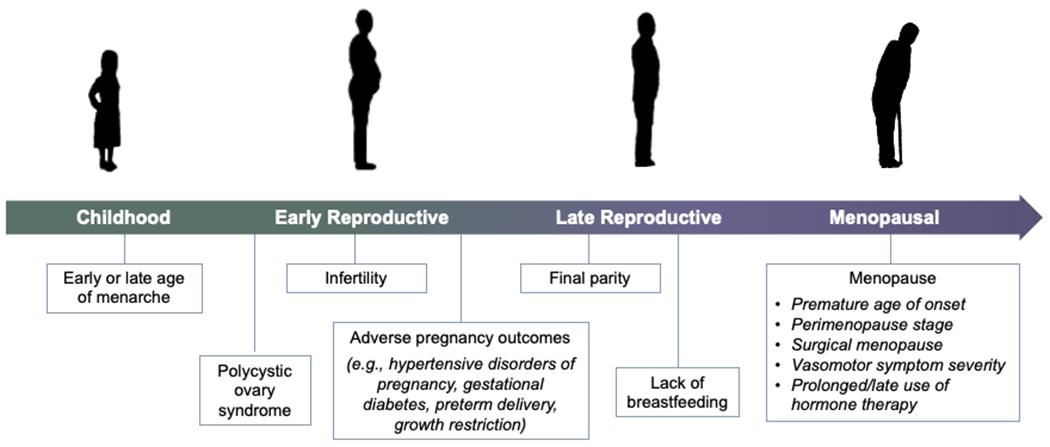
Figure 1.
Figure 1.. Key reproductive exposures associated with future risk of cardiovascular disease in women.
Key stages of a woman’s reproductive history may influence or reveal short- and long-term cardiometabolic and cardiovascular trajectories. Early and late menarche, polycystic ovary syndrome, infertility, adverse pregnancy outcomes (e.g., hypertensive disorders of pregnancy, gestational diabetes, preterm delivery, and intrauterine growth restriction), and absence of breastfeeding may all be adversely associated with a woman’s cardiovascular risk. In addition, the menopause transition represents a period of accelerated cardiovascular disease risk, with timing (e.g., premature menopause), mechanism, and symptoms of menopause, as well as treatment of menopause symptoms, each modifying these risks.
Figure 2.
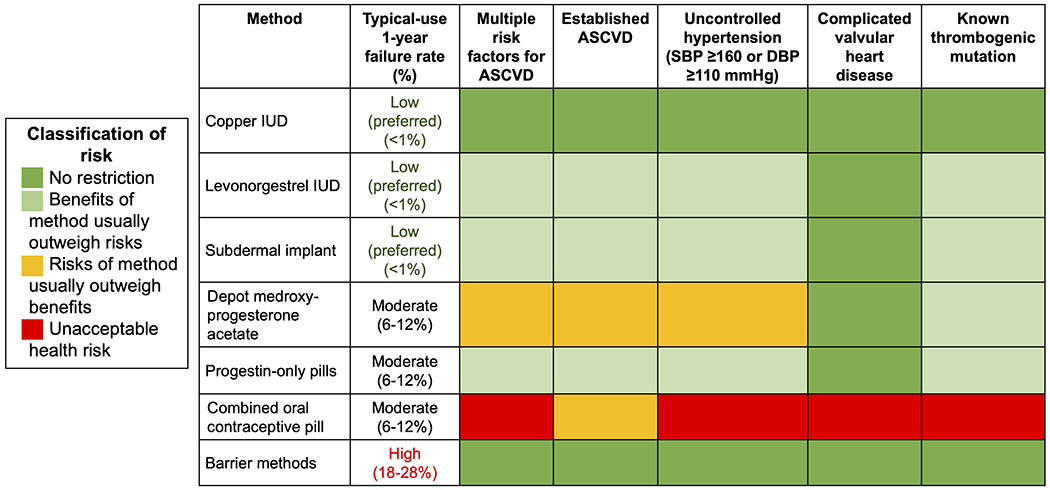
Figure 2.. Effectiveness and select cardiovascular considerations of commonly used contraceptive methods.
Contraceptive failures rates are from Lindley et al. (39). Complicated valvular heart disease refers to endocarditis and valvular lesions associated with atrial fibrillation or pulmonary hypertension. For additional cardiovascular considerations, refer to the U.S. Medical Eligibility Criteria for Contraceptive Use (38).
Figure 3.
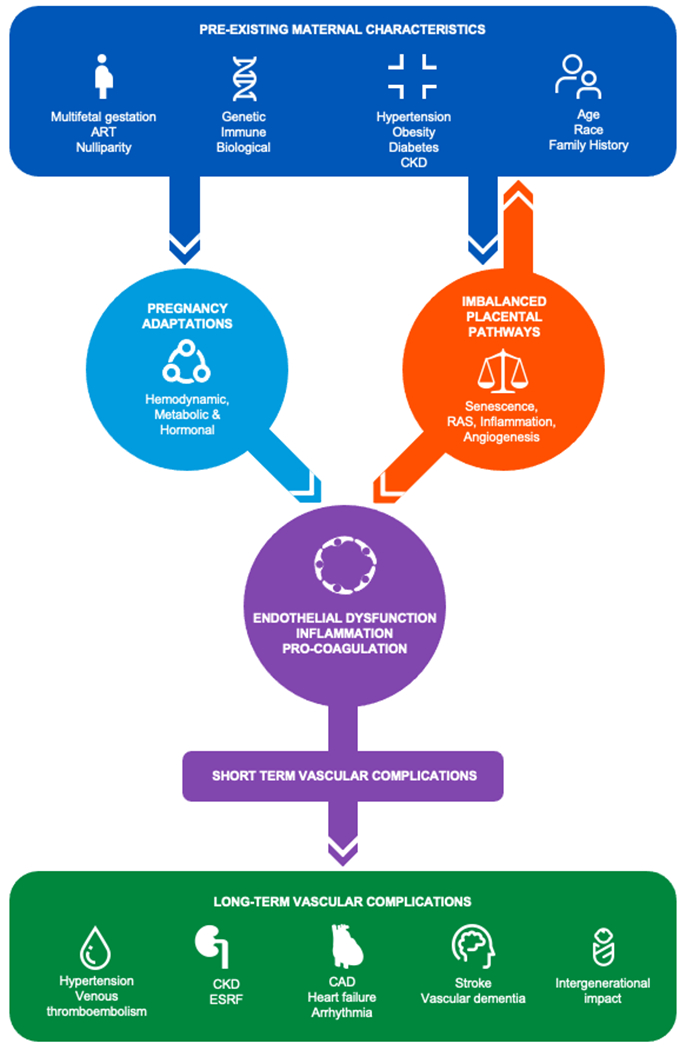
Figure 3.. Putative mechanisms linking of hypertensive disorders of pregnancy to cardiovascular disease.
Hypertensive disorders of pregnancy are phenotypically heterogeneous, which likely reflects interactions between pre-existing maternal characteristics, genetics, and comorbidities (hypertension, obesity, diabetes, and chronic kidney disease), pregnancy-specific factors (nulliparity, multi-gestation and assisted reproduction), and an imbalance of placental biological pathways. Hypertensive disorders of pregnancy are linked to short-term vascular complications as well as earlier and increased risk of developing traditional cardiovascular disease risk factors and diverse cardiovascular conditions. ART = assisted reproductive technology, CKD = chronic kidney disease, RAS = renin angiotensin system, ESRF = end stage renal failure, CAD = coronary artery disease
Figure 4.
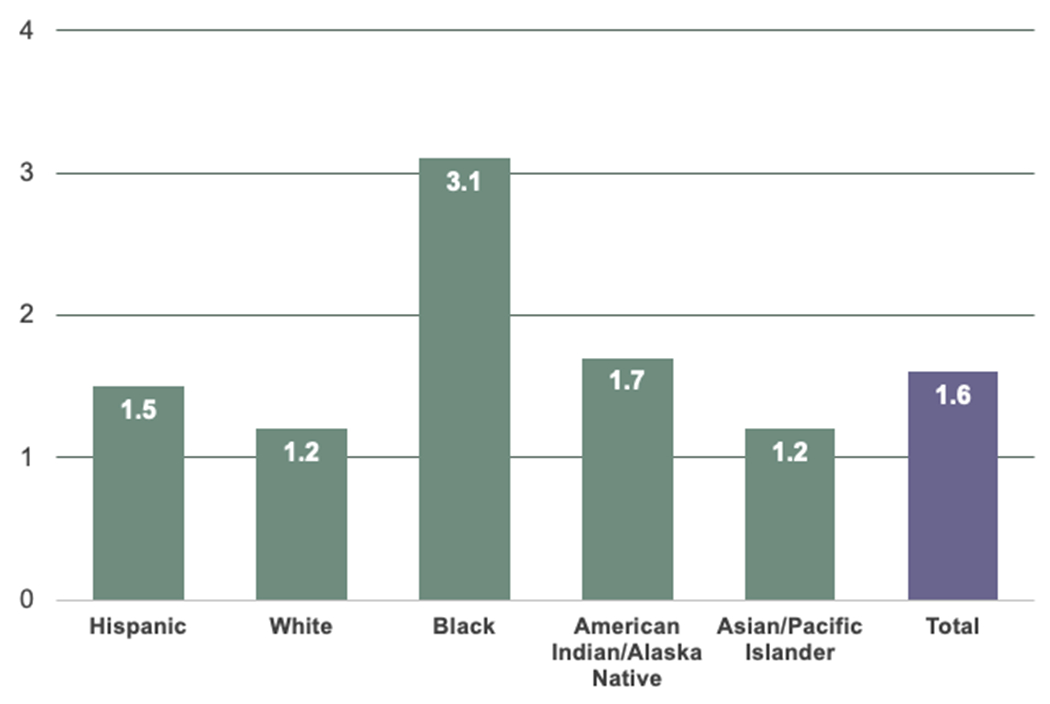
Figure 4.. Rate of very preterm delivery (<32 weeks gestational), U.S. average between 2017-2019.
In the U.S., Black women experience the highest rate of preterm delivery at 29% higher than the national average. All race categories exclude Hispanics. Very preterm is less than 32 weeks’ gestation. Data source: National Center for Health Statistics, final natality data.
Figure 5.
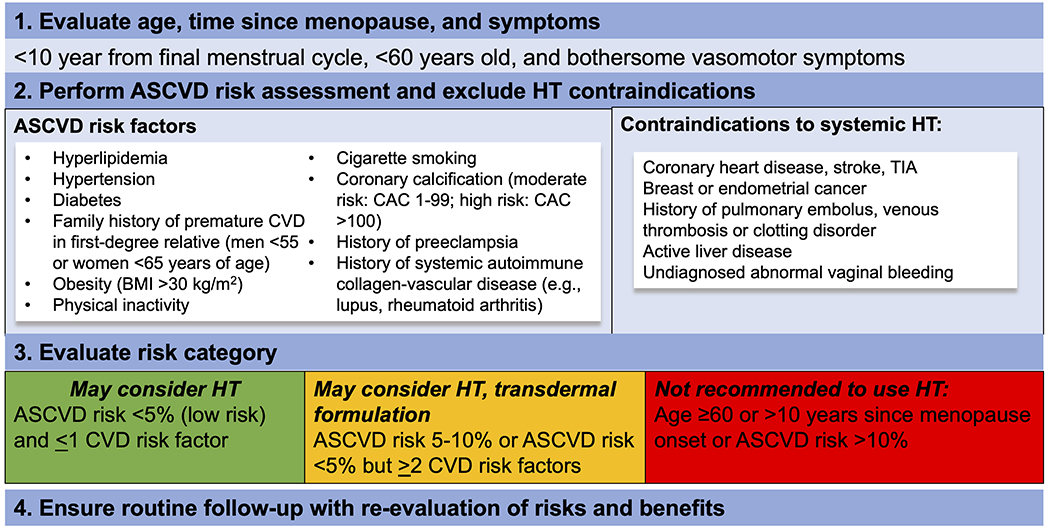
Figure 5.. Contemporary approach to prescribing hormone therapy and hormone therapy risk assessment.
Hormone therapy is appropriate for treatment of vasomotor symptoms in women who are otherwise healthy at the time of menopause, within 10 years of menopause, and under age 60 years. However, the decision to prescribe hormone therapy should still consider a woman’s individual cardiovascular disease risk factors and employ a shared decision-making approach.

References

    1. Virani SS, Alonso A, Aparicio HJ, Benjamin EJ, Bittencourt MS, Callaway CW, Carson AP, Chamberlain AM, Cheng S, Delling FN, et al. Heart disease and stroke statistics-2021 update: A report from the american heart association. Circulation. 2021;143:e254–e743 - PubMed
    1. Garcia M, Mulvagh SL, Merz CN, Buring JE, Manson JE. Cardiovascular disease in women: Clinical perspectives. Circ Res. 2016;118:1273–1293 - PMC - PubMed
    1. O’Kelly AC, Honigberg MC. Sex differences in cardiovascular disease and unique pregnancy-associated risk factors in women. Current Treatment Options Cardiovascular Medicine. 2020;22
    1. Grundy SM, Stone NJ, Bailey AL, Beam C, Birtcher KK, Blumenthal RS, Bruan LT, de Ferranti S, Faiella-Tommasino J, Forman DE, et al. 2018 aha/acc/aacvpr/aapa/abc/acpm/ada/ags/apha/aspc/nla/pcna guideline on the management of blood cholesterol: A report of the american college of cardiology/american heart association task force on clinical practice guidelines. Circulation. 2019;139:e1082–e1143 - PMC - PubMed
    1. Arnett DK, Blumenthal RS, Albert MA, Buroker AB, Goldberger ZD, Hahn EJ, Himmelfarb CD, Khera A, Lloyd-Jones D, McEvoy JW, et al. 2019 acc/aha guideline on the primary prevention of cardiovascular disease: A report of the american college of cardiology/american heart association task force on clinical practice guidelines. Circulation. 2019;140:e596–e646 - PMC - PubMed

Publication types

MeSH terms