


Repeatability and reproducibility of a handheld quantitative G6PD diagnostic
- PMID: 35176015
- PMCID: PMC8853557
- DOI: 10.1371/journal.pntd.0010174
Repeatability and reproducibility of a handheld quantitative G6PD diagnostic
Abstract
Background: The introduction of novel short course treatment regimens for the radical cure of Plasmodium vivax requires reliable point-of-care diagnosis that can identify glucose-6-phosphate dehydrogenase (G6PD) deficient individuals. While deficient males can be identified using a qualitative diagnostic test, the genetic make-up of females requires a quantitative measurement. SD Biosensor (Republic of Korea) has developed a handheld quantitative G6PD diagnostic (STANDARD G6PD test), that has approximately 90% accuracy in field studies for identifying individuals with intermediate or severe deficiency. The device can only be considered for routine care if precision of the assay is high.
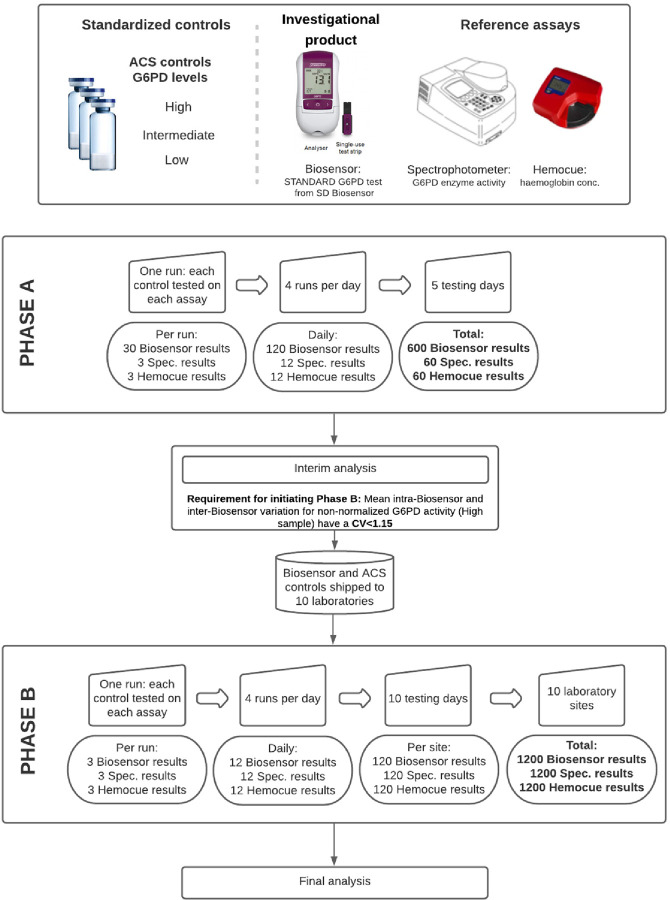
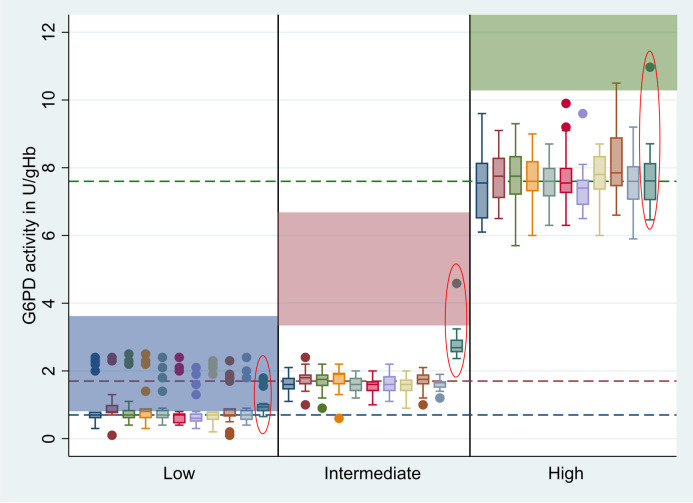
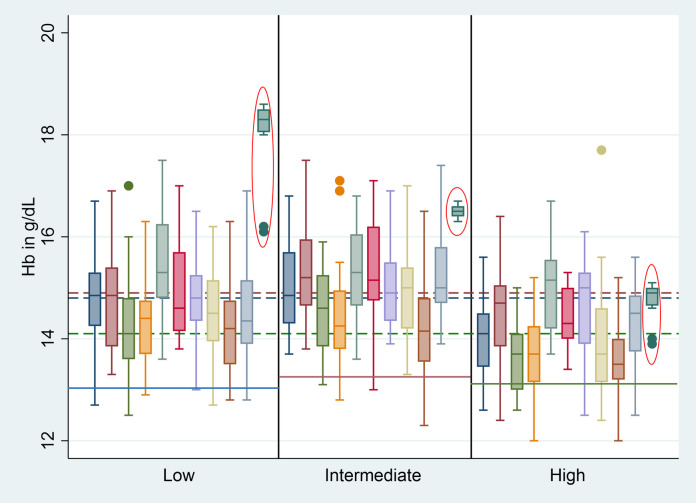
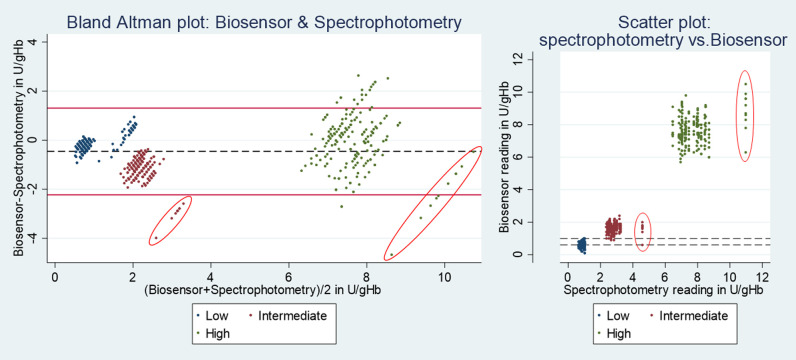
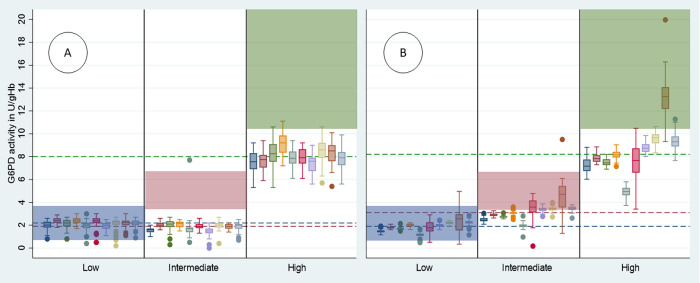
Methods and findings: Commercial lyophilised controls (ACS Analytics, USA) with high, intermediate, and low G6PD activities were assessed 20 times on 10 Biosensor devices and compared to spectrophotometry (Pointe Scientific, USA). Each device was then dispatched to one of 10 different laboratories with a standard set of the controls. Each control was tested 40 times at each laboratory by a single user and compared to spectrophotometry results. When tested at one site, the mean coefficient of variation (CV) was 0.111, 0.172 and 0.260 for high, intermediate, and low controls across all devices respectively; combined G6PD Biosensor readings correlated well with spectrophotometry (rs = 0.859, p<0.001). When tested in different laboratories, correlation was lower (rs = 0.604, p<0.001) and G6PD activity determined by Biosensor for the low and intermediate controls overlapped. The use of lyophilised human blood samples rather than fresh blood may have affected these findings. Biosensor G6PD readings between sites did not differ significantly (p = 0.436), whereas spectrophotometry readings differed markedly between sites (p<0.001).
Conclusions: Repeatability and inter-laboratory reproducibility of the Biosensor were good; though the device did not reliably discriminate between intermediate and low G6PD activities of the lyophilized specimens. Clinical studies are now required to assess the devices performance in practice.
Conflict of interest statement
The authors have declared that no competing interests exist.
Figures
References
-
- Taylor WRJ, Thriemer K, von Seidlein L, Yuentrakul P, Assawariyathipat T, Assefa A, et al.. Short-course primaquine for the radical cure of Plasmodium vivax malaria: a multicentre, randomised, placebo-controlled non-inferiority trial. Lancet. 2019. doi: 10.1016/S0140-6736(19)31285-1 - DOI - PMC - PubMed
-
- Phru CS, Kibria MG, Thriemer K, Chowdhury MU, Jahan N, Aktaruzzaman MM, et al.. Case Report: A Case of Primaquine-Induced Hemoglobinuria in Glucose-6-Phosphate Dehydrogenase-Deficient Malaria Patient in Southeastern Bangladesh. The American journal of tropical medicine and hygiene. 2019. - PMC - PubMed
Publication types
MeSH terms
Substances
Grants and funding
LinkOut - more resources
Full Text Sources
Medical
Miscellaneous
