Five-year trend analysis of malaria prevalence in Shewarobit, Amhara Regional State, North-central Ethiopia
- PMID: 35178148
- PMCID: PMC8817195
- DOI: 10.11604/pamj.2021.40.237.30614
Five-year trend analysis of malaria prevalence in Shewarobit, Amhara Regional State, North-central Ethiopia
Abstract
Introduction: analysis of the prevalence of malaria infection in health facilities is crucial for transmission dynamics and implementing evidence-based control strategies. The study was to determine a five-year pattern of malaria infection in Shewarobit, Northcentral Ethiopia.
Methods: institutional based retrospective study was carried out to determine the prevalence of malaria infection from a five-year examination of malaria cases at Shewarobit Health Center, Ethiopia. The directory of all malaria cases reported between 2013-2017 was carefully examined and recorded. Data were analyzed using SPSS version 20.0 and the results were presented in tables and figures.
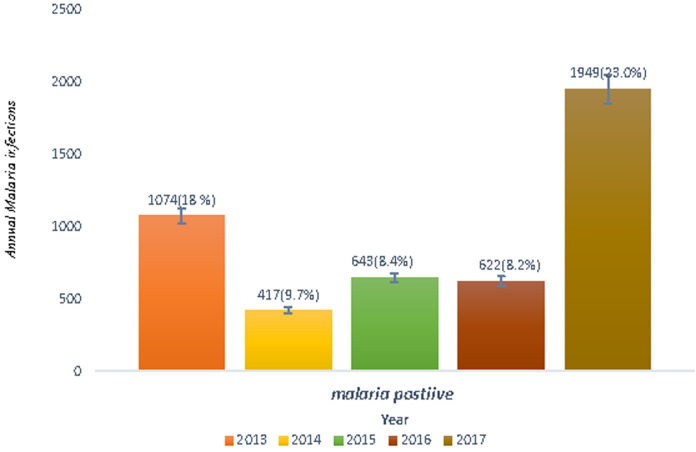
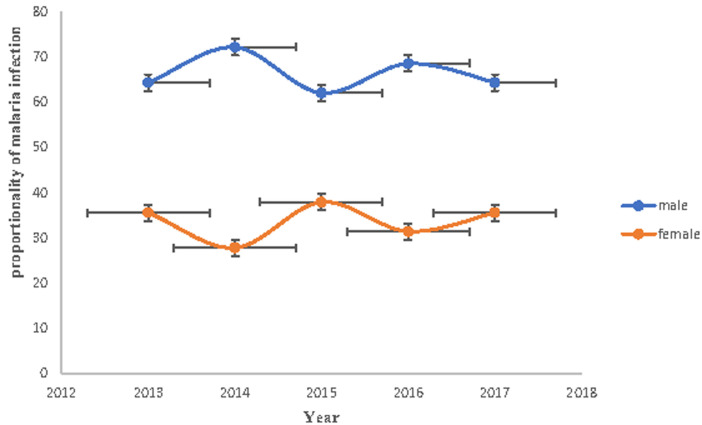
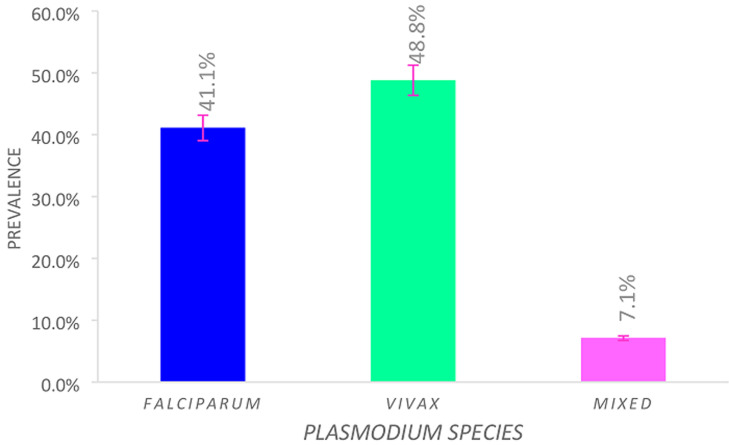
Results: the results confirmed a total of 33,932 malaria suspects were diagnosed using microscopy over the last 5 years, of which 4705 (13.9%) were positive for malaria infection. Out of 4705 positive individuals, 3074 (65.3%) were males and 1631 (34.7%) were females. Plasmodium vivax, Plasmodium falciparum, and mixed infection (both species) accounted for 44.8%, 44.1%, and 7.1% of the confirmed cases, respectively.
Conclusion: the study demonstrated that malaria infection is a public health concern in the study area, and Plasmodium vivax was the predominant species. Thus, the district health bureau and other concerned stakeholders should strengthen evidence-based intervention of malaria control strategies to eliminate malaria infection.
Keywords: Trend; malaria; plasmodium species; shewarobit.
Copyright: Tadegew Teshome Shiferawu et al.
Figures
References
-
- World Health O . 1991. Basic laboratory methods in medical parasitology: World Health Organization.
MeSH terms
LinkOut - more resources
Full Text Sources
Medical