


Age-specific effectiveness of a tuberculosis screening intervention in children
- PMID: 35180263
- PMCID: PMC8856528
- DOI: 10.1371/journal.pone.0264216
Age-specific effectiveness of a tuberculosis screening intervention in children
Abstract
Objective: To apply a cascade-of-care framework to evaluate the effectiveness-by age of the child-of an intensified tuberculosis patient-finding intervention.
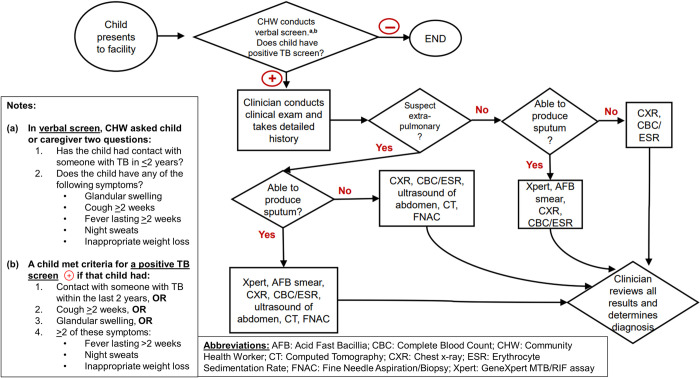
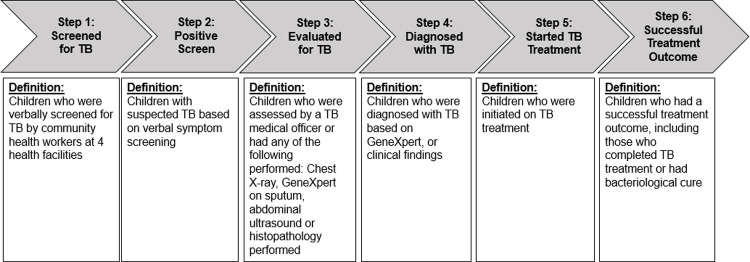
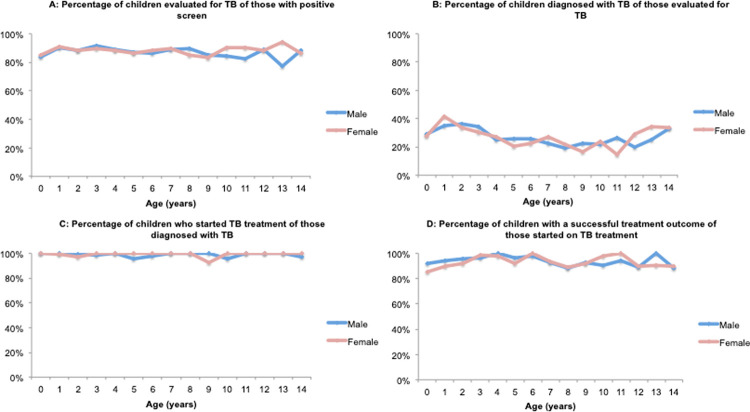
Design: From a prospective screening program at four hospitals in Pakistan (2014-2016) we constructed a care cascade comprising six steps: screened, positive screen, evaluated, diagnosed, started treatment, and successful outcome. We evaluated the cascade by each year of age from 0 to 14 and report the age-specific mean proportion and standard deviation.
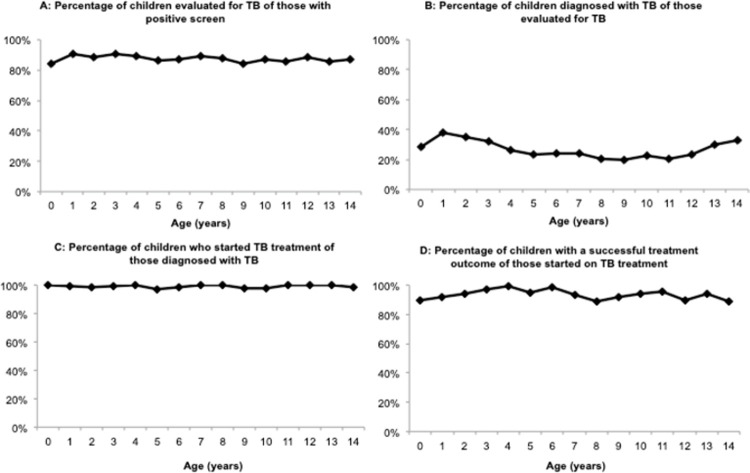
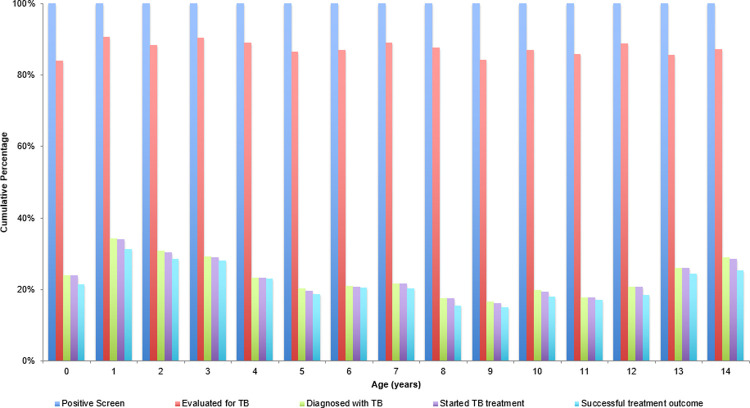
Results: On average across all ages, only 12.5% (standard deviation: 2.0%) of children with a positive screen were not evaluated. Among children who had a complete evaluation, the highest percentages of children diagnosed with tuberculosis were observed in children 0-4 (mean: 31.9%; standard deviation: 4.8%), followed by lower percentages in children 5-9 (mean: 22.4%; standard deviation: 2.2%), and 10-14 (mean: 26.0%; standard deviation:5.4%). Nearly all children diagnosed with tuberculosis initiated treatment, and an average of 93.3% (standard deviation: 3.3%) across all ages had successful treatment outcomes.
Conclusions: This intervention was highly effective across ages 0-14 years. Our study illustrates the utility of applying operational analyses of age-stratified cascades to identify age-specific gaps in pediatric tuberculosis care that can guide future, novel interventions to close these gaps.
Conflict of interest statement
The authors have declared that no competing interests exist.
Figures
References
-
- WHO. Global Tuberculosis Report 2021. World Health Organization. Geneva, Switzerland; 2021.
Publication types
MeSH terms
Grants and funding
LinkOut - more resources
Full Text Sources
Medical
