


Evolving measles status and immunization policy development in six European countries
- PMID: 35180372
- PMCID: PMC9009904
- DOI: 10.1080/21645515.2022.2031776
Evolving measles status and immunization policy development in six European countries
Abstract
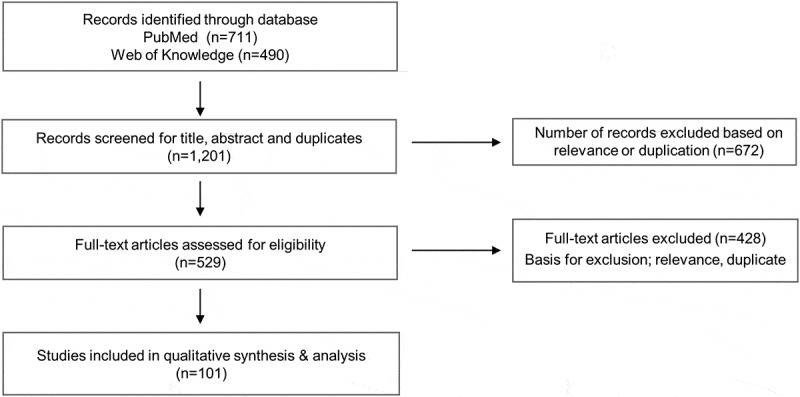
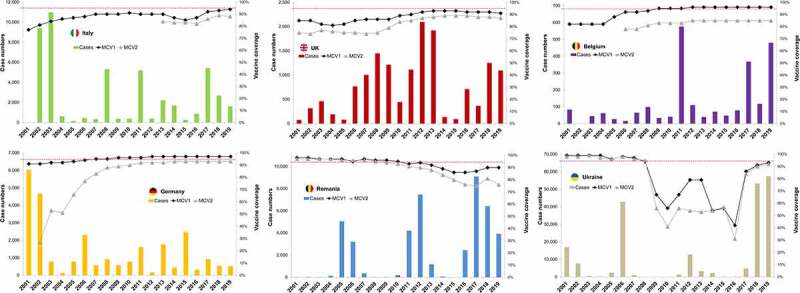
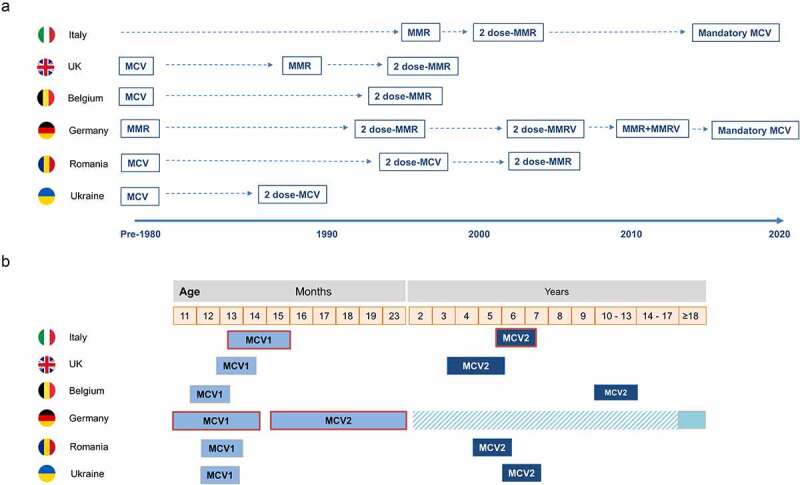
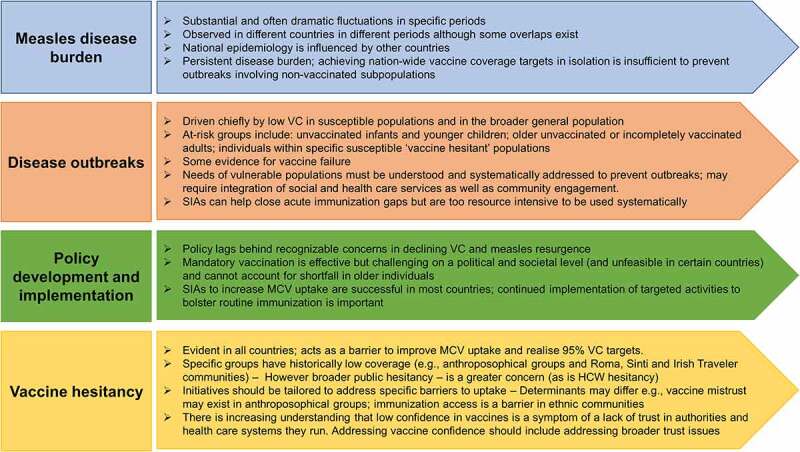
Developing and implementing new immunization policies in response to shifting epidemiology is a critical public health component. We adopted a mixed-methods approach (via narrative literature review [101 articles] and 9 semi-structured interviews) to evaluate policy development in response to shifting measles epidemiology in six European countries (Italy, Belgium, Germany, Romania, UK, and Ukraine); where policies and strategies have evolved in response to country-specific disease and vaccination patterns. Periodic outbreaks have occurred in all countries against a background of declining measles-containing-vaccine (MCV) uptake and increasing public vaccine hesitancy (with substantial regional or social differences in measles burden and vaccine uptake). Health-care worker (HCW) vaccine skepticism is also seen. While many outbreaks arise or involve specific susceptible populations (e.g., minority/migrant communities), the broader pattern is spread to the wider (and generally older) population; often among incompletely/non-vaccinated individuals as a legacy of previous low uptake. Immunization policy and strategic responses are influenced by political and social factors, where public mistrust contributes to vaccine hesitancy. A strong centralized immunization framework (allied with effective regional implementation and coherent political commitment) can effectively increase uptake. Mandatory vaccination has increased childhood MCV uptake in Italy, and similar benefits could be anticipated for other countries considering vaccine mandates. Although possible elsewhere, socio-political considerations render mandating impractical in other countries, where targeted immunization activities to bolster routine uptake are more important. Addressing HCW skepticism, knowledge gaps, improving access and increasing public/community engagement and education to address vaccine hesitancy/mistrust (especially in communities with specific unmet needs) is critical.
Keywords: Measles; decision-making; policy; routine immunization.
Conflict of interest statement
IV is employed by the GSK group of companies and holds shares in the GSK group of companies. SP has received fees from Sanofi, Merck, Janssen, Inovio, Moderna, Astra Zeneca, Rational Vaccines, NTxBio, Seqirus, Codagenix, Vaxinnity, and Valneva outside the submitted work. HL has received grants from the GSK group of companies, Merck and Janssen and payment from the GSK group of companies for presentations outside the submitted work. IV, SP and HL declare no other financial and non-financial relationships and activities. PVD declares no financial and non-financial relationships and activities and no conflicts of interest.
Figures
References
Publication types
MeSH terms
Substances
LinkOut - more resources
Full Text Sources
Medical
