


PLCG2 is associated with the inflammatory response and is induced by amyloid plaques in Alzheimer's disease
- PMID: 35180881
- PMCID: PMC8857783
- DOI: 10.1186/s13073-022-01022-0
PLCG2 is associated with the inflammatory response and is induced by amyloid plaques in Alzheimer's disease
Abstract
Background: Alzheimer's disease (AD) is characterized by robust microgliosis and phenotypic changes that accompany disease pathogenesis. Accumulating evidence from genetic studies suggests the importance of phospholipase C γ 2 (PLCG2) in late-onset AD (LOAD) pathophysiology. However, the role of PLCG2 in AD is still poorly understood.
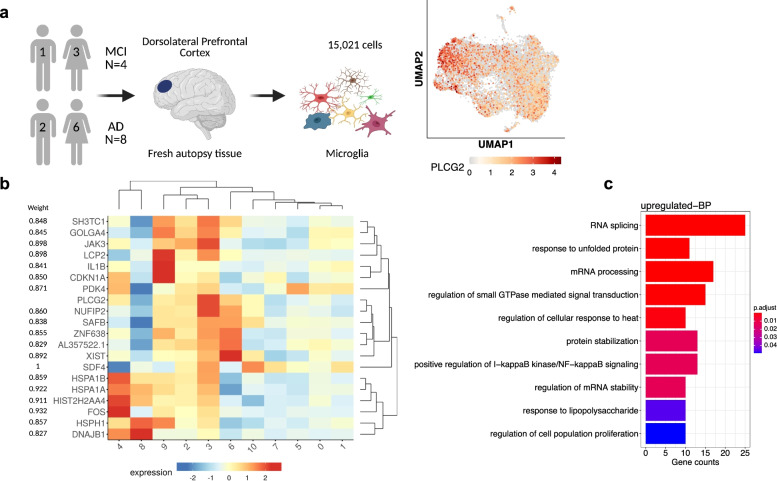
Methods: Using bulk RNA-Seq (N=1249) data from the Accelerating Medicines Partnership-Alzheimer's Disease Consortium (AMP-AD), we investigated whether PLCG2 expression increased in the brains of LOAD patients. We also evaluated the relationship between PLCG2 expression levels, amyloid plaque density, and expression levels of microglia specific markers (AIF1 and TMEM119). Finally, we investigated the longitudinal changes of PLCG2 expression in the 5xFAD mouse model of AD. To further understand the role of PLCG2 in different signaling pathways, differential gene expression and co-expression network analyses were performed using bulk RNA-Seq and microglial single-cell RNA-Seq data. To substantiate the human analyses, we performed differential gene expression analysis on wild-type (WT) and inactivated Plcg2 mice and used immunostaining to determine if the differentially expressed genes/pathways were altered by microglial cell coverage or morphology.
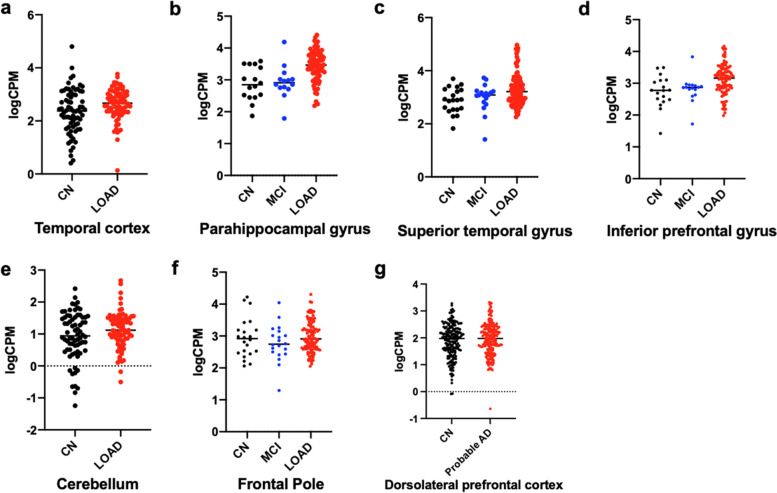
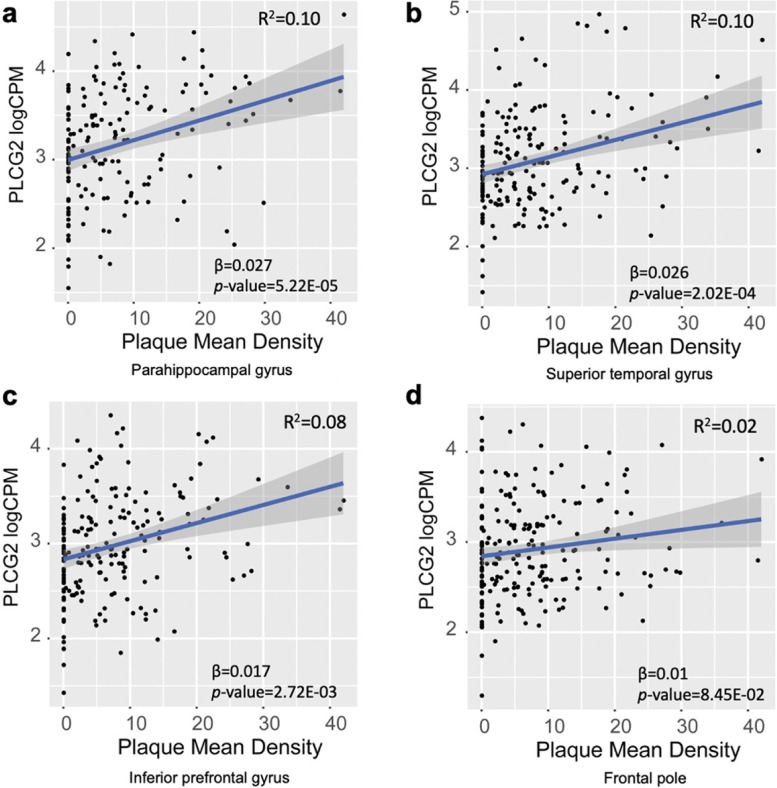
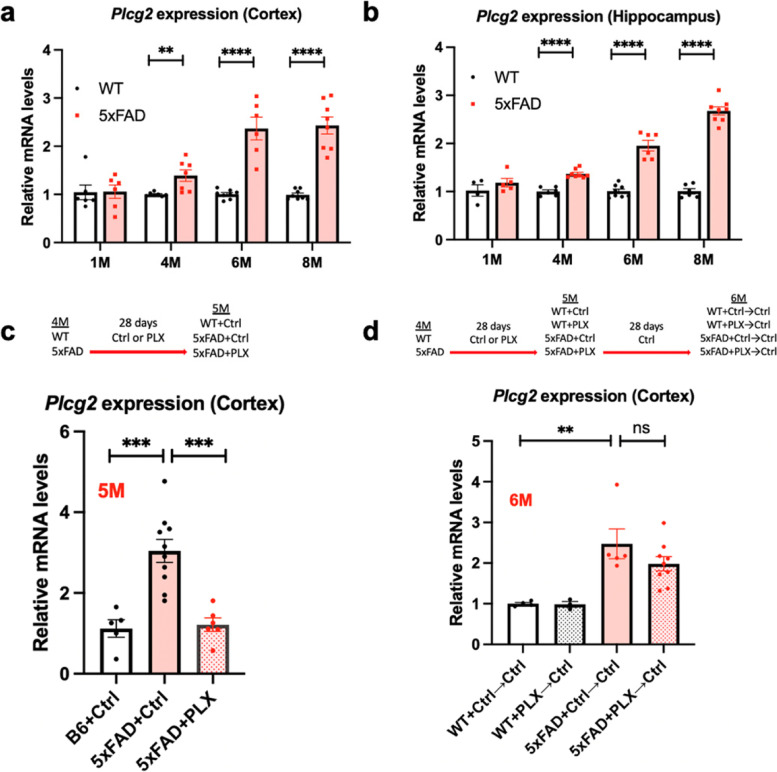
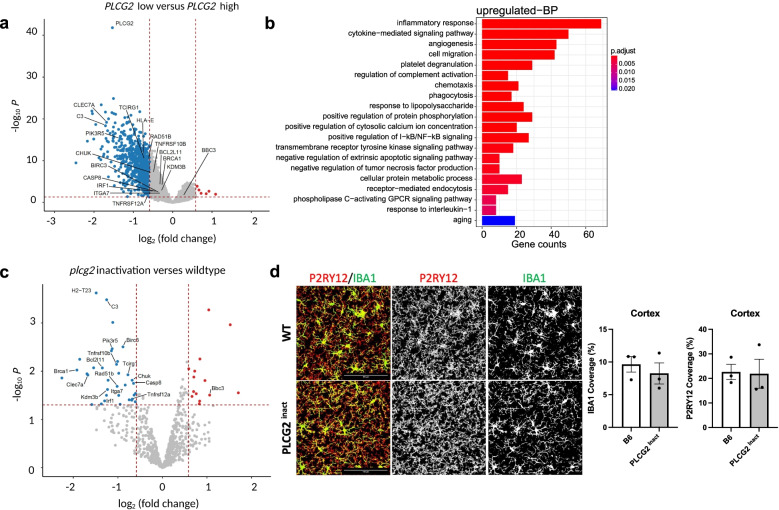
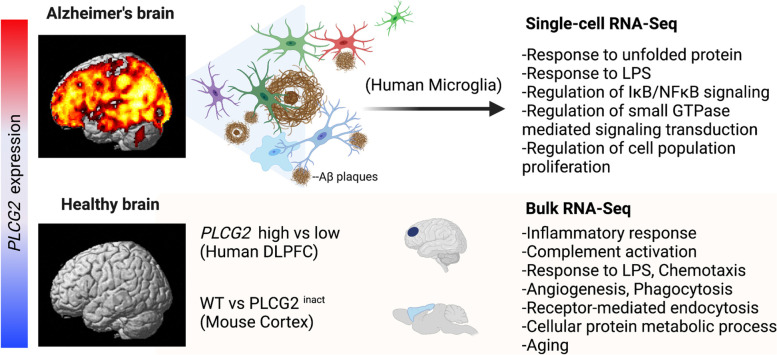
Results: We observed significant upregulation of PLCG2 expression in three brain regions of LOAD patients and significant positive correlation of PLCG2 expression with amyloid plaque density. These findings in the human brain were validated in the 5xFAD amyloid mouse model, which showed disease progression-dependent increases in Plcg2 expression associated with amyloid pathology. Of note, increased Plcg2 expression levels in 5xFAD mice were abolished by reducing microglia. Furthermore, using bulk RNA-Seq data, we performed differential expression analysis by comparing cognitively normal older adults (CN) with 75th percentile (high) and 25th percentile (low) PLCG2 gene expression levels to identify pathways related to inflammation and the inflammatory response. The findings in the human brain were validated by differential expression analyses between WT and plcg2 inactivated mice. PLCG2 co-expression network analysis of microglial single-cell RNA-Seq data identified pathways related to the inflammatory response including regulation of I-kappaB/NF-kappa B signaling and response to lipopolysaccharide.
Conclusions: Our results provide further evidence that PLCG2 plays an important role in AD pathophysiology and may be a potential target for microglia-targeted AD therapies.
Keywords: Alzheimer’s disease; Co-expression network analysis; Inflammatory response; Microglia; PLCG2; Single-cell RNA-Seq analysis.
© 2022. The Author(s).
Conflict of interest statement
The authors declare that they have no competing interests. The stipend for A.P.T. was provided in part through a fellowship funded by Eli Lilly and Company; however, the project was not sponsored by Eli Lilly and Company and they had no influence on the design, conduct, or reporting of the research.
Figures
References
-
- Reiman EM, Arboleda-Velasquez JF, Quiroz YT, Huentelman MJ, Beach TG, Caselli RJ, Chen Y, Su Y, Myers AJ, Hardy J, et al. Exceptionally low likelihood of Alzheimer’s dementia in APOE2 homozygotes from a 5,000-person neuropathological study. Nat Commun. 2020;11:667. doi: 10.1038/s41467-019-14279-8. - DOI - PMC - PubMed
Publication types
MeSH terms
Substances
Grants and funding
LinkOut - more resources
Full Text Sources
Medical
Molecular Biology Databases
