


An ode to fetal, infant, and toddler neuroimaging: Chronicling early clinical to research applications with MRI, and an introduction to an academic society connecting the field
- PMID: 35184026
- PMCID: PMC8861425
- DOI: 10.1016/j.dcn.2022.101083
An ode to fetal, infant, and toddler neuroimaging: Chronicling early clinical to research applications with MRI, and an introduction to an academic society connecting the field
Abstract
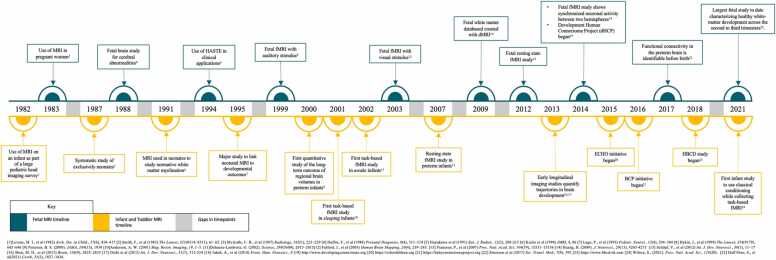
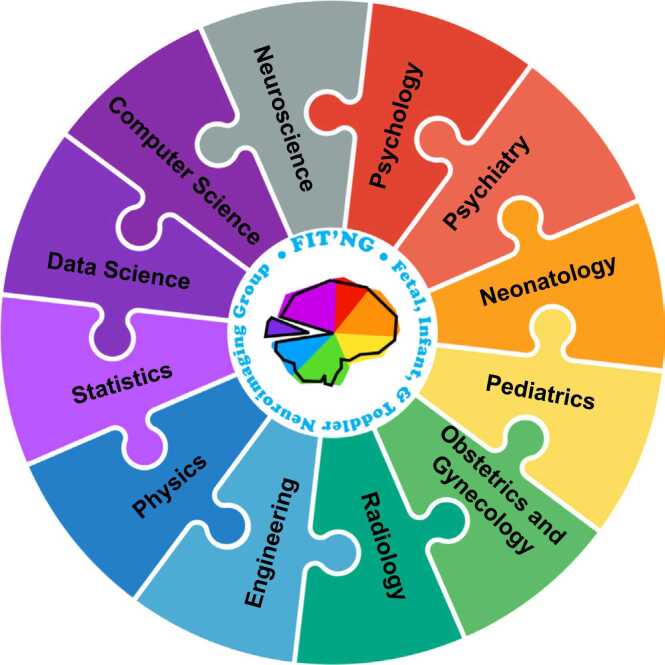
Fetal, infant, and toddler neuroimaging is commonly thought of as a development of modern times (last two decades). Yet, this field mobilized shortly after the discovery and implementation of MRI technology. Here, we provide a review of the parallel advancements in the fields of fetal, infant, and toddler neuroimaging, noting the shifts from clinical to research use, and the ongoing challenges in this fast-growing field. We chronicle the pioneering science of fetal, infant, and toddler neuroimaging, highlighting the early studies that set the stage for modern advances in imaging during this developmental period, and the large-scale multi-site efforts which ultimately led to the explosion of interest in the field today. Lastly, we consider the growing pains of the community and the need for an academic society that bridges expertise in developmental neuroscience, clinical science, as well as computational and biomedical engineering, to ensure special consideration of the vulnerable mother-offspring dyad (especially during pregnancy), data quality, and image processing tools that are created, rather than adapted, for the young brain.
Keywords: Brain development; FIT’NG; FMRI; Fetal neuroimaging; Infant neuroimaging; Longitudinal studies; MRI.
Copyright © 2022 The Authors. Published by Elsevier Ltd.. All rights reserved.
Conflict of interest statement
The authors declare that they have no known competing financial interests or personal relationships that could have appeared to influence the work reported in this paper.
Figures
References
-
- Adamson C., Alexander B., Ball G., Beare R., Cheong J., Spittle A., Doyle L., Anderson P., Seal M., Thompson D. Parcellation of the neonatal cortex using Surface-based Melbourne Children’s Regional Infant Brain atlases (M-CRIB-S) Scientific Reports. 2020;10 doi: 10.1038/s41598-020-61326-2. - DOI - PMC - PubMed
Publication types
MeSH terms
Grants and funding
- R01 HD093578/HD/NICHD NIH HHS/United States
- ZIA MH002782/ImNIH/Intramural NIH HHS/United States
- KL2 TR003016/TR/NCATS NIH HHS/United States
- R34 DA050291/DA/NIDA NIH HHS/United States
- R21 HD095338/HD/NICHD NIH HHS/United States
- R01 MH117983/MH/NIMH NIH HHS/United States
- TL1 TR001875/TR/NCATS NIH HHS/United States
- T32 MH018268/MH/NIMH NIH HHS/United States
- R01 HD065762/HD/NICHD NIH HHS/United States
- R03 EB022754/EB/NIBIB NIH HHS/United States
- R01 HD099846/HD/NICHD NIH HHS/United States
- R01 HD100560/HD/NICHD NIH HHS/United States
- K24 MH127381/MH/NIMH NIH HHS/United States
- UL1 TR001863/TR/NCATS NIH HHS/United States
- UL1 TR003015/TR/NCATS NIH HHS/United States
- UL1 TR001873/TR/NCATS NIH HHS/United States
LinkOut - more resources
Full Text Sources
Medical
