


Changes in alcohol use during the COVID-19 pandemic in Europe: A meta-analysis of observational studies
- PMID: 35187739
- PMCID: PMC9111882
- DOI: 10.1111/dar.13446
Changes in alcohol use during the COVID-19 pandemic in Europe: A meta-analysis of observational studies
Abstract
Issues: Numerous studies have examined the impact of the COVID-19 pandemic on alcohol use changes in Europe, with concerns raised regarding increased use and related harms.
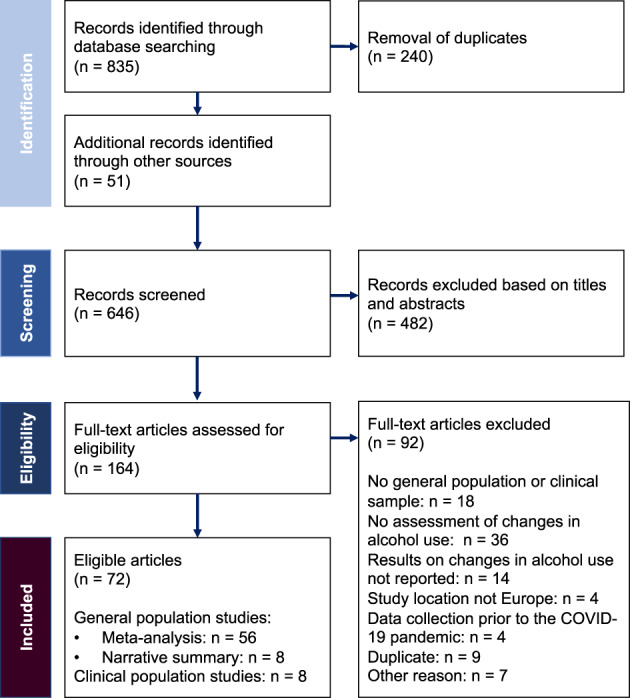
Approach: We synthesised observational studies published between 1 January 2020 and 31 September 2021 on self-reported changes in alcohol use associated with COVID-19. Electronic databases were searched for studies evaluating individual data from European general and clinical populations. We identified 646 reports, of which 56 general population studies were suitable for random-effects meta-analyses of proportional differences in alcohol use changes. Variations by time, sub-region and study quality were assessed in subsequent meta-regressions. Additional 16 reports identified were summarised narratively.
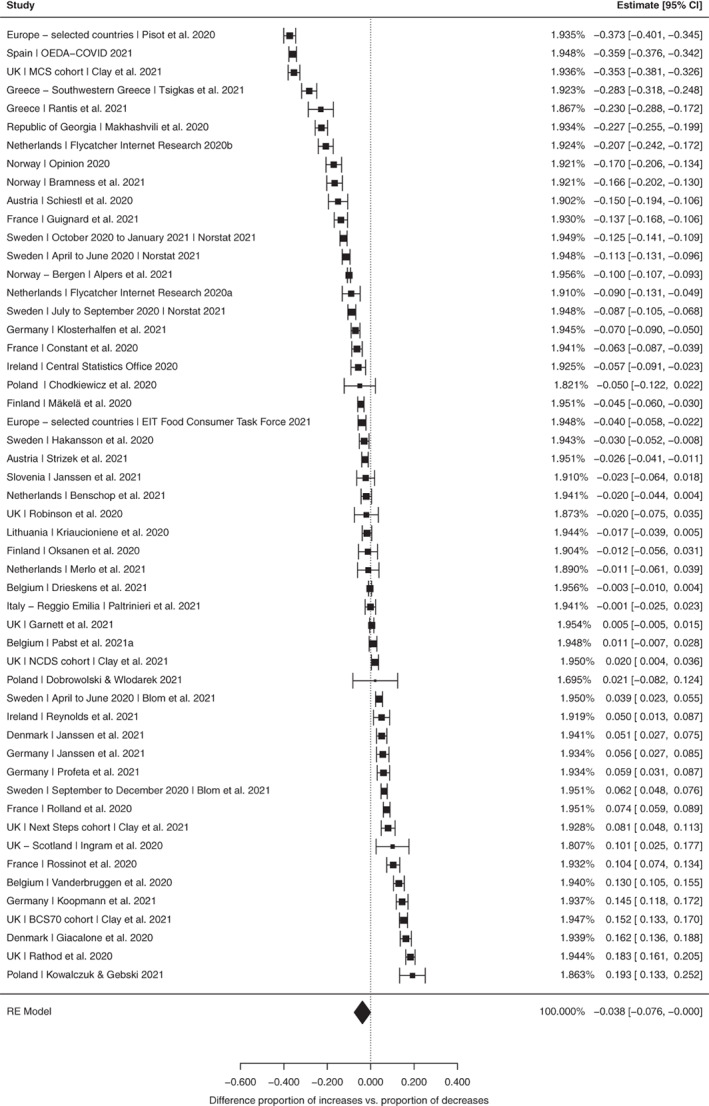
Key findings: Compiling reports measuring changes in overall alcohol use, slightly more individuals indicated a decrease than an increase in their alcohol use during the pandemic [3.8%, 95% confidence interval (CI) 0.00-7.6%]. Decreases were also reported more often than increases in drinking frequency (8.0%, 95% CI 2.7-13.2%), quantity consumed (12.2%, 95% CI 8.3-16.2%) and heavy episodic drinking (17.7%, 95% CI 13.6-21.8%). Among people with pre-existing high drinking levels/alcohol use disorder, high-level drinking patterns appear to have solidified or intensified.
Implications: Pandemic-related changes in alcohol use may be associated with pre-pandemic drinking levels. Increases among high-risk alcohol users are concerning, suggesting a need for ongoing monitoring and support from relevant health-care services.
Conclusion: Our findings suggest that more people reduced their alcohol use in Europe than increased it since the onset of the pandemic. However high-quality studies examining specific change mechanisms at the population level are lacking.
Keywords: COVID-19; Europe; alcohol; drinking; pandemic.
© 2022 The Authors. Drug and Alcohol Review published by John Wiley & Sons Australia, Ltd on behalf of Australasian Professional Society on Alcohol and other Drugs.
Conflict of interest statement
LM has received honoraria from GILEAD, Lundbeck and Neuraxpharm that are not related to this study. HLP has received training grants in the last 3 years from Lundbeck, Exeltis and Otsuka that are not related to this study.
Figures
References
-
- De Goeij MCM, Suhrcke M, Toffolutti V, van de Mheen D, Schoenmakers TM, Kunst AE. How economic crises affect alcohol consumption and alcohol‐related health problems: a realist systematic review. Soc Sci Med 2015;131:131–46. - PubMed
-
- World Health Organization . Coronavirus disease (COVID‐19). Geneva, Switzerland: World Health Organization, 2020. Available at: https://www.who.int/emergencies/diseases/novel-coronavirus-2019/ (accessed 11 November 2020).
Publication types
MeSH terms
Grants and funding
LinkOut - more resources
Full Text Sources
Medical
