. 2022 Sep 28;226(7):1204-1214.
doi: 10.1093/infdis/jiac065.

Longitudinal Systemic and Mucosal Immune Responses to SARS-CoV-2 Infection

Affiliations

Longitudinal Systemic and Mucosal Immune Responses to SARS-CoV-2 Infection

Peter F Wright et al. J Infect Dis. .

Abstract

Background: A longitudinal study was performed to determine the breadth, kinetics, and correlations of systemic and mucosal antibody responses to severe acute respiratory syndrome coronavirus 2 (SARS-CoV-2) infection.

Methods: Twenty-six unvaccinated adults with confirmed coronavirus disease 2019 (COVID-19) were followed for 6 months with 3 collections of blood, nasal secretions, and stool. Control samples were obtained from 16 unvaccinated uninfected individuals. SARS-CoV-2 neutralizing and binding antibody responses were respectively evaluated by pseudovirus assays and multiplex bead arrays.

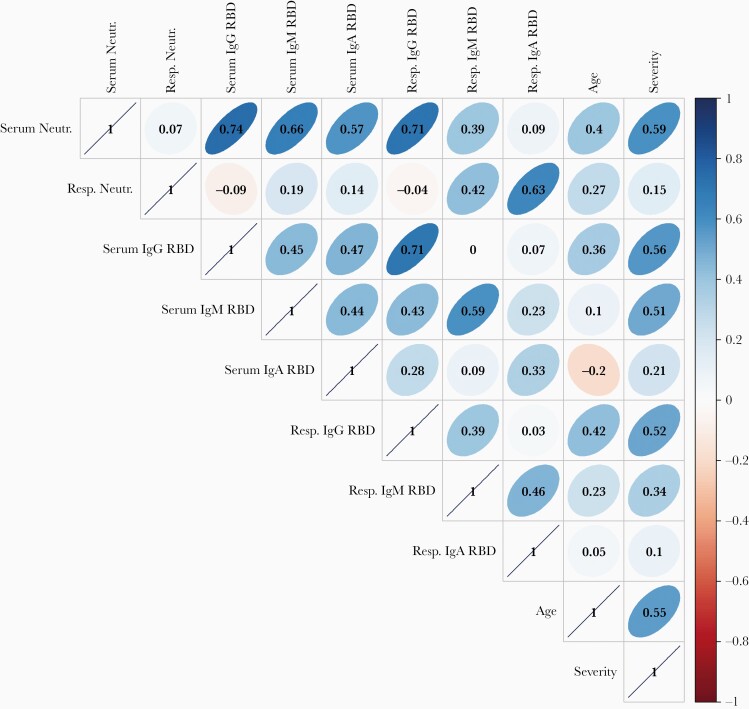
Results: Neutralizing antibody responses to SARS-CoV-2 were detected in serum and respiratory samples for 96% (25/26) and 54% (14/26), respectively, of infected participants. Robust binding antibody responses against SARS-CoV-2 spike protein and S1, S2, and receptor binding (RBD) domains occurred in serum and respiratory nasal secretions, but not in stool samples. Serum neutralization correlated with RBD-specific immunoglobulin (Ig)G, IgM, and IgA in serum (Spearman ρ = 0.74, 0.66, and 0.57, respectively), RBD-specific IgG in respiratory secretions (ρ = 0.52), disease severity (ρ = 0.59), and age (ρ = 0.40). Respiratory mucosal neutralization correlated with RBD-specific IgM (ρ = 0.42) and IgA (ρ = 0.63).

Conclusions: Sustained antibody responses occurred after SARS-CoV-2 infection. Notably, there was independent induction of IgM and IgA binding antibody and neutralizing responses in systemic and respiratory compartments. These observations have implications for current vaccine strategies and understanding SARS-CoV-2 reinfection and transmission.

Keywords: SARS-CoV-2; mucosal immunity.


Conflict of interest statement

Potential conflicts of interest. All authors: No reported conflicts of interest. All authors have submitted the ICMJE Form for Disclosure of Potential Conflicts of Interest. Conflicts that the editors consider relevant to the content of the manuscript have been disclosed.

Figures
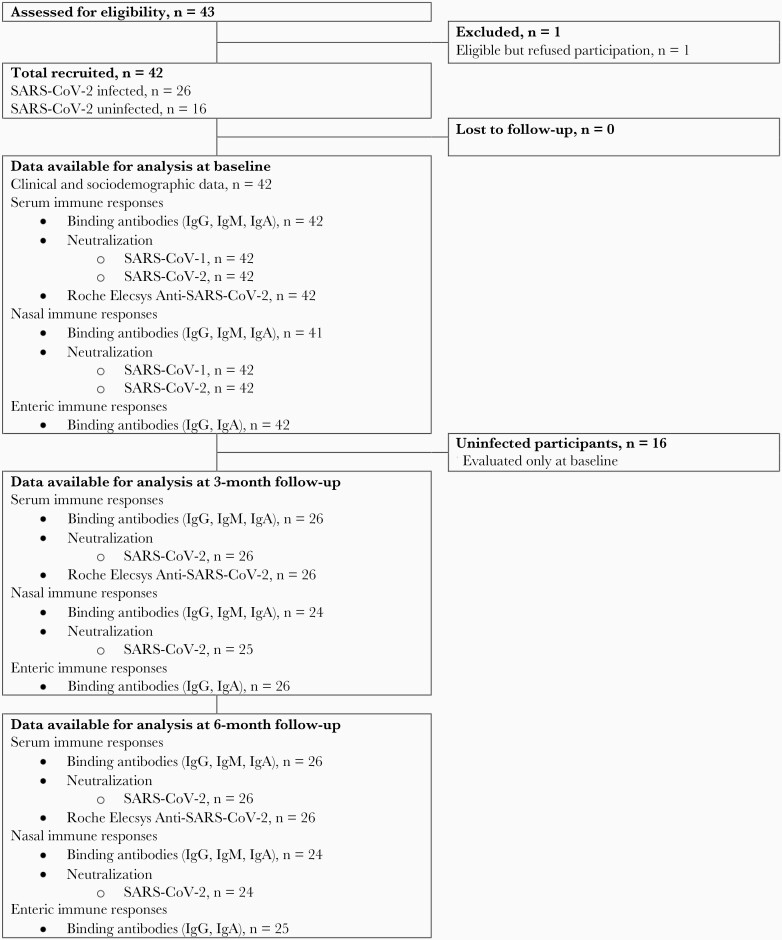
Figure 1.
Figure 1.
Follow-up of study population at Dartmouth Hitchcock Medical Center (Lebanon, NH) between 8 April 2020 and 4 February 2021. Abbreviations: Ig, immunoglobulin; SARS-CoV-2, severe acute respiratory syndrome coronavirus 2.
Figure 2.
Figure 2.
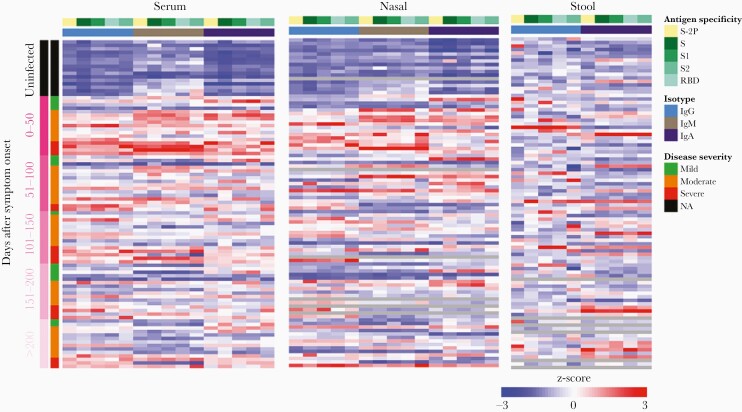
Heat-map overview of binding antibody responses to specific SARS-CoV-2 proteins in serum, nasal wash, and stool in infected and uninfected participants at Dartmouth Hitchcock Medical Center (Lebanon, NH) between 17 April 2020 and 4 February 2021. Abbreviations: Ig, immunoglobulin; NA, not applicable; RBD, receptor-binding domain; S, spike; SARS-CoV-2, severe acute respiratory syndrome coronavirus 2.
Figure 3.
Figure 3.
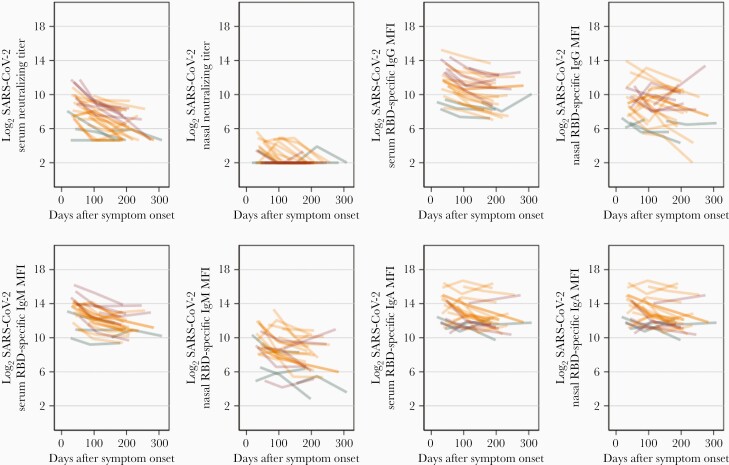
Longitudinal profile of serum and respiratory secretion neutralization after SARS-CoV-2 infection among 26 participants presenting with mild (n = 5, green), moderate (n = 15, orange), and severe (n = 6, red) COVID-19. Abbreviations: COVID-19, coronavirus disease 2019; Ig, immunoglobulin; MFI, mean fluorescence intensity; RBD, receptor-binding domain; SARS-CoV-2, severe acute respiratory syndrome coronavirus 2.
Figure 4.
Figure 4.
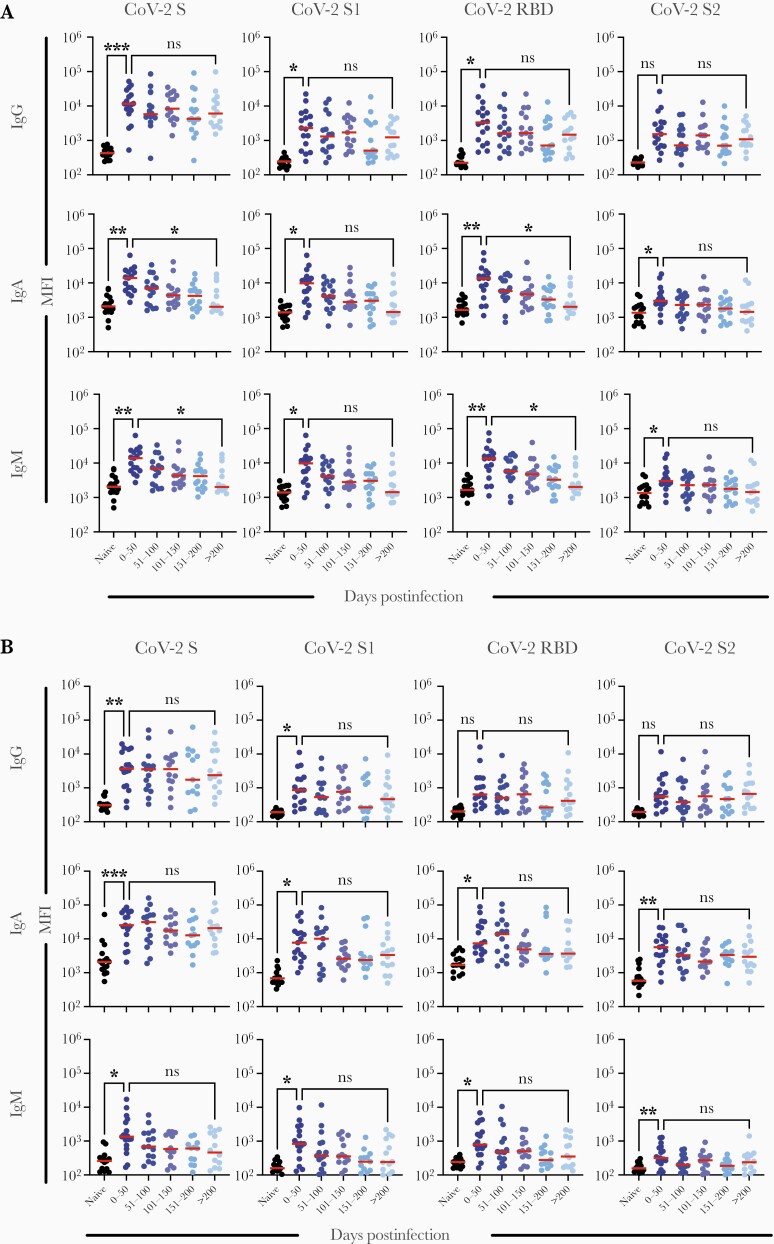
Changes over time in binding antibodies to portions of the coronavirus spike protein by Ig class in (A) serum and (B) respiratory secretions (n = 26). Abbreviations: CoV-2, coronavirus 2; Ig, immunoglobulin; MFI, mean fluorescence intensity; RBD, receptor-binding domain; S, spike.
Figure 5.
Figure 5.
Pairwise spearman rank correlation coefficients of serum and respiratory SARS-CoV-2–specific neutralization, RBD binding antibody levels, participant age and severity (ie, in increasing rank order), and binding antibody levels in serum and nasal wash collected at the first study visit in SARS-CoV-2–infected participants (n = 25). The narrowness of the ellipse and intensity of the color indicate the strength of a given correlation coefficient, and the corresponding numerical values are defined by the vertical bar on the right. Abbreviations: Ig, immunoglobulin; Neutr., neutralization; RBD, receptor-binding domain; Resp., respiratory; SARS-CoV-2, severe acute respiratory syndrome coronavirus 2.

References

    1. Wu F, Zhao S, Yu B, et al. A new coronavirus associated with human respiratory disease in China. Nature 2020; 579:265–9. - PMC - PubMed
    1. John Hopkins University of Medicine. Coronavirus resource center. https://coronavirus.jhu.edu. Accessed 4 January 2022.
    1. Pearce N, Lawlor DA, Brickley EB.. Comparisons between countries are essential for the control of COVID-19. Int J Epidemiol 2020; 49:1059–62. - PMC - PubMed
    1. Mlcochova P, Kemp S, Dhar MS, et al. SARS-CoV-2 B.1.617.2 Delta variant replication and immune evasion. Nature 2021; 599:114–9. - PMC - PubMed
    1. Meng B, Abdullahi A, Ferreira IATM, et al. Altered TMPRSS2 usage by SARS-CoV-2 Omicron impacts infectivity and fusogenicity. Nature 2022; 603:706–14. - PMC - PubMed

Publication types