


Antibacterial activities of plant leaf extracts against multi-antibiotic resistant Staphylococcus aureus associated with skin and soft tissue infections
- PMID: 35189869
- PMCID: PMC8862250
- DOI: 10.1186/s12906-022-03527-y
Antibacterial activities of plant leaf extracts against multi-antibiotic resistant Staphylococcus aureus associated with skin and soft tissue infections
Abstract
Background: The antibacterial activities of aqueous leaf extracts of Moringa oleifera, Vernonia amygdalina, Azadirachta indica and Acalypha wilkesiana against multidrug resistance (MDR) Staphylococcus aureus associated with skin and soft tissue infections were investigated.
Methods: Staphylococcus aureus (n = 183) from the skin and soft tissue infections with evidence of purulent pus, effusions from aspirates, wounds, and otorrhea were biotyped, and evaluated for biofilm production. The phenotypic antibiotic resistance and MDR strains susceptibility to plant leaves extract were determined using disc diffusion and micro-broth dilution assays respectively. The correlation of plant extract bioactive components with inhibitory activities was determined.
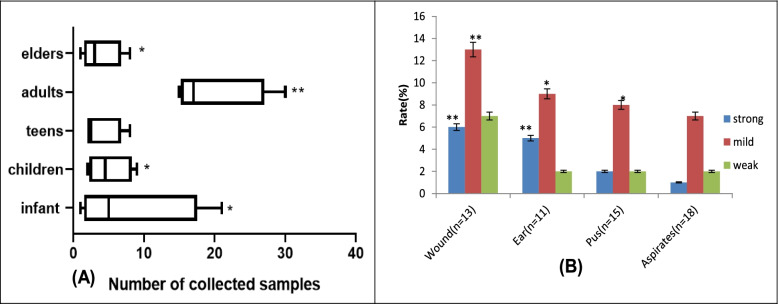
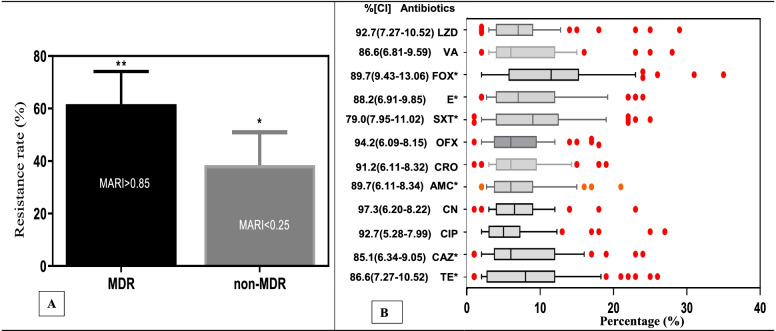
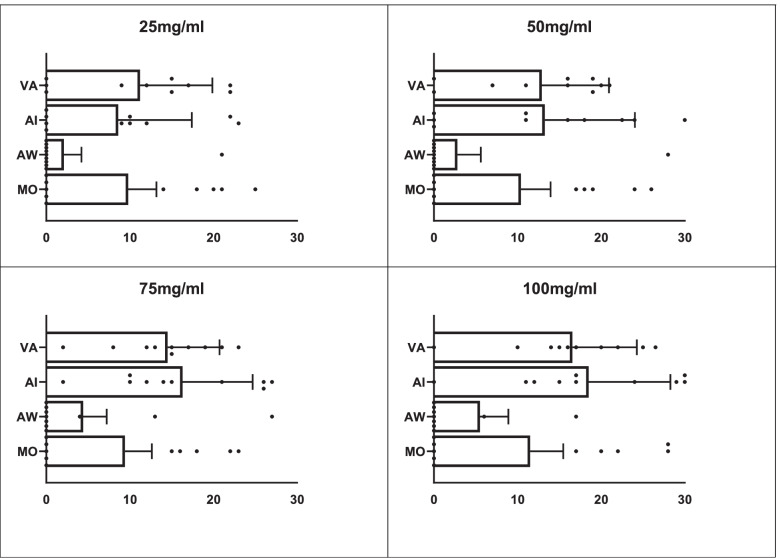
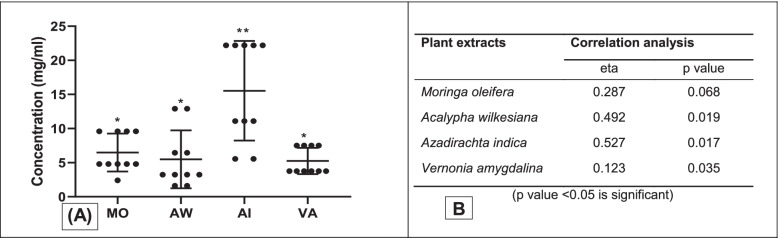
Results: High occurrence rate of S. aureus were recorded among infant and adult age groups and 13.2% mild biofilm producers from the wound (p < 0.05). Of 60.2% MDR strains with overall significant MARI of more than 0.85 (p < 0.05), high resistant rates to linozidine (92.7%; 95% CI:7.27-10.52), ofloxacin (94.2%; 95% CI:6.09-8.15), chloramphenicol (91.2%; 95% CI:6.11-8.32), gentamicin (97.3%; 95% CI:6.20-8.22), ciprofloxacin (92.7%; 95% CI: 5.28-7.99) and vancomycin (86.6%; 95% CI:6.81-9.59) were observed. Vernonia amygdalina and Azadirachta indica showed significant antimicrobial activity at 100 mg/ml and 75 mg/ml, with low susceptibility of less than 10% to 25 mg/ml, 50 mg/ml, and 75 mg/ml Moringa oleifera. Alkaloids, saponin and terpenoids were significant in Moringa oleifera, Acalypha wilkesiana, Azadirachta indica and Vernonia amygdalina leaves extracts (p < 0.05). High inhibitory concentrations at IC50; 3.23, 3.75 and 4.80 mg/ml (p = 0.02, CI: - 0.08 - 11.52) and IC90; 12.9, 7.5, and 9.6 mg/ml (p = 0.028, CI: 2.72-23.38) were shown by Acalypha wilkesiana, Vernonia amygdalina and Moringa oleifera respectively. Comparative outcome of the plant extracts showed Acalypha wilkesiana, Vernonia amygdalina and Moringa oleifera to exhibit significant inhibition activities (p < 0.05) compared to other extracts. Significant median inhibitory concentration (15.3 mg/ml) of Azadirachta indica were observed (p < 0.01) and strong associations of phytochemical compounds of Azadirachta indica (eta = 0.527,p = 0.017), Vernonia amygdalina (eta = 0.123,p = 0.032) and Acalypha wilkesiana (eta = 0.492,p = 0.012) with their respective inhibitory values.
Conclusion: Observed high occurrence rate of skin and soft tissue infections caused by biofilm-producing MDR S. aureus requires alternative novel herbal formulations with rich bioactive compounds from Moringa oleifera, Acalypha wilkesiana, Azadirachta indica and Vernonia amygdalina as skin therapeutic agents.
Keywords: Antibiotic resistance; Biofilm; Plant extracts; S. aureus; Skin and soft tissue infections.
© 2022. The Author(s).
Conflict of interest statement
The authors declare that they have no competing interests
Figures
References
-
- Olaniyi R, Pozzi C, Grimaldi L, Bagnoli F. Staphylococcus aureus-Associated Skin and Soft Tissue Infections: Anatomical Localization, Epidemiology, Therapy and Potential Prophylaxis. Curr Top Microbiol Immunol. 2017;409:199–227. - PubMed
-
- Bouvet C, Gjoni S, Zenelaj B, Lipsky BA, Hakko E, Uçkay I. Staphylococcus aureus soft tissue infection may increase the risk of subsequent staphylococcal soft tissue infections. Int J Infect Dis. 2017;60:44–48. - PubMed
MeSH terms
Substances
LinkOut - more resources
Full Text Sources
Medical
