


Initial experience of temperature-controlled irrigated radiofrequency ablation for ischaemic cardiomyopathy ventricular tachycardia ablation
- PMID: 35192098
- PMCID: PMC10066113
- DOI: 10.1007/s10840-022-01158-4
Initial experience of temperature-controlled irrigated radiofrequency ablation for ischaemic cardiomyopathy ventricular tachycardia ablation
Abstract
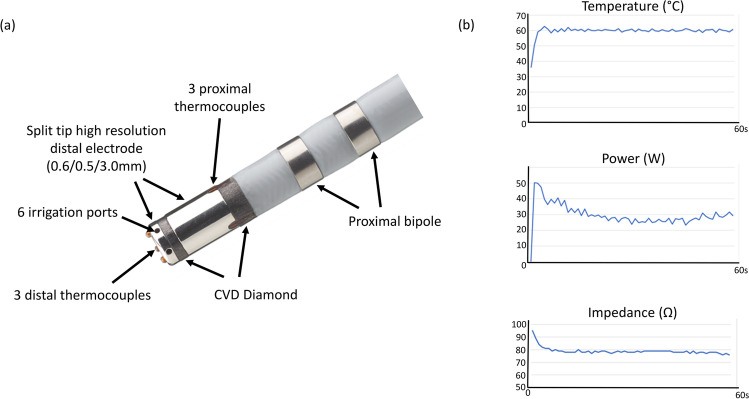
Background: The DiamondTemp ablation (DTA) catheter system delivers high power, open-irrigated, temperature-controlled radiofrequency (RF) ablation. This novel ablation system has not been previously used for ventricular tachycardia (VT) ablation.
Objective: Feasibility of using the DTA catheter system for VT ablation in ischaemic cardiomyopathy (ICM) patients.
Method: Ten ICM patients with optimal anti-arrhythmic drug therapy and implantable cardiac defibrillators (ICD) were recruited. VT inducibility testing was performed at the end of the procedure. ICD data for device detected VT episodes and device treated VT episodes were collected for 6-months pre- and post-ablation.
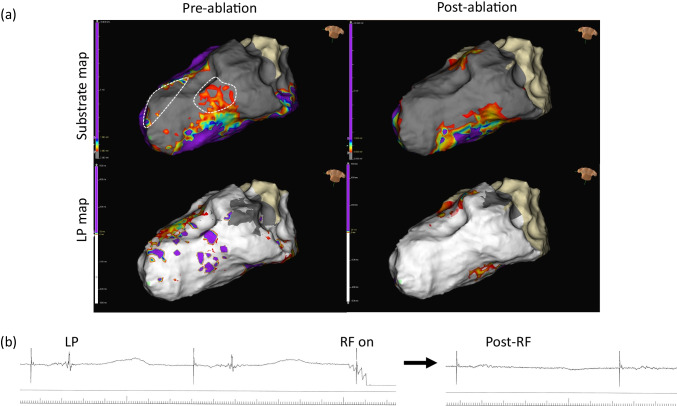
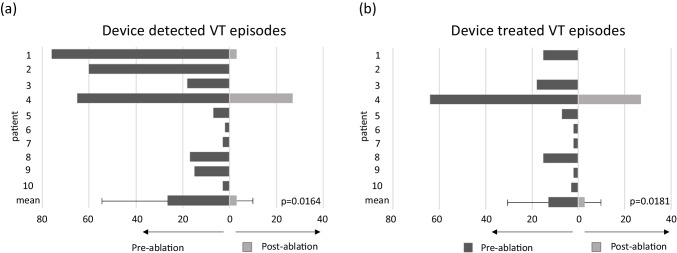
Results: Substrate analysis demonstrated reductions in the borderzone area of 4.4 cm2 (p = 0.026) and late potential area of 3.5 cm2 (p = 0.0449) post-ablation, with reductions in the mean bipolar and unipolar voltages of the ablation target areas (0.14 mV (p = 0.0007); 0.59 mV (p = 0.0072) respectively). Complete procedural success was achieved in 9 procedures. Post-ablation VT inducibility testing was not performed in 1 procedure due to a steam pop complication resulting in pericardial tamponade requiring drainage. Mean follow-up of 214 ± 33 days revealed an 88% reduction in total VT episodes (n = 266 median 16 [IQR 3-57] to n = 33 median 0; p = 0.0164) and 77% reduction in ICD therapies (n = 128 median 5 [IQR 2-15] to n = 30 median 0; p = 0.0181).
Conclusion: The DTA system resulted in adequate lesion characteristics with effective substrate modification, acute procedural success and improved outcomes at intermediate-term follow-up. Randomised controlled trials are required to compare the performance of the DTA system against conventional ablation catheters.
Keywords: Feasibility; Ischaemic cardiomyopathy; Temperature-controlled irrigated radiofrequency ablation; Ventricular tachycardia.
© 2022. The Author(s).
Conflict of interest statement
The authors declare no competing interests.
Figures
References
-
- Sapp JL, Wells GA, Parkash R, et al. Ventricular tachycardia ablation versus escalation of antiarrhythmic drugs. N Engl J Med. 2016;375:111–21. - PubMed
-
- Kuck KH, Schaumann A, Eckardt L, et al. Catheter ablation of stable ventricular tachycardia before defibrillator implantation in patients with coronary heart disease (VTACH): a multicentre randomised controlled trial. Lancet. 2010;375:31–40. - PubMed
-
- Haines DE, Verow AF. Observations on electrode-tissue interface temperature and effect on electrical impedance during radiofrequency ablation of ventricular myocardium. Circulation. 1990;82:1034–8. - PubMed
-
- Kautzner J, Albenque JP, Natale A, et al. A novel temperature-controlled radiofrequency catheter ablation system used to treat patients with paroxysmal atrial fibrillation. JACC Clin Electrophysiol. 2021;7:352–63. - PubMed
MeSH terms
LinkOut - more resources
Full Text Sources
Medical
