


Enhanced resting-state EEG source functional connectivity within the default mode and reward-salience networks in internet gaming disorder
- PMID: 35193713
- PMCID: PMC9386438
- DOI: 10.1017/S0033291722000137
Enhanced resting-state EEG source functional connectivity within the default mode and reward-salience networks in internet gaming disorder
Abstract
Background: The two key mechanisms affected by internet gaming disorder (IGD) are cognitive and reward processing. Despite their significance, little is known about neurophysiological features as determined using resting-state electroencephalography (EEG) source functional connectivity (FC).
Methods: We compared resting-state EEG source FC within the default mode network (DMN) and reward/salience network (RSN) between patients with IGD and healthy controls (HCs) to identify neurophysiological markers associated with cognitive and reward processing. A total of 158 young male adults (79 patients with IGD and 79 HCs) were included, and the source FC of the DMN and RSN in five spectral bands (delta, theta, alpha, beta, and gamma) were assessed.
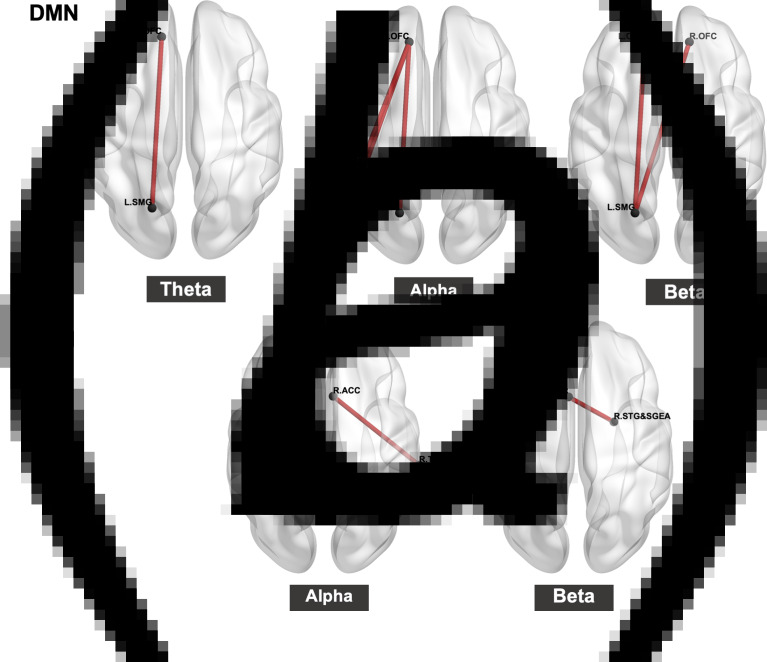
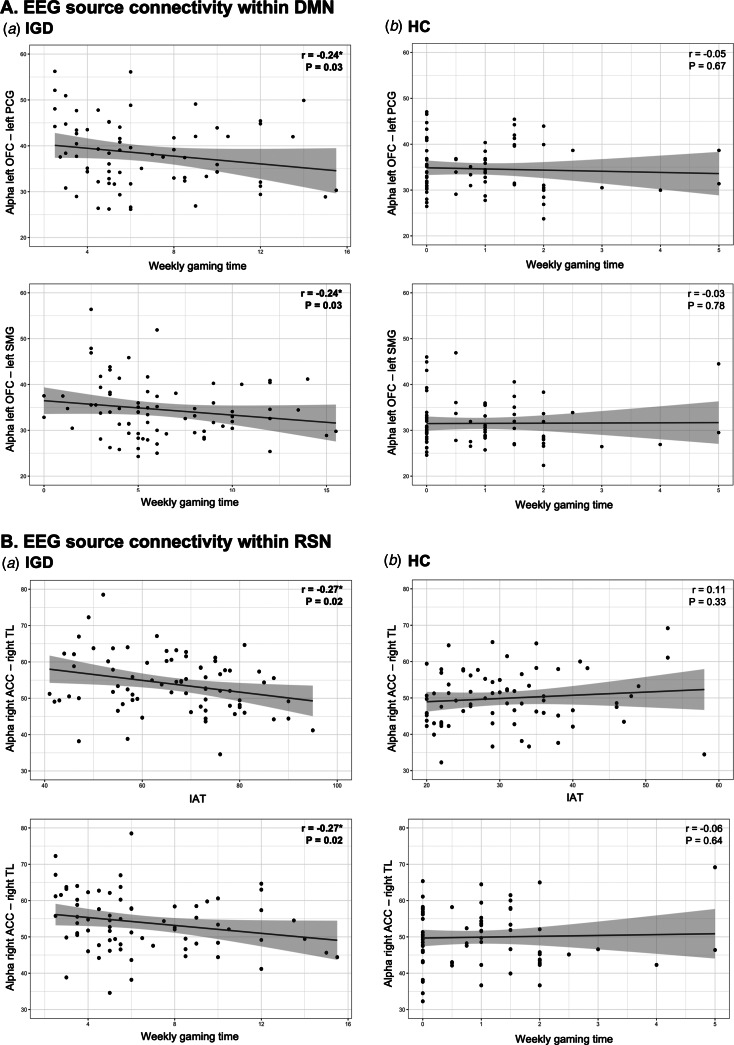
Results: Patients with IGD showed increased theta, alpha, and beta connectivity within the DMN between the orbitofrontal cortex and parietal regions compared with HCs. In terms of RSN, patients with IGD exhibited elevated alpha and beta connectivity between the anterior cingulate gyrus and temporal regions compared with HCs. Furthermore, patients with IGD showed negative correlations between the severity of IGD symptoms and/or weekly gaming time and theta and alpha connectivity within the DMN and theta, alpha, and beta connectivity within the RSN. However, the duration of IGD was not associated with EEG source FC.
Conclusions: Hyper-connectivities within the DMN and RSN may be considered potential state markers associated with symptom severity and gaming time in IGD.
Keywords: Default mode network; electroencephalography; internet gaming disorder; reward-salience network; source connectivity.
Figures
References
-
- American Psychiatric Association. (2013). Diagnostic and statistical manual of mental disorders (DSM-5). Washington, DC: American Psychiatric Publishing.
-
- Beck, A. T., Steer, R. A., & Brown, G. (1996). Beck depression inventory–II. San Antonio, TX: Psychological Assessment.
Publication types
MeSH terms
LinkOut - more resources
Full Text Sources
