


Evidence Mapping of 23 Systematic Reviews of Traditional Chinese Medicine Combined With Western Medicine Approaches for COVID-19
- PMID: 35197851
- PMCID: PMC8860227
- DOI: 10.3389/fphar.2021.807491
Evidence Mapping of 23 Systematic Reviews of Traditional Chinese Medicine Combined With Western Medicine Approaches for COVID-19
Abstract
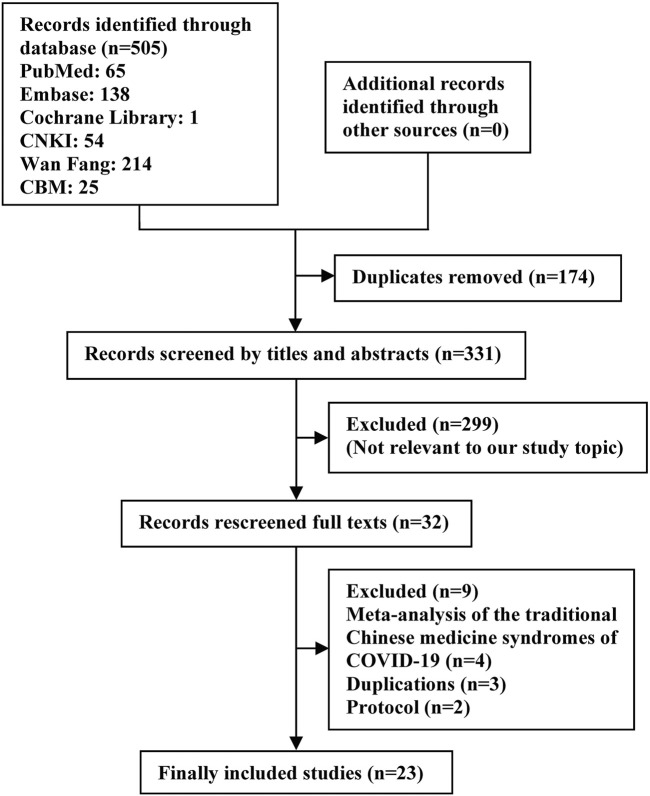
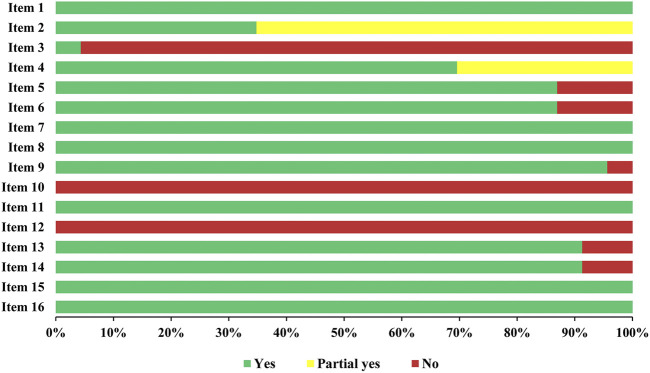
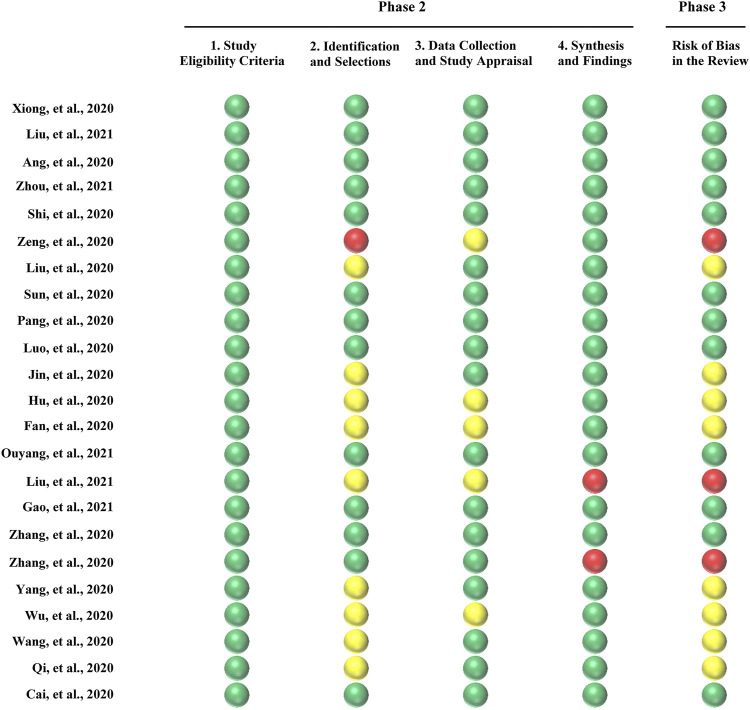
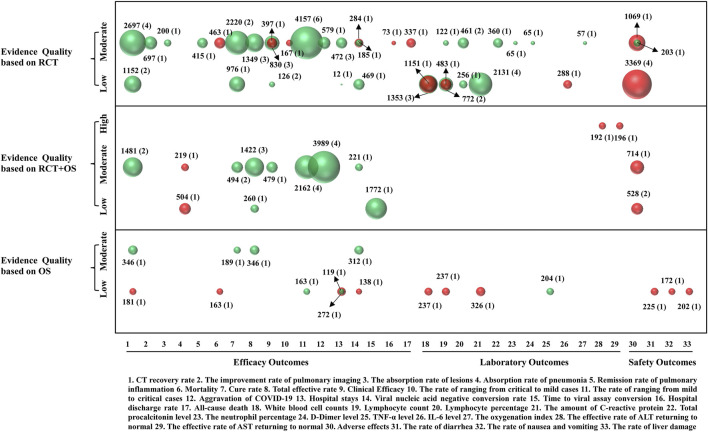
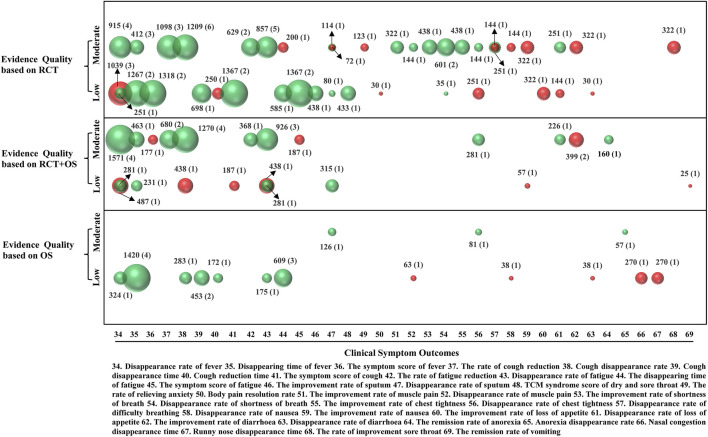
Background: Coronavirus disease 2019 (COVID-19) has already spread around the world. The modality of traditional Chinese medicine (TCM) combined with Western medicine (WM) approaches is being used to treat COVID-19 patients in China. Several systematic reviews (SRs) are available highlighting the efficacy and safety of TCM combined with WM approaches in COVID-19 patients. However, their evidence quality is not completely validated. Purpose: We aimed to assess the methodological quality and the risk of bias of the included SRs, assess the evidence quality of outcomes, and present their trends and gaps using the evidence mapping method. Methods: PubMed, Cochrane Library, Embase, CNKI, CBM, and Wanfang Data were searched from inception until March 2021 to identify SRs pertaining to the field of TCM combined with WM approaches for COVID-19. The methodological quality of the SRs was assessed using the Assessment of Multiple Systematic Reviews 2 (AMSTAR 2), the risk of bias of the included SRs was assessed with the Risk of Bias in Systematic Review (ROBIS) tool, and the evidence quality of outcomes was assessed using the Grading of Recommendations Assessment, Development and Evaluation (GRADE) system. Results: In total, 23 SRs were found eligible. Twenty-one were rated of moderate confidence by AMSTAR 2, while 12 were rated at low risk using the ROBIS tool. In addition, most outcomes were graded as having moderate quality using the GRADE system. We found that the combined use of TCM and WM approaches could improve the CT recovery rate, effective rate, viral nucleic acid negative conversion rate, and the disappearance rate of fever, cough, and shortness of breath. Also, these approaches could decrease the conversion rate from mild to critical, white blood cell counts, and lymphocyte counts and shorten the time to viral assay conversion and the length of hospital stay. Conclusion: TCM combined with WM approaches had advantages in efficacy, laboratory, and clinical symptom outcomes of COVID-19, but the methodological deficiencies of SRs should be taken into consideration. Therefore, to better guide clinical practice in the future, the methodological quality of SRs should still be improved, and high-quality randomized controlled trials (RCTs) and observational studies should also be carried out.
Keywords: AMSTAR 2; COVID-19; ROBIS; evidence mapping; grade; systematic reviews; traditional Chinese medicine combined with Western medicine approaches.
Copyright © 2022 Zhang, Li, Chen, Zhao, Tian and Zhang.
Conflict of interest statement
The authors declare that the research was conducted in the absence of any commercial or financial relationships that could be construed as a potential conflict of interest.
Figures
References
-
- BBC News (2020). Worst Economic Crisis since 1930s Depression, IMF Says. Available at: https://www.bbc.com/news/business-52236936 (accessed April 20, 2021).
-
- Bougioukas K. I., Liakos A., Tsapas A., Ntzani E., Haidich A. B. (2018). Preferred Reporting Items for Overviews of Systematic Reviews Including Harms Checklist: A Pilot Tool to Be Used for Balanced Reporting of Benefits and Harms. J. Clin. Epidemiol. 93, 9–24. 10.1016/j.jclinepi.2017.10.002 - DOI - PubMed
-
- Cai X., Tang F., Ma W. K., Zhang S. Q. (2020). Meta-analysis of the Combination of Traditional Chinese and Western Medicine in the Treatment of COVID-19. J. Baotou. Med. Coll. 36, 95–98. 10.16833/j.cnki.Jbmc.2020.03.034 - DOI
Publication types
LinkOut - more resources
Full Text Sources
