


Research Hotspots and Trend Exploration on the Clinical Translational Outcome of Simulation-Based Medical Education: A 10-Year Scientific Bibliometric Analysis From 2011 to 2021
- PMID: 35198570
- PMCID: PMC8860229
- DOI: 10.3389/fmed.2021.801277
Research Hotspots and Trend Exploration on the Clinical Translational Outcome of Simulation-Based Medical Education: A 10-Year Scientific Bibliometric Analysis From 2011 to 2021
Abstract
Background: In recent decades, an increasing number of studies have focused on the clinical translational effect of simulation-based medical education (SBME). However, few scientific bibliometric studies have analyzed the research hotspots and publication trends. This study aimed to investigate research hotspots and future direction in the clinical translational outcome of SBME via bibliometrics.
Method: Relevant publications on the clinical translational outcomes of SBME from 2011 to 2021 were identified and retrieved from the Web of Science Core Collection (WOSCC). Software including VOSviewer (1.6.17) and CiteSpace (5.8R3) and a platform (bibliometric.com) were employed to conduct bibliographic and visualized analysis on the literature.
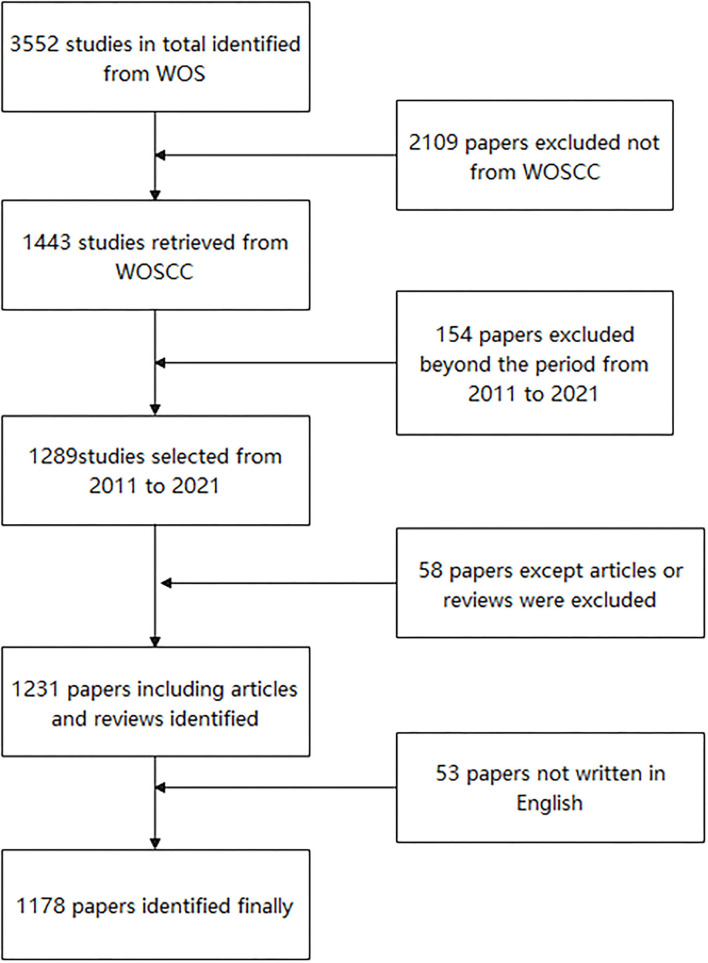
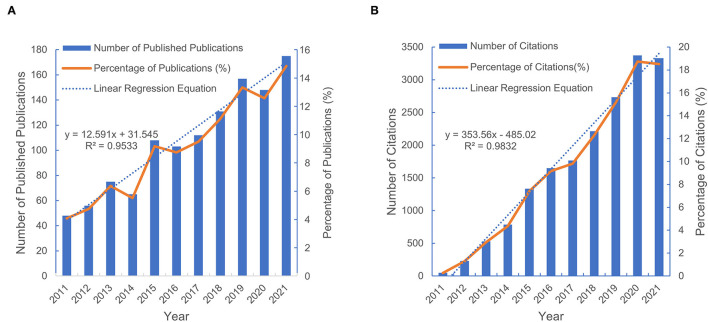
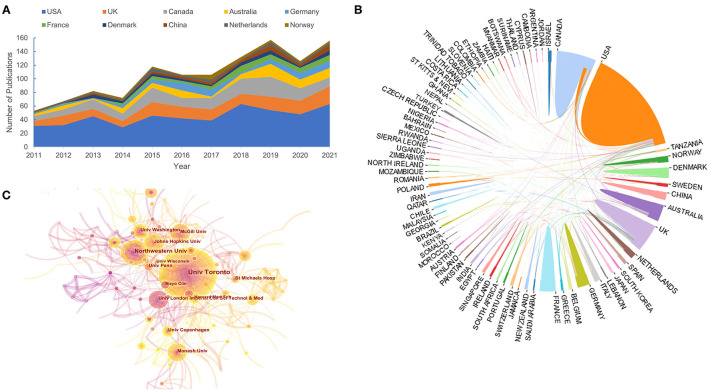
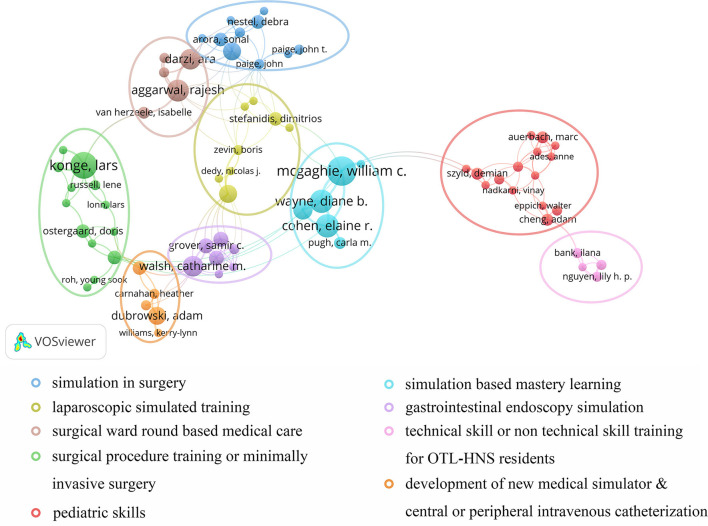
Results: A total of 1,178 publications were enrolled. An increasing number of publications were observed in the past decades from 48 in 2011 to 175 in 2021. The United States accounted for the largest number of publications (488, 41.4%) and citations (10,432); the University of Toronto and Northwestern University were the leading institutions. Academic Medicine was the most productive journal concerning this field. McGaghie W C and Konge L were the most influential authors in this area. The hot topic of the translational outcome of SBME was divided into 3 stages, laboratory phase, individual skill improvement, and patient outcome involving both technical skills and non-technical skills. Translational research of comprehensive impact and collateral outcomes could be obtained in the future.
Conclusion: From the overall trend of 10 years of research, we can see that the research is roughly divided into three phases, from laboratory stage, individual skill improvement to the patient outcomes, and comprehensive impacts such as skill retention and collateral effect as cost-effectiveness is a major trend of future research. More objective evaluation measurement should be designed to assess the diverse impact and further meta-analysis and randomized controlled trials are needed to provide more clinical evidence of SBME as translational science.
Keywords: bibliometric; clinical skill; scientific visualization analysis; simulation-based medical education (SBME); translational outcomes.
Copyright © 2022 Yao, Tang, Yi and Xiao.
Conflict of interest statement
The authors declare that the research was conducted in the absence of any commercial or financial relationships that could be construed as a potential conflict of interest.
Figures
References
-
- McGaghie WC, Issenberg SB, Cohen ER, Barsuk JH, Wayne DB. Does simulation-based medical education with deliberate practice yield better results than traditional clinical education? A meta-analytic comparative review of the evidence. Acad Med. (2011) 86:706–11. 10.1097/ACM.0b013e318217e119 - DOI - PMC - PubMed
-
- Price J, Naik V, Boodhwani M, Brandys T, Hendry P, Lam BK. A randomized evaluation of simulation training on performance of vascular anastomosis on a high-fidelity in vivo model: the role of deliberate practice. J Thorac Cardiovasc Surg. (2011) 142:496–503. 10.1016/j.jtcvs.2011.05.015 - DOI - PubMed
LinkOut - more resources
Full Text Sources
Miscellaneous
