Review
. 2022 Jan 31;9(2):47.
doi: 10.3390/jcdd9020047.

Cardiomyopathies in Children and Systemic Disorders When Is It Useful to Look beyond the Heart?

Affiliations
Review

Cardiomyopathies in Children and Systemic Disorders When Is It Useful to Look beyond the Heart?

Valentina Lodato et al. J Cardiovasc Dev Dis. .

Abstract

Cardiomyopathy (CMP) is a rare disease in the pediatric population, with a high risk of morbidity and mortality. The genetic etiology of CMPs in children is extremely heterogenous. These two factors play a major role in the difficulties of establishing standard diagnostic and therapeutic protocols. Isolated CMP in children is a frequent finding, mainly caused by sarcomeric gene variants with a detection rate that can reach up to 50% of analyzed cohorts. Complex multisystemic forms of pediatric CMP are even more heterogenous. Few studies in literature take into consideration this topic as the main core since it represents a rarity (systemic CMP) within a rarity (pediatric population CMP). Identifying etiology in this cohort is essential for understanding prognosis, risk stratification, eligibility to heart transplantation and/or mechanical-assisted procedures, preventing multiorgan complications, and relatives' recurrence risk calculation. The previous points represent a cornerstone in patients' empowerment and personalized medical care approach. The aim of this work is to propose a new approach for an algorithm in the setting of the diagnostic framework of systemic pediatric CMP. On the other hand, during the literature review, we noticed a relatively common etiologic pattern in some forms of complex/multisystem CMP. In other words, certain syndromes such as Danon, Vici, Alström, Barth, and Myhre syndrome share a common pathway of directly or indirectly defective "autophagy" process, which appears to be a possible initiating/triggering factor for CMPs. This conjoint aspect could be important for possible prognostic/therapeutic implications in this category of patients. However, multicentric studies detailed functional and experimental models are needed prior to deriving conclusions.

Keywords: cardiomyopathies; children; heterogeneity; multisystemic; personalized approach; syndromes.


Conflict of interest statement

The authors declare no conflict of interest.

Figures
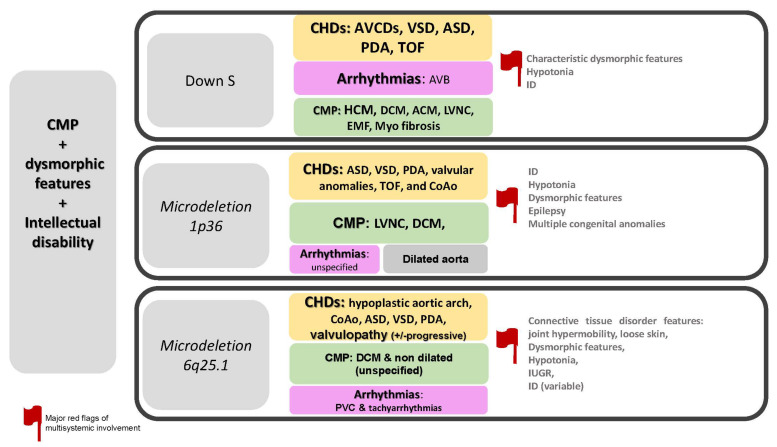
Figure 2
Figure 2
CMP + dysmorphic features + intellectual disability. Abbreviations: ACM; arrhythmogenic cardiomyopathy; ASD, atrial septal defects; AVB, atrioventricular block; AVCDs, atrioventricular canal defects; CHDs, congenital heart defects; CMP, cardiomyopathy; CoAo, coarctation of aorta; DCM, dilated cardiomyopathy; EMF, endomyocardial fibrosis; ID, intellectual disability; IUGR, intrauterine growth restriction; HCM; hypertrophic cardiomyopathy; LVNC, left ventricular non-compaction; PDA, patent ductus arteriosus; PVC, premature ventricular contraction; S, syndrome; TOF, tetralogy of Fallot; VSD, ventricular septal defect.
Figure 3
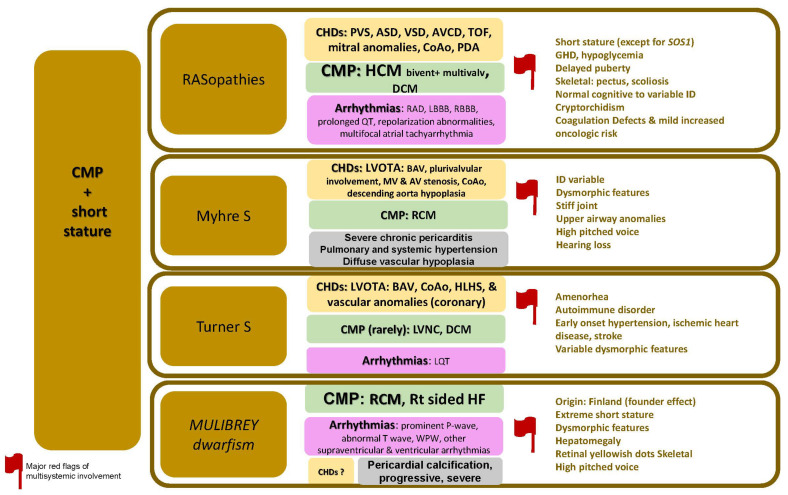
Figure 3
CMP + short stature. Abbreviations; ASD, atrial septal defects; AV, aortic valve; AVCDs, atrioventricular canal defects; BAV, bicuspid aortic valve; CHDs, congenital heart defects; CMP, cardiomyopathy; CoAo, coarctation of aorta; DCM, dilated cardiomyopathy; ID, intellectual disability; GHD, growth hormone deficiency; HCM; hypertrophic cardiomyopathy; HF, heart failure; HLHS, hypoplastic left heart syndrome; LBBB, left bundle branch block; LQT, long QT; LVNC, left ventricular non-compaction; PDA, patent ductus arteriosus; LVOTA, left ventricular outflow tract area; MV, mitral valve; PVS, pulmonary vein stenosis; RAD, right axis deviation; RBBB, right bundle branch block; RCM, restrictive cardiomyopathy; S, syndrome; Rt, right side; TOF, tetralogy of Fallot; VSD, ventricular septal defect; WPW, Wolff Parkinson White.
Figure 4
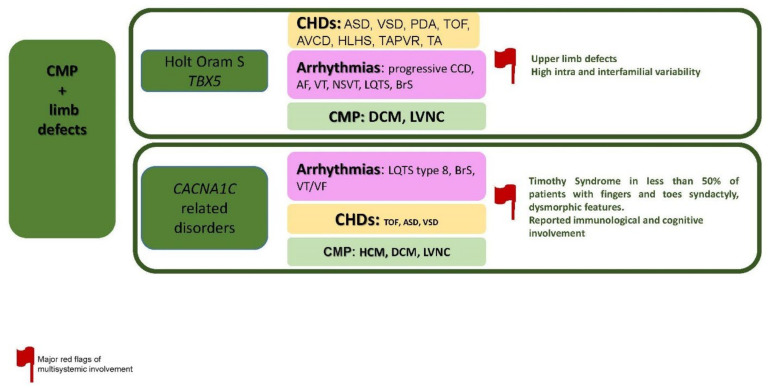
Figure 4
CMP + limb defects. Abbreviations: AF, atrial fibrillation; ASD, atrial septal defects; AVCD, atrioventricular canal defects; BrS, Brugada Syndrome; CCD, cardiac conduction defects; CHDs, congenital heart defects; CMP, cardiomyopathy; DCM, dilated cardiomyopathy; HCM; hypertrophic cardiomyopathy; HLHS, hypoplastic left heart syndrome; LQTS, long QT syndrome; LVNC, left ventricular non-compaction; NSVT, non-sustained ventricular tachycardia; PDA, patent ductus arteriosus; S, syndrome; TA, troncus arteriosus; TOF, tetralogy of Fallot; TAPVR, total anomalous pulmonary venous return; VF, ventricular fibrillation; VSD, ventricular septal defect; VT, ventricular tachycardia.
Figure 5
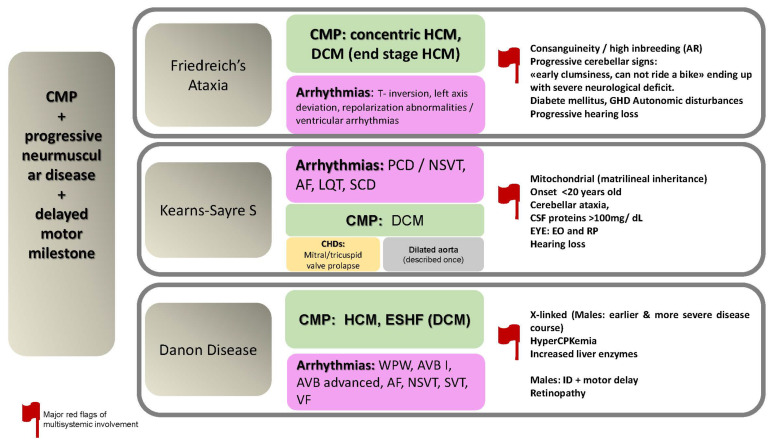
Figure 5
CMP + progressive neuromuscular disease + delayed motor milestone. Abbreviations: AF, atrial fibrillation; AR, autosomal recessive; AVB, atrioventricular block; CHDs, congenital heart defects; CMP, cardiomyopathy; CSF, cerebrospinal fluid; DCM, dilated cardiomyopathy; CPK; creatine phosphokinase; EO, external ophthalmoplegia; ESHF, end-stage heart failure; GHD, growth hormone deficiency; HCM; hypertrophic cardiomyopathy; ID, intellectual disability; LQT, long QT; NSVT, non-sustained ventricular tachycardia; PCD, progressive conduction defects; RP, retinitis pigmentosa; S, syndrome; SCD, sudden cardiac death; SVT, sustained ventricular tachycardia; VF, ventricular fibrillation; WPW, Wolff Parkinson White.
Figure 6
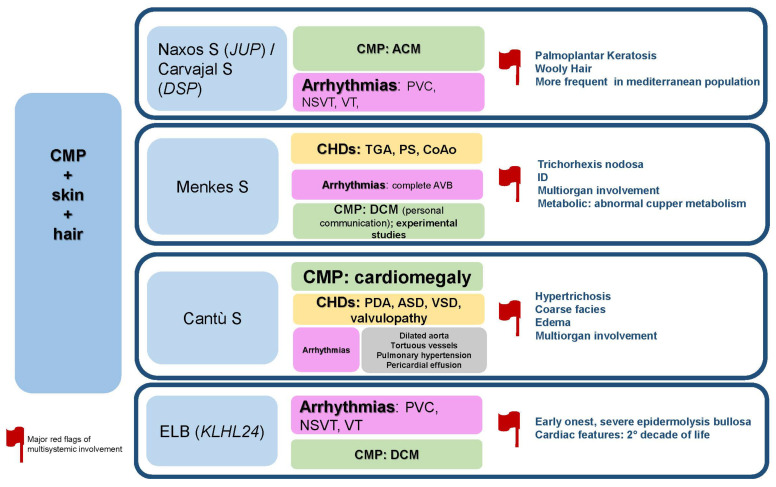
Figure 6
CMP + skin + hair. Abbreviations: ACM; arrhythmogenic cardiomyopathy; ASD, atrial septal defects; AVB, atrioventricular block; CHDs, congenital heart defects; CMP, cardiomyopathy; CoAo, coarctation of aorta; DCM, dilated cardiomyopathy; ID, intellectual disability; NSVT, non-sustained ventricular tachycardia; PDA, patent ductus arteriosus; PVC, premature ventricular contraction; PS, pulmonary stenosis; S, syndrome; TGA, transposition of great arteries, VSD, ventricular septal defect; VT, ventricular tachycardia.
Figure 7
Figure 7
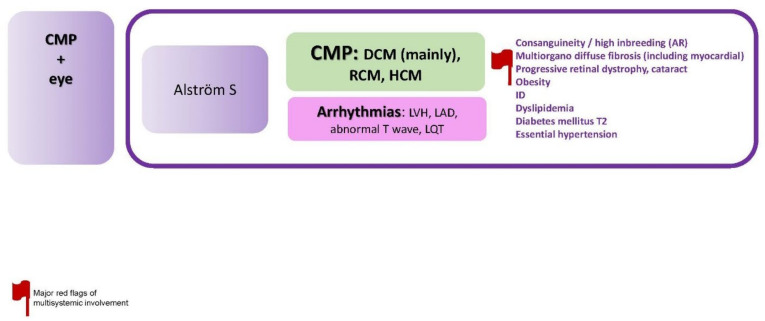
CMP + eye. Abbreviations: AR, autosomal recessive; CMP, cardiomyopathy; DCM, dilated cardiomyopathy; HCM; hypertrophic cardiomyopathy; ID, intellectual disability; LAD, left axis deviation; LQT, long QT; LVH, left ventricular hypertrophy; RCM, restrictive cardiomyopathy; S, syndrome; T2, type 2.
Figure 8
Figure 8
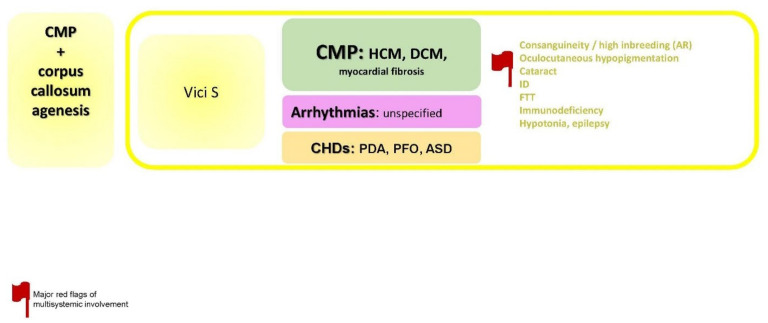
CMP + corpus callosum agenesis. Abbreviations: ASD, atrial septal defects; AR, autosomal recessive; CHDs, congenital heart defects; CMP, cardiomyopathy; DCM, dilated cardiomyopathy; FTT, failure to thrive; HCM; hypertrophic cardiomyopathy; ID, intellectual disability; PDA, patent ductus arteriosus; PFO, patent forame ovale.
Figure 9
Figure 9
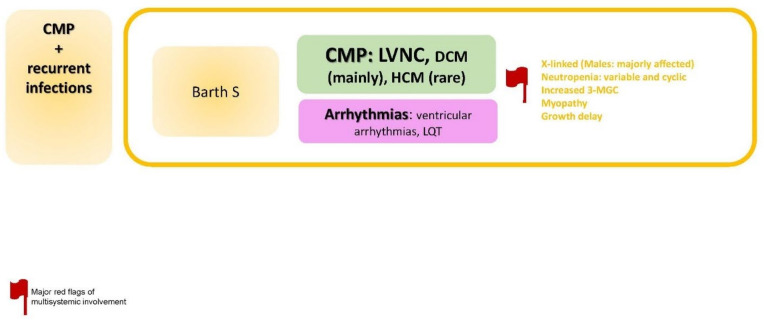
CMP + recurrent infections. Abbreviations: 3-MGC, methylglutaconic aciduria; CMP, cardiomyopathy; DCM, dilated cardiomyopathy; HCM; hypertrophic cardiomyopathy; LQT, long QT, LVNC, left ventricular non-compaction; S, syndrome.
Figure 10
Figure 10
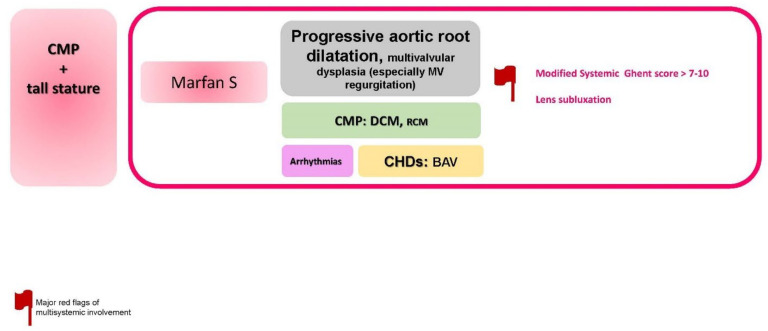
CMP + tall stature. Abbreviations: BAV, bicuspid aortic valve; CMP, cardiomyopathy; CHDs, congenital heart defects; DCM, dilated cardiomyopathy; MV, mitral valve, RCM, restrictive cardiomyopathy; S, syndrome.
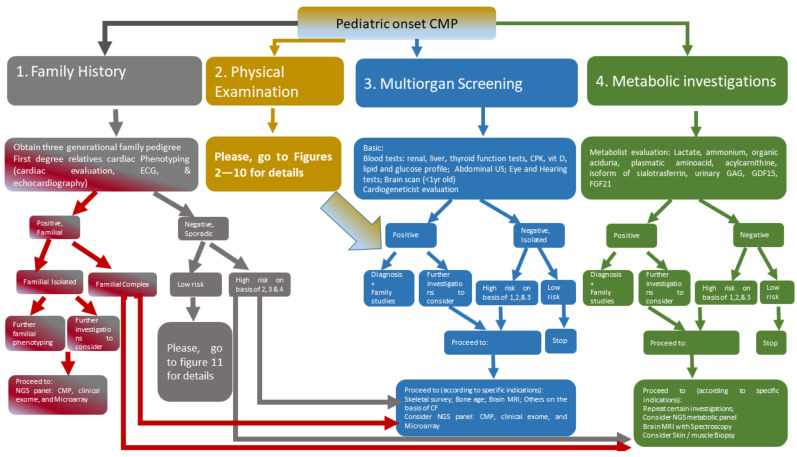
Figure 1
Figure 1
Diagnostic algorithm in pediatric-onset CMP. The algorithm brings light to a step-by-step method for the clinical approach when facing the management of a cohort with CMP in children. Abbreviations: CF, clinical features; CMP, cardiomyopathy; CPK; creatine phosphokinase; ECG electrocardiography; FGF21, fibroblast growth factor 21; GAG, glycosaminoglycan; MRI, magnetic resonance imaging; GDF15, growth differentiation factor 15; NGS, next-generation sequencing; US, ultrasound.
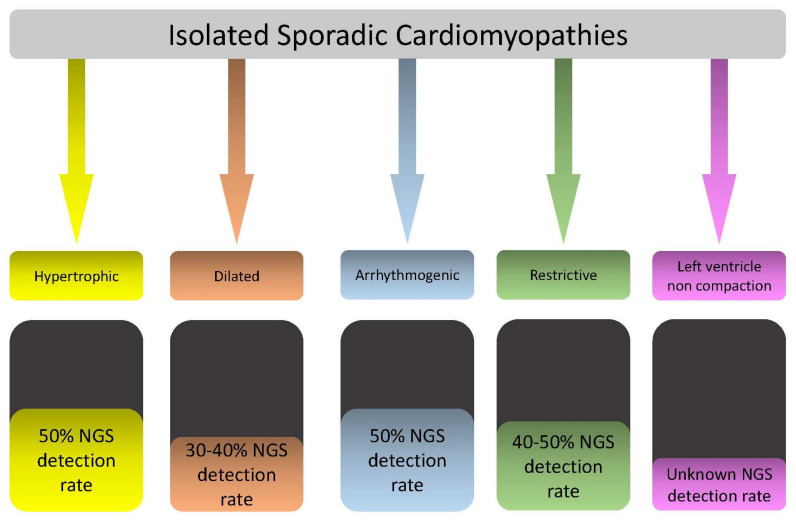
Figure 11
Figure 11
NGS detection rate in isolated CMPs. Abbreviations: CMPs, cardiomyopathies; NGS, next-generation sequencing.

References

    1. Lipshultz S.E., Sleeper L.A., Towbin J.A., Lowe A.M., Orav E.J., Cox G.F., Lurie P.R., McCoy K.L., McDonald M.A., Messere J.E., et al. The Incidence of Pediatric Cardiomyopathy in Two Regions of the United States. N. Engl. J. Med. 2003;348:1647–1655. doi: 10.1056/NEJMoa021715. - DOI - PubMed
    1. Nugent A.W., Daubeney P.E.F., Chondros P., Carlin J.B., Cheung M., Wilkinson L.C., Davis A.M., Kahler S.G., Chow C.W., Wilkinson J.L., et al. The Epidemiology of Childhood Cardiomyopathy in Australia. N. Engl. J. Med. 2003;348:1639–1646. doi: 10.1056/NEJMoa021737. - DOI - PubMed
    1. Andrews R.E., Fenton M.J., Ridout D.A., Burch M., British Congenital Cardiac Association New-Onset Heart Failure Due to Heart Muscle Disease in Childhood: A Prospective Study in the United Kingdom and Ireland: A Prospective Study in the United Kingdom and Ireland. Circulation. 2008;117:79–84. doi: 10.1161/CIRCULATIONAHA.106.671735. - DOI - PubMed
    1. Massin M.M., Astadicko I., Dessy H. Epidemiology of Heart Failure in a Tertiary Pediatric Center. Clin. Cardiol. 2008;31:388–391. doi: 10.1002/clc.20262. - DOI - PMC - PubMed
    1. Webber S.A. New-Onset Heart Failure in Children in the Absence of Structural Congenital Heart Disease. Circulation. 2008;117:11–12. doi: 10.1161/CIRCULATIONAHA.107.747469. - DOI - PubMed

LinkOut - more resources