


Association of pigment epithelium derived factor expression with cancer progression and prognosis: a meta-analysis study
- PMID: 35201465
- PMCID: PMC8777498
- DOI: 10.1007/s12672-021-00457-y
Association of pigment epithelium derived factor expression with cancer progression and prognosis: a meta-analysis study
Abstract
Background: Pigment epithelium derived factor (PEDF) is a secreted protein that strongly suppresses angiogenesis and directly inhibits cancer cells proliferation. The differential expression of PEDF has been observed in multiple types of human tumors. However, it is unclear as to how PEDF expression is associated with cancer progression and if PEDF could serve as a prognostic marker for cancer patients.
Methods: We performed a comprehensive search for the studies on PEDF expression in 14 top-ranked types of solid tumor cancer with the highest incidence. A systemic approach was used to screen for qualified studies and to extract data. Meta-analysis was performed to investigate if PEDF expression is associated with the TNM staging, tumor size, lymph node invasion, distal metastasis and pathological grade of tumor in a pan-cancer manner. A Kaplan-Meier curve was plotted with the digitally-reconstituted patient survival data to study the effect of PEDF expression on the prognosis of cancer patients.
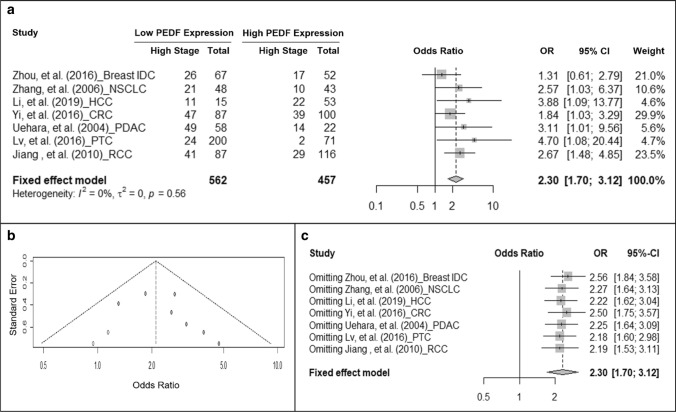
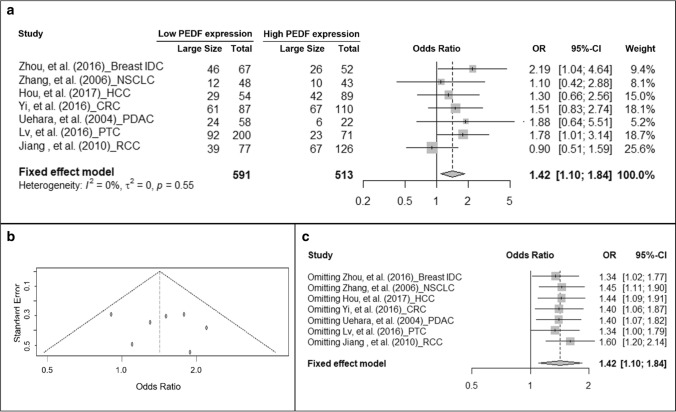
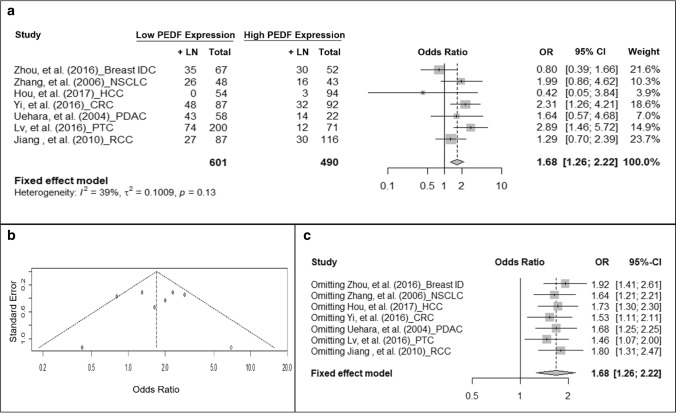
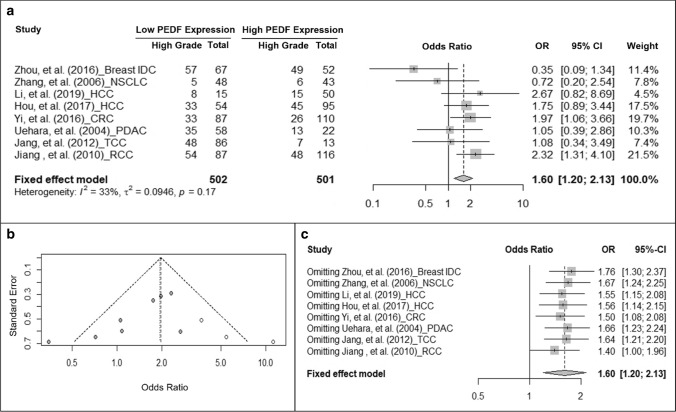
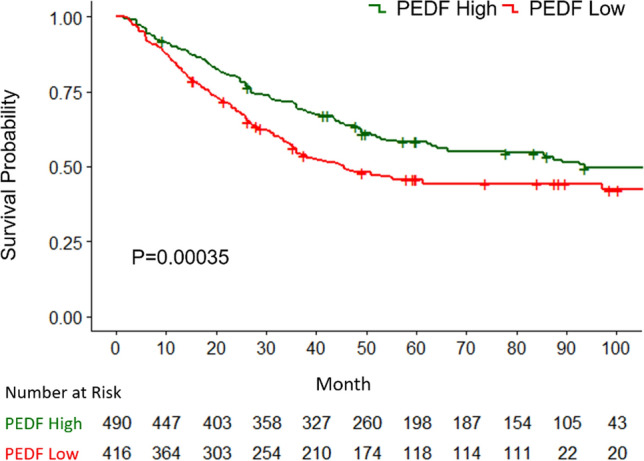
Results: A total of nine studies were selected, reviewed and analyzed. Meta-analysis suggested that decreased PEDF protein expression was associated with higher TNM staging (OR = 2.13, 95% CI: 1.61-2.81), larger tumor size (OR = 1.42, 95% CI: 1.1-1.84), larger possibility of lymph node invasion (OR = 1.68, 95% CI: 1.26-2.22) and higher pathological grade (OR = 1.6, 95% CI: 1.2-2.13). No correlation was found between PEDF expression and tumor distal metastasis, gender or age. In addition, low PEDF protein level in tumor tissue is correlated with shorter overall survival (P < 0.05).
Conclusions: Low PEDF protein expression in cancer is significantly associated with more advanced cancer progression and significantly poorer survival. The differential clinical outcome among patients with various PEDF expression suggests its prognostic value.
Keywords: Cancer progression; Meta-analysis; Overall survival; Pigment epithelium derived factor (PEDF); Prognosis.
© 2021. The Author(s).
Conflict of interest statement
The authors declare that they have no conflicts of interest to declare that are relevant to the content of this article.
Figures
References
-
- Tombran-Tink J, Johnson LV. Neuronal differentiation of retinoblastoma cells induced by medium conditioned by human RPE cells. Invest Ophthalmol Vis Sci. 1989;30(8):1700–1707. - PubMed
-
- Becerra SP, Palmer I, Kumar A, Steele F, Shiloach J, Notario V, Chader GJ. Overexpression of fetal human pigment epithelium-derived factor in Escherichia coli. A functionally active neurotrophic factor. J Biol Chem. 1993;268(31):23148–23156. - PubMed
-
- Carmeliet P, Jain RK. Angiogenesis in cancer and other diseases. Nature. 2000;407(6801):249–257. - PubMed
-
- Folkman J, Bach M, Rowe JW, Davidoff F, Lambert P, Hirsch C, Goldberg A, Hiatt HH, Glass J, Henshaw E. Tumor angiogenesis—therapeutic implications. New Engl J Med. 1971;285(21):1182–2000. - PubMed
-
- Dawson DW, Volpert OV, Gillis P, Crawford SE, Xu H, Benedict W, Bouck NP. Pigment epithelium-derived factor: a potent inhibitor of angiogenesis. Science. 1999;285(5425):245–248. - PubMed
LinkOut - more resources
Full Text Sources
Miscellaneous