


Mitophagy in carcinogenesis and cancer treatment
- PMID: 35201480
- PMCID: PMC8777571
- DOI: 10.1007/s12672-021-00454-1
Mitophagy in carcinogenesis and cancer treatment
Abstract
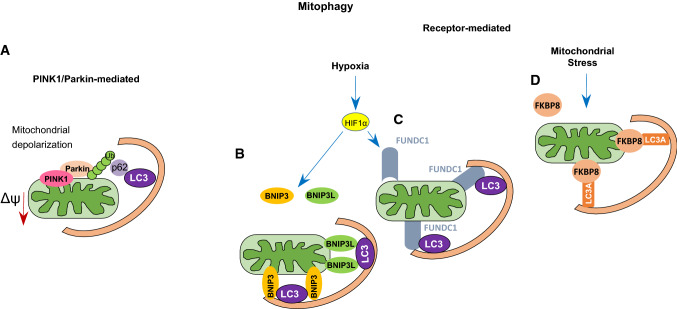
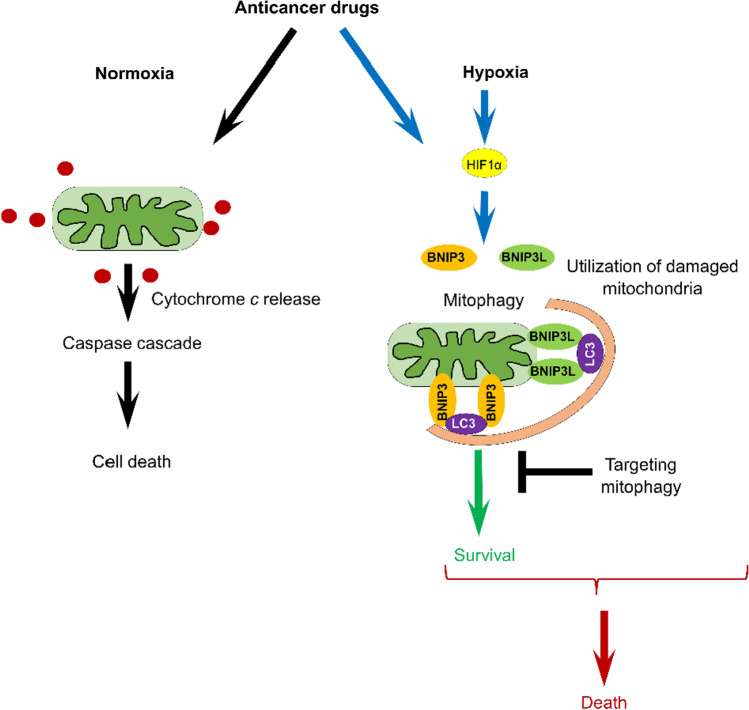
In order to maintain a functional mitochondrial network, cells have developed a quality control mechanism, namely mitophagy. This process can be induced through different pathways. The most studied is the so-called PINK1/Parkin pathway, which is associated with ubiquitylation of several mitochondrial proteins that were initially found to be related to Parkinson's disease. Another type of mitophagy is known as receptor-mediated mitophagy, which includes proteins, such as BNIP3 and BNIP3L, also known as Nix. Through these two mechanisms, mitophagy fulfills its functions and maintains cellular homeostasis. Here, we summarize the current knowledge about the mechanisms of mitophagy regulation and their interplay with cancer progression as well as anticancer treatment.
Keywords: Autophagy; Cancer; Homeostasis; Mitophagy.
© 2021. The Author(s).
Conflict of interest statement
Authors declare the absence of any competing financial interests. The authors declare no competing interests.
Figures
References
Publication types
Grants and funding
LinkOut - more resources
Full Text Sources