


O-GlcNAcylation links oncogenic signals and cancer epigenetics
- PMID: 35201498
- PMCID: PMC8777512
- DOI: 10.1007/s12672-021-00450-5
O-GlcNAcylation links oncogenic signals and cancer epigenetics
Abstract
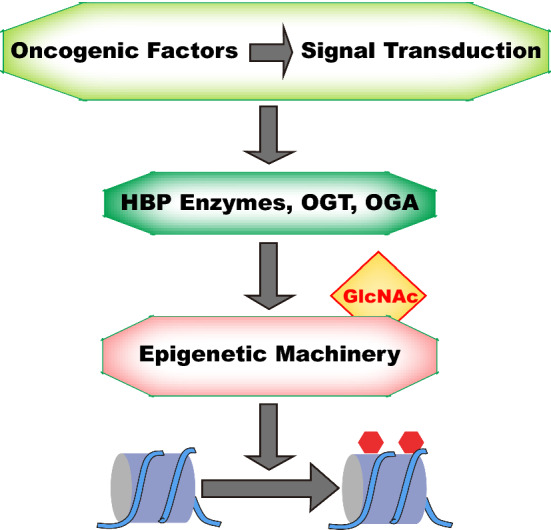
Prevalent dysregulation of epigenetic modifications plays a pivotal role in cancer. Targeting epigenetic abnormality is a new strategy for cancer therapy. Understanding how conventional oncogenic factors cause epigenetic abnormality is of great basic and translational value. O-GlcNAcylation is a protein modification which affects physiology and pathophysiology. In mammals, O-GlcNAcylation is catalyzed by one single enzyme OGT and removed by one single enzyme OGA. O-GlcNAcylation is affected by the availability of the donor, UDP-GlcNAc, generated by the serial enzymatic reactions in the hexoamine biogenesis pathway (HBP). O-GlcNAcylation regulates a wide spectrum of substrates including many proteins involved in epigenetic modification. Like epigenetic modifications, abnormality of O-GlcNAcylation is also common in cancer. Studies have revealed substantial impact on HBP enzymes and OGT/OGA by oncogenic signals. In this review, we will first summarize how oncogenic signals regulate HBP enzymes, OGT and OGA in cancer. We will then integrate this knowledge with the up to date understanding how O-GlcNAcylation regulates epigenetic machinery. With this, we propose a signal axis from oncogenic signals through O-GlcNAcylation dysregulation to epigenetic abnormality in cancer. Further elucidation of this axis will not only advance our understanding of cancer biology but also provide new revenues towards cancer therapy.
Keywords: Chromatin; Epigenetics; Hexoamine biosynthesis pathway; Histone; O-GlcNAcylation; OGA; OGT.
© 2021. The Author(s).
Conflict of interest statement
The authors declare no competing interests.
Figures

References
-
- Zachara NE, Hart GW. Cell signaling, the essential role of O-GlcNAc! Biochim Biophys Acta. 2006;1761:599–617. - PubMed
-
- Oki T, et al. cDNA cloning and mapping of a novel subtype of glutamine:fructose-6-phosphate amidotransferase (GFAT2) in human and mouse. Genomics. 1999;57:227–234. - PubMed
-
- Yang YR, et al. O-GlcNAcase is essential for embryonic development and maintenance of genomic stability. Aging Cell. 2012;11:439–448. - PubMed
Publication types
Grants and funding
LinkOut - more resources
Full Text Sources
Miscellaneous