Folic Acid-Adorned Curcumin-Loaded Iron Oxide Nanoparticles for Cervical Cancer
- PMID: 35201760
- PMCID: PMC8941513
- DOI: 10.1021/acsabm.1c01311
Folic Acid-Adorned Curcumin-Loaded Iron Oxide Nanoparticles for Cervical Cancer
Erratum in
-
Correction to "Folic Acid-Adorned Curcumin-Loaded Iron Oxide Nanoparticles for Cervical Cancer".ACS Appl Bio Mater. 2023 Feb 20;6(2):932. doi: 10.1021/acsabm.2c01014. Epub 2023 Jan 9. ACS Appl Bio Mater. 2023. PMID: 36622897 Free PMC article. No abstract available.
Abstract
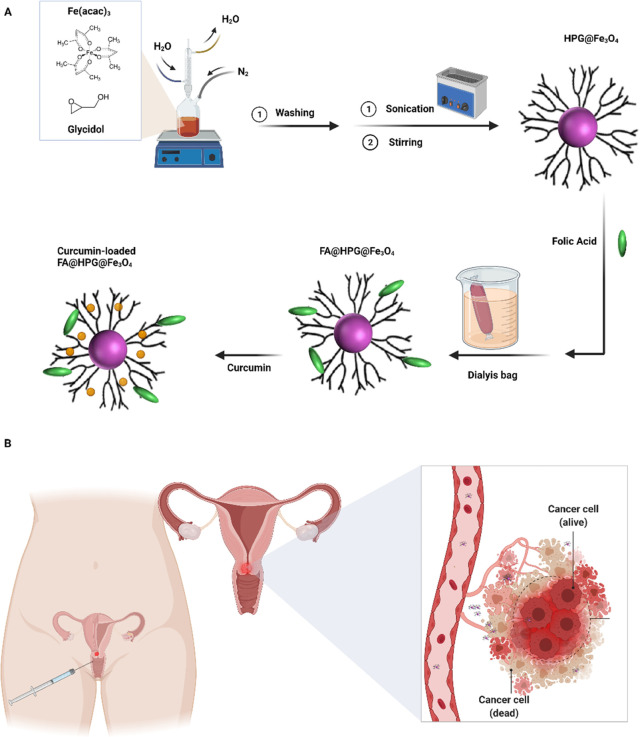
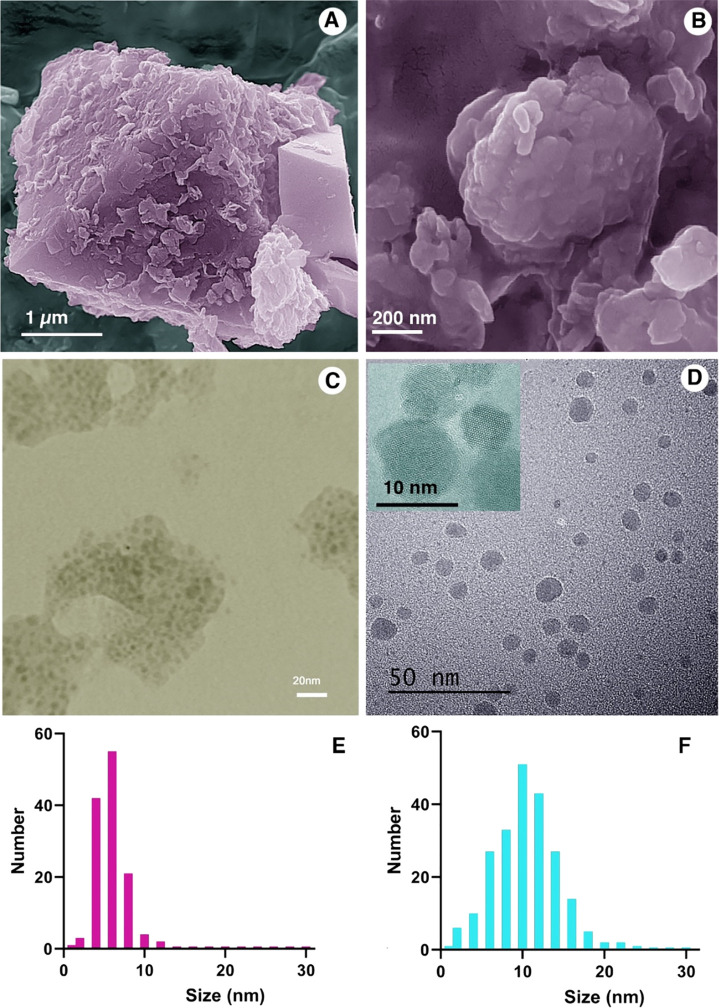
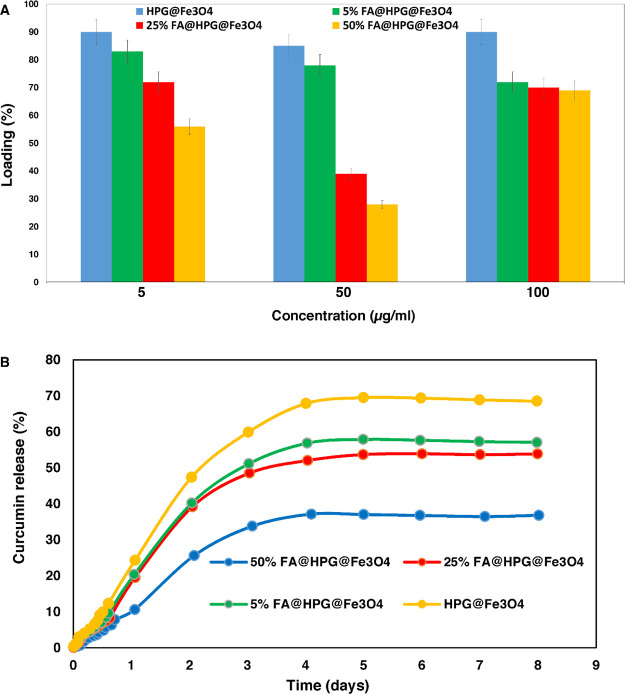
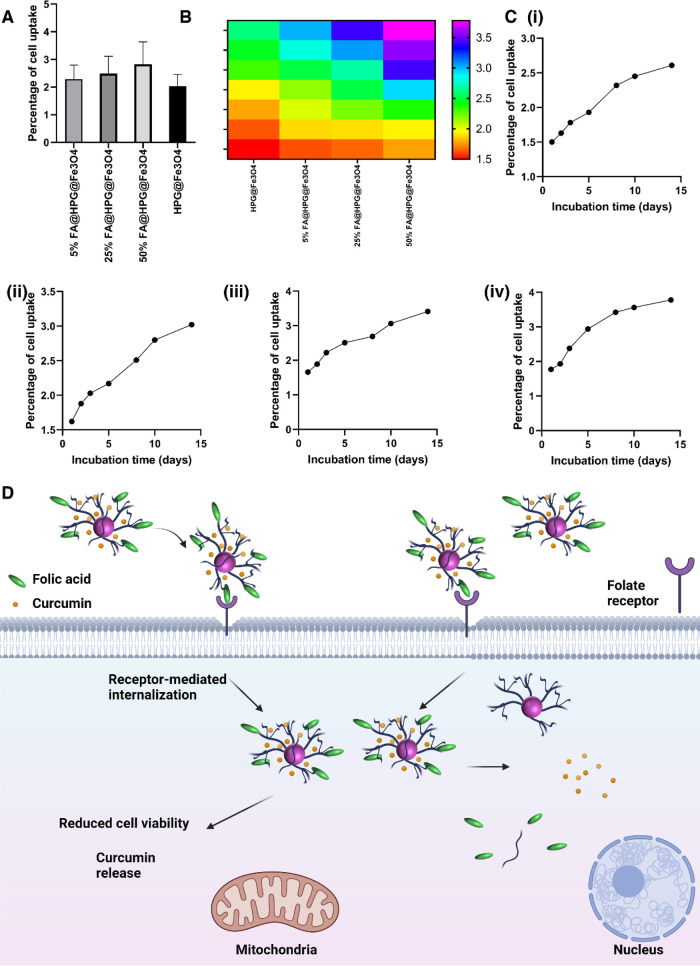
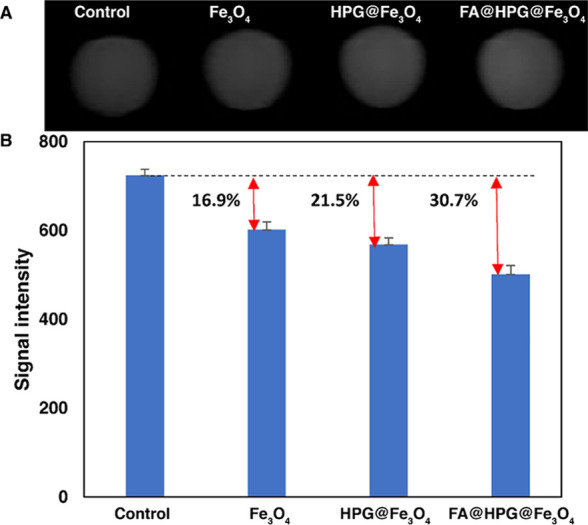
Cancer is a deadly disease that has long plagued humans and has become more prevalent in recent years. The common treatment modalities for this disease have always faced many problems and complications, and this has led to the discovery of strategies for cancer diagnosis and treatment. The use of magnetic nanoparticles in the past two decades has had a significant impact on this. One of the objectives of the present study is to introduce the special properties of these nanoparticles and how they are structured to load and transport drugs to tumors. In this study, iron oxide (Fe3O4) nanoparticles with 6 nm sizes were coated with hyperbranched polyglycerol (HPG) and folic acid (FA). The functionalized nanoparticles (10-20 nm) were less likely to aggregate compared to non-functionalized nanoparticles. HPG@Fe3O4 and FA@HPG@Fe3O4 nanoparticles were compared in drug loading procedures with curcumin. HPG@Fe3O4 and FA@HPG@Fe3O4 nanoparticles' maximal drug-loading capacities were determined to be 82 and 88%, respectively. HeLa cells and mouse L929 fibroblasts treated with nanoparticles took up more FA@HPG@Fe3O4 nanoparticles than HPG@Fe3O4 nanoparticles. The FA@HPG@Fe3O4 nanoparticles produced in the current investigation have potential as anticancer drug delivery systems. For the purpose of diagnosis, incubation of HeLa cells with nanoparticles decreased MRI signal enhancement's percentage and the largest alteration was observed after incubation with FA@HPG@Fe3O4 nanoparticles.
Keywords: MRI; cervical cancer therapy; curcumin; iron oxide nanoparticles; polyglycerol; targeted delivery.
Conflict of interest statement
The authors declare no competing financial interest.
Figures
References
-
- Paskeh M. D. A.; Mirzaei S.; Gholami M. H.; Zarrabi A.; Zabolian A.; Hashemi M.; Hushmandi K.; Ashrafizadeh M.; Aref A. R.; Samarghandian S. Cervical cancer progression is regulated by SOX transcription factors: Revealing signaling networks and therapeutic strategies. Biomed. Pharmacother. 2021, 144, 112335.10.1016/j.biopha.2021.112335. - DOI - PubMed
MeSH terms
Substances
LinkOut - more resources
Full Text Sources
Medical
Miscellaneous