. 2022 Feb 25;375(6583):889-894.
doi: 10.1126/science.abg9868. Epub 2022 Feb 24.

Minimizing treatment-induced emergence of antibiotic resistance in bacterial infections

Affiliations

Minimizing treatment-induced emergence of antibiotic resistance in bacterial infections

Mathew Stracy et al. Science. .

Abstract

Treatment of bacterial infections currently focuses on choosing an antibiotic that matches a pathogen's susceptibility, with less attention paid to the risk that even susceptibility-matched treatments can fail as a result of resistance emerging in response to treatment. Combining whole-genome sequencing of 1113 pre- and posttreatment bacterial isolates with machine-learning analysis of 140,349 urinary tract infections and 7365 wound infections, we found that treatment-induced emergence of resistance could be predicted and minimized at the individual-patient level. Emergence of resistance was common and driven not by de novo resistance evolution but by rapid reinfection with a different strain resistant to the prescribed antibiotic. As most infections are seeded from a patient's own microbiota, these resistance-gaining recurrences can be predicted using the patient's past infection history and minimized by machine learning-personalized antibiotic recommendations, offering a means to reduce the emergence and spread of resistant pathogens.


Conflict of interest statement

Competing interests

Authors declare that they have no competing interests.

Figures
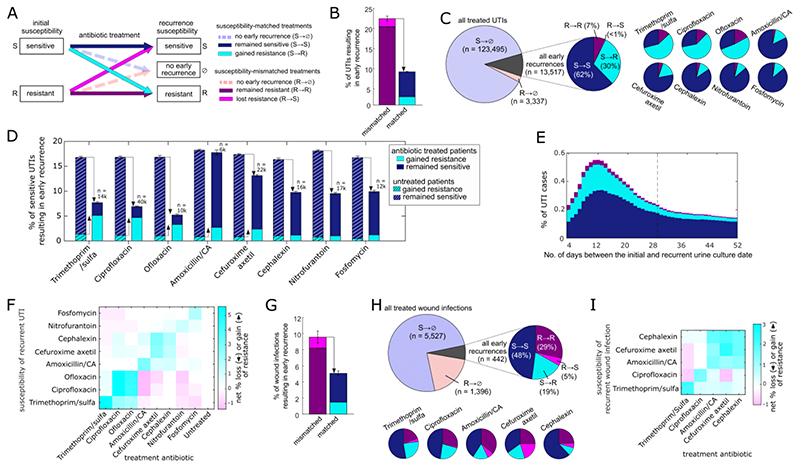
Figure 1
Figure 1. Post-treatment recurrences are strongly associated with the infection gaining resistance specifically to the treated antibiotic.
(A) Each infection case was categorized into one of six possible outcomes based on the susceptibility and treatment outcome. (B,G) The overall rate of recurrence for UTIs (B) and wound infections (G) following either susceptibility-matched or susceptibility-mismatched antibiotic treatments. (C,H) The percentage of all antibiotic treated UTIs (C) and wound infections (H) resulting in early recurrence, and a breakdown of these early recurrences by their pre- and post- treatment susceptibility to the treatment antibiotic, for all treated cases and for each of the most frequently prescribed antibiotics. (D) The rate of early recurrence for UTIs initially sensitive to the specific antibiotic and either treated with this antibiotic (solid bars) or untreated (hashed bars). The cases are further categorized based on whether they recurred still sensitive to the specified antibiotic (blue) or recurred while gaining resistance to it (cyan). Susceptibility-matched treatment decreases the overall risk of early recurrences (down-pointing arrow), yet increases the risk of recurrence with gained resistance (up-pointing arrows). (E) The rate of UTI recurrences occurring on each day following antibiotic treatment (7-day moving average). Each recurrent case is categorized by pre- and post- treatment susceptibility to the prescribed antibiotic as shown in panel A. The dashed vertical line shows the 28-day threshold used to define early recurrences. (F,I) The net change in susceptibility of early recurrent UTIs (F) and wound infections (I). For infections treated with each antibiotic (x-axis) or untreated (UTIs), the percentage of gain of resistance (cyan) minus loss of resistance (magenta) to each specified antibiotic is shown (y-axis).
Figure. 2
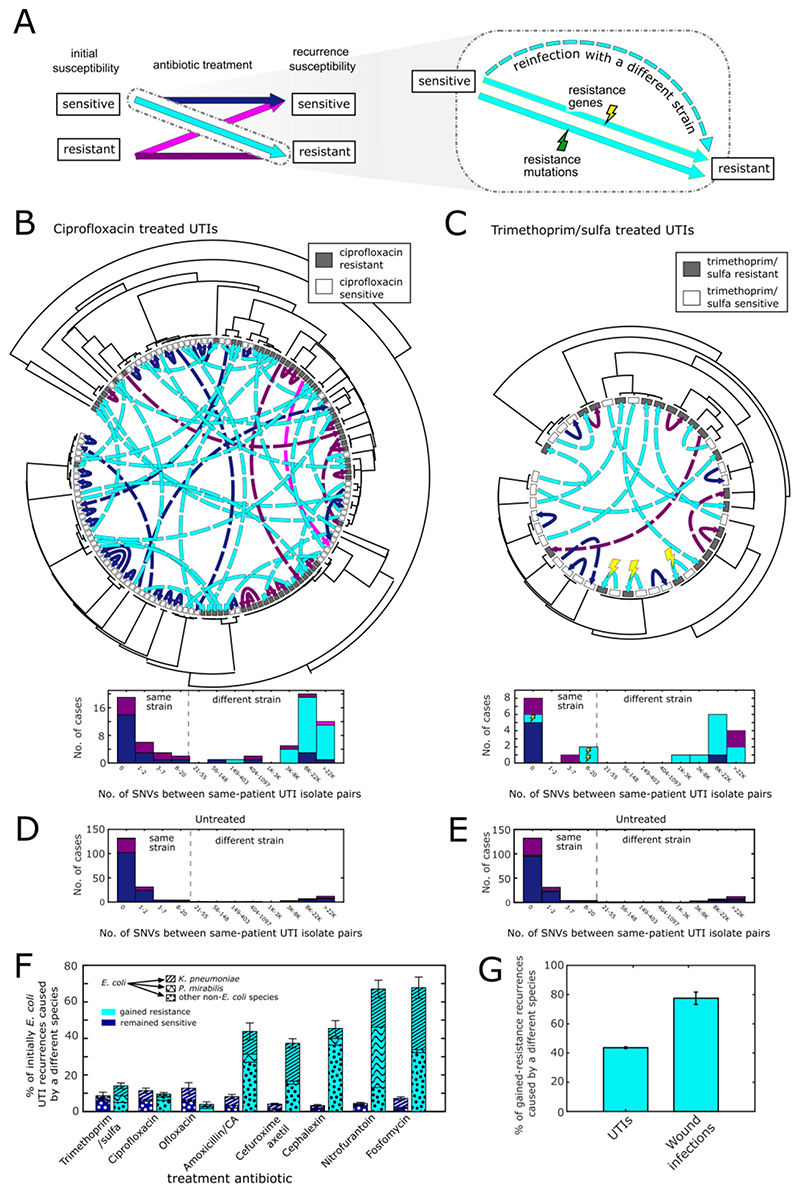
Figure. 2. Genomic analysis of infecting pathogens before and after antibiotic treatment.
(A) Infections which recurred with gained resistance following treatment (cyan) could be a consequence of acquiring resistance-conferring mutations (green lightning), resistance conferring genes (yellow lightning), or reinfection with a different strain resistant to the antibiotic (dashed arrow). (B,C) Phylogenetic trees of E. coli urine culture isolates collected from patients who experienced early recurrence following treatment with ciprofloxacin (B) or trimethoprim/sulfa (C), with isolate resistance/sensitivity to the prescribed antibiotic indicated by grey/white boxes. Same-patient isolates are connected with arrows whose color and style represent change in infection susceptibility and mechanism of gain of resistance (as defined in panel A). Histograms show the genetic distance, in number of single nucleotide variations (SNVs), between these same patient isolate pairs, again categorized by infection susceptibility and mechanism of gain of resistance (as defined in panel A). Vertical dashed lines represent the threshold used to define same-strain versus different-strain recurrences. (D,E) Histograms of the genetic distance in SNVs between same-patient isolates in untreated cases categorized by infection susceptibility to ciprofloxacin (D) or trimethoprim (E). (F) The percentage of E. coli infections treated with a susceptibility-matched antibiotic which resulted in early recurrence with different non-E. coli species (bar patterns), for recurrences which remained sensitive (blue) or gained resistance (cyan) to the prescribed antibiotic. (G) The percentage of gained-resistance recurrences in all UTIs and wound infections which were caused by reinfection with a different species.
Figure 3
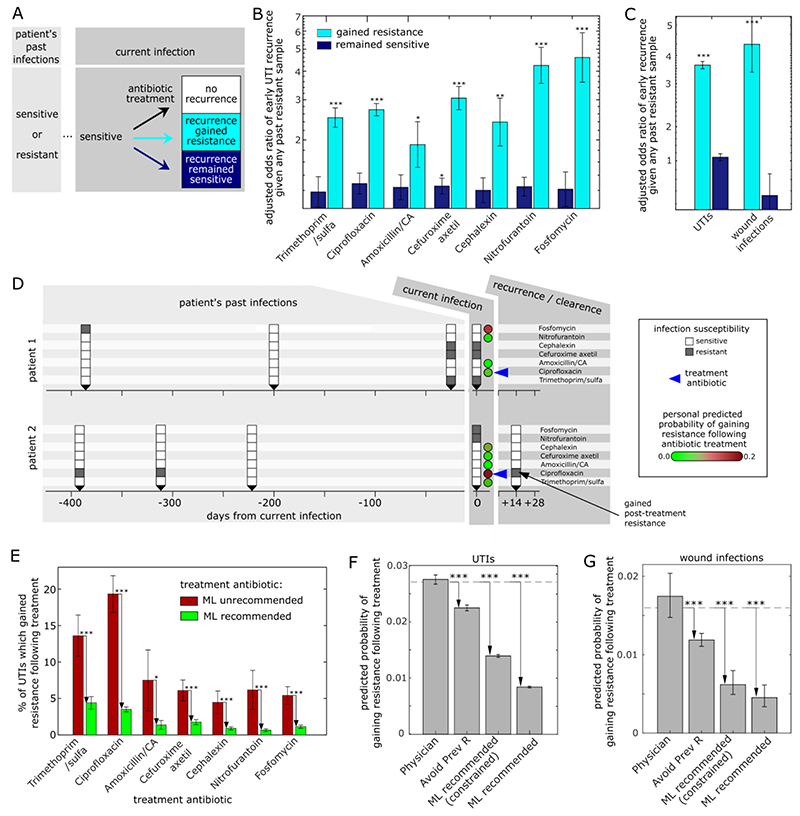
Figure 3. Personalized, antibiotic-specific, predictions of treatment-induced emergence of antibiotic resistance.
(A) Schematic showing the possible outcomes of susceptibility-matched antibiotic treatment for patients with a recorded history of prior infection susceptibility to the currently prescribed antibiotic. (B) Odds ratio of risk of early recurrence which gained resistance (cyan) or remained sensitive (blue) given the patient’s prior history of resistant infections (binary 1/0: any prior resistance to the prescribed antibiotic, or no prior resistance to the prescribed antibiotic). For each antibiotic, all susceptibility-matched treated cases for patients with any prior infections within the past 3 years are considered. Odds ratios are adjusted for demographics (age, gender) and potential risk factors (pregnancy, catheter use). (C) The adjusted odds ratio of early recurrence given the patient’s prior history of resistant infections for all antibiotic treatments combined for both UTIs and wound infections. (D) Timeline of two example patients showing, the susceptibilities of their current (t=0) and prior (t<0) infections for each antibiotic (white/grey for sensitive/resistance), as well as their ML predicted probability of recurrence with gained resistance upon treatment of their current infection with each of the antibiotics (circles, green-to-red colormap). Despite both patients treated with the same antibiotic for which their infection was sensitive, ciprofloxacin (blue arrow), they had very different ML personal predicted risk of gaining post-treatment ciprofloxacin resistance and indeed varied accordingly in the treatment outcome. (E) The percentage of UTIs within the 14-month test period which gained resistance following treatment for cases prescribed an antibiotic that was unrecommended (red, 15% highest predicted risk) or recommended (green, 85% lowest predicted risk) by the ML algorithm (these results are robust to choice of grouping intermediate level resistance with resistant, Fig. S16). (F,G) The overall predicted probability of gaining resistance for all UTIs (F) and wounds (G) during the test period for 4 different antibiotic prescription methods: the actual antibiotic prescribed by the physician; an algorithm that randomly chooses an antibiotic but avoids antibiotics to which the patient had past resistance, and the ML recommendation either unconstrained, or constrained such that each antibiotic is recommended at the exact same frequencies as prescribed by the physicians. The dashed line represents the actual gained-resistance rate for the physician-prescribed antibiotics during the test period. * p < 0.05; ** p < 0.005; *** p < 0.0005.

Comment in

References

    1. Harding GKM, Ronald AR. The management of urinary infections; what have we learned in the past decade? Int J Antimicrob Agents. 1994;4:83–88. - PubMed
    1. Stamm WE, Norrby SR. Urinary tract infections: disease panorama and challenges. J Infect Dis. 2001;183(Suppl 1):S1–4. - PubMed
    1. Montgomery CP, David MZ, Daum RS. Host factors that contribute to recurrent staphylococcal skin infection. Curr Opin Infect Dis. 2015;28:253–258. - PMC - PubMed
    1. Nicolle Lindsay E. Brenner and Rector’s The Kidney. 10th Editi. Elsevier; 2015. pp. 1231–1256.
    1. Tchesnokova VL, Rechkina E, Chan D, Haile HG, Larson L, Ferrier K, Schroeder DW, Solyanik T, Shibuya S, Hansen K, Ralston JD, et al. Pandemic Uropathogenic Fluoroquinolone-resistant Escherichia coli Have Enhanced Ability to Persist in the Gut and Cause Bacteriuria in Healthy Women. Clinical Infectious Diseases. 2019 doi: 10.1093/cid/ciz547. - DOI - PMC - PubMed

Publication types

MeSH terms

Substances