


Managing the allergy and asthma epidemic in 2020s-Lessons from the Finnish experience
- PMID: 35202479
- PMCID: PMC9546028
- DOI: 10.1111/all.15266
Managing the allergy and asthma epidemic in 2020s-Lessons from the Finnish experience
Abstract
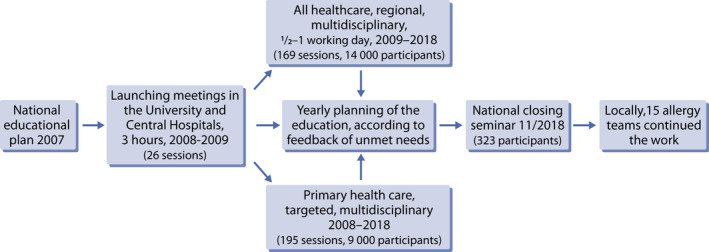
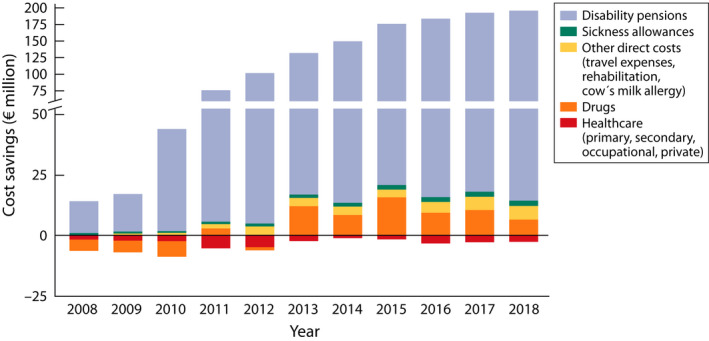
In Finland, a systematic public health programme was implemented from 2008 to 2018 to mitigate the burden of allergic disorders by revisiting the prevention strategy. Allergy health and contacts with natural environment were emphasized to promote immunological and psychological resilience instead of poorly justified avoidance. Allergy management practices were improved and low-valued recommendations for care, for example for food allergy, were revised. Patients and families were empowered to use guided self-management to proactively stop symptom exacerbations. A professional non-governmental organization implemented the nationwide education for healthcare and patient NGOs for patients, families and lay public. In healthcare, the work supporting allergic patients and families was organized towards common goals and integrated into everyday work without extra costs. Reaching the predefined goals was followed by employing the national healthcare registers and questionnaire surveys. Governmental bodies contributed with kick-off funding, which was supplemented by private funding. International collaboration, for example with the European patient organization (EFA), increased awareness of the Finnish action and predisposed it for peer review. The 10-year results are favourable, patients are less disabled, practices and attitudes in healthcare have changed, and major cost savings have been obtained. Views of the lay public and patients are slow to move, however. Local multidisciplinary allergy teams were set up to continue the activities also after the Programme. Changes in environment and lifestyle in the last 50 years are the main reasons for the allergy rise. The Finnish experience may help to manage allergic diseases, improve nature relatedness in the fast-urbanizing world, combat nature loss and reduce the disease burden.
Keywords: allergy campaign; allergy epidemic; allergy prevention; allergy programme; biodiversity; public health.
© 2022 The Authors. Allergy published by European Academy of Allergy and Clinical Immunology and John Wiley & Sons Ltd.
Conflict of interest statement
Tari Haahtela has received personal lecturing fees from GSK, Mundipharma, Orion Pharma, Sanofi, Erkka Valovirta from ALK‐Abello, AstraZeneca, Mylan, Nestle, Nigaard, Orion Pharma, Stallergenes Greer, ThermoFisher, TEVA, Tuula Vasankari from AstraZeneca, MSD, Boehringer Ingelheim, and Mika J. Mäkelä from GSK and Orion Pharma, outside the submitted work. The other authors have nothing to disclose.
Figures
References
-
- Blackley CH. Experimental Researches on the Causes and Nature of Catarrhus Aestivus. Tindall & Cox; 1873.
-
- Riedler J, Braun‐Fahrländer C, Eder W, et al. Exposure to farming in early life and development of asthma and allergy: a cross‐sectional survey. Lancet. 2001;358:1129‐1133. - PubMed
-
- von Mutius E, Smits HH. Primary prevention of asthma: from risk and protective factors to targeted strategies for prevention. Lancet. 2020;396:854‐866. - PubMed
-
- Haahtela T, Alenius H, Lehtimäki J, et al. Immunological resilience and biodiversity for prevention of allergic diseases and asthma. Allergy. 2021;76:3613‐3626. - PubMed
