


Prevalence of Developmental Dyslexia in Primary School Children: A Systematic Review and Meta-Analysis
- PMID: 35204003
- PMCID: PMC8870220
- DOI: 10.3390/brainsci12020240
Prevalence of Developmental Dyslexia in Primary School Children: A Systematic Review and Meta-Analysis
Abstract
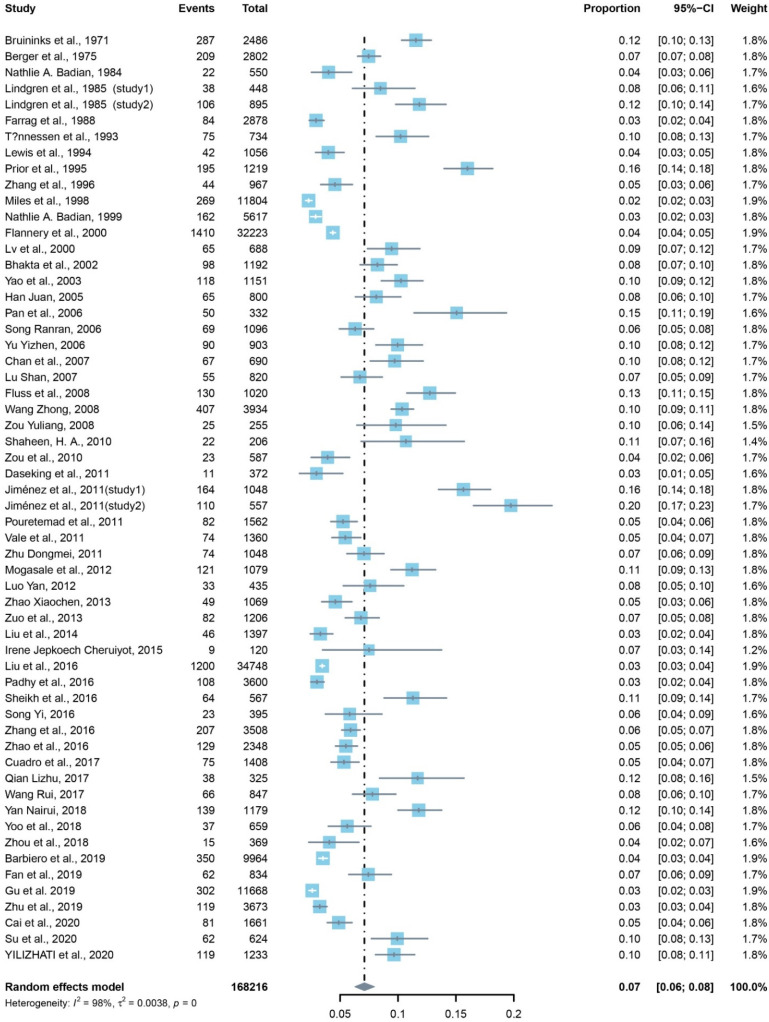
Background: Developmental dyslexia (DD) is a specific learning disorder concerning reading acquisition that may has a lifelong negative impact on individuals. A reliable estimate of the prevalence of DD serves as the basis for diagnosis, intervention, and evidence-based health resource allocation and policy-making. Hence, the present meta-analysis aims to generate a reliable prevalence estimate of DD worldwide in primary school children and explore the potential variables related to that prevalence.
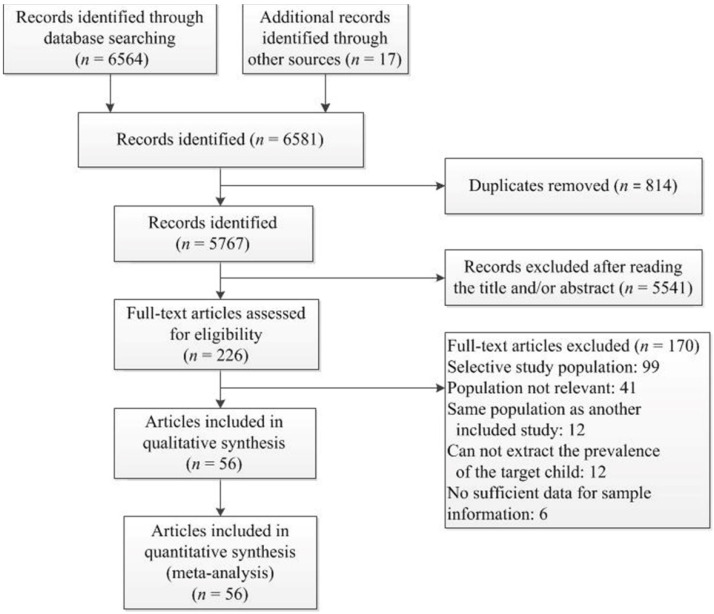
Methods: Studies from the 1950s to June 2021 were collated using a combination of search terms related to DD and prevalence. Study quality was assessed using the STROBE guidelines according to the study design, with study heterogeneity assessed using the I2 statistic, and random-effects meta-analyses were conducted. Variations in the prevalence of DD in different subgroups were assessed via subgroup meta-analysis and meta-regression.
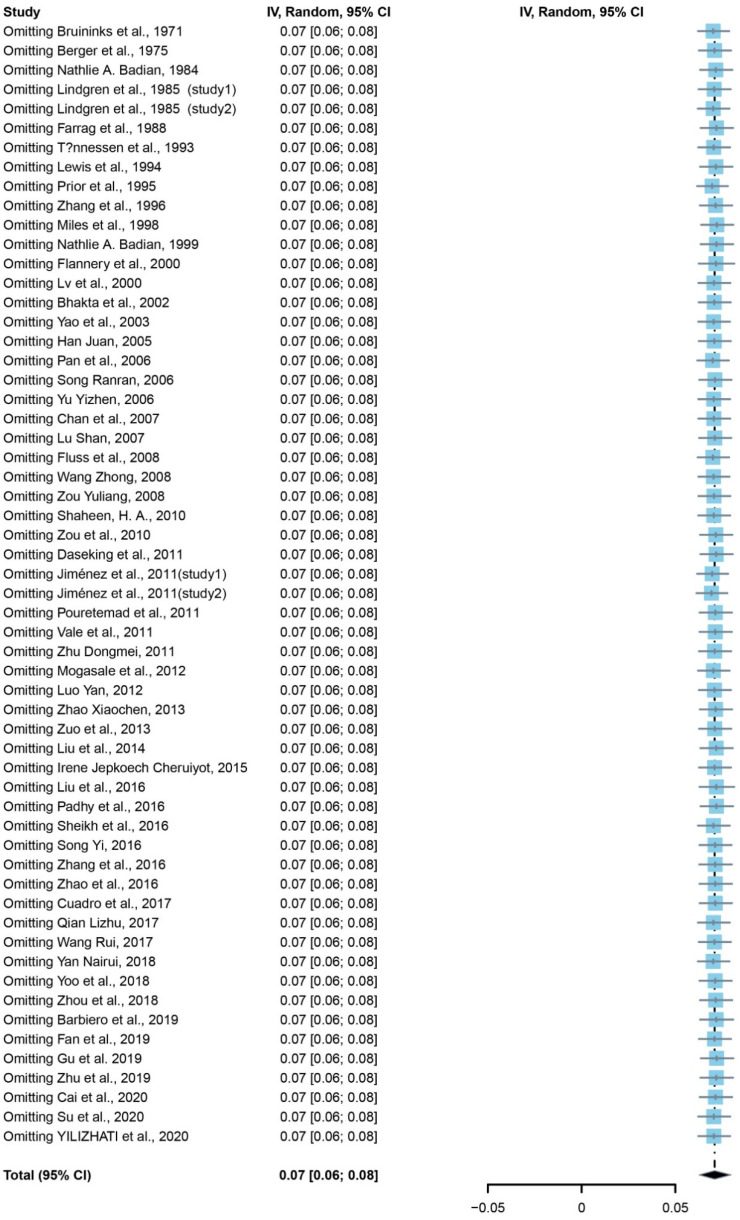
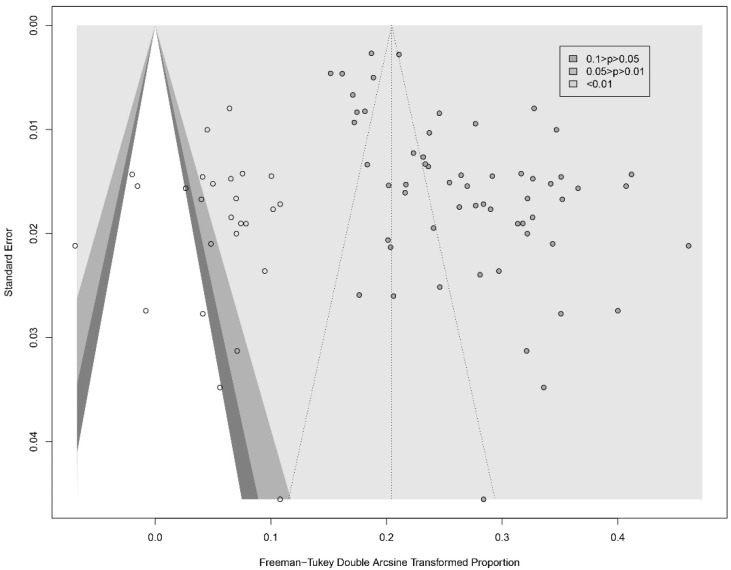
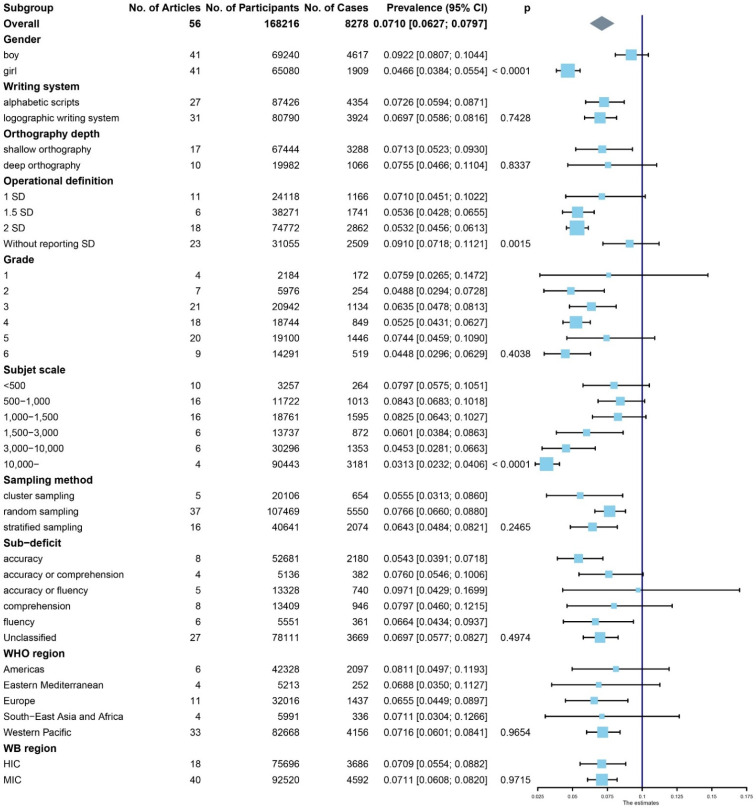
Results: The pooled prevalence of DD was 7.10% (95% CI: 6.27-7.97%). The prevalence in boys was significantly higher than that in girls (boys: 9.22%, 95%CI, 8.07-10.44%; girls: 4.66%, 95% CI, 3.84-5.54%; p < 0.001), but no significant difference was found in the prevalence across different writing systems (alphabetic scripts: 7.26%, 95%CI, 5.94-8.71%; logographic scripts: 6.97%, 95%CI, 5.86-8.16%; p > 0.05) or across different orthographic depths (shallow: 7.13%, 95% CI, 5.23-9.30%; deep: 7.55%, 95% CI, 4.66-11.04%; p > 0.05). It is worth noting that most articles had small sample sizes with diverse operational definitions, making comparisons challenging.
Conclusions: This study provides an estimation of worldwide DD prevalence in primary school children. The prevalence was higher in boys than in girls but was not significantly different across different writing systems.
Keywords: developmental dyslexia; prevalence; primary school children.
Conflict of interest statement
The authors declare no conflict of interest.
Figures
References
-
- American Psychiatric Association . Diagnostic and Statistical Manual of Mental Disorders. 5th ed. American Psychiatric Publishing; Arlington, VA, USA: 2013.
-
- World Health Organization . International Statistical Classification of Diseases and Related Health Problems, 10th Revision. World Health Organization; Geneva, Switzerland: 2016.
Publication types
Grants and funding
LinkOut - more resources
Full Text Sources
