


Dynamic and Systemic Perspective in Autism Spectrum Disorders: A Change of Gaze in Research Opens to A New Landscape of Needs and Solutions
- PMID: 35204013
- PMCID: PMC8870276
- DOI: 10.3390/brainsci12020250
Dynamic and Systemic Perspective in Autism Spectrum Disorders: A Change of Gaze in Research Opens to A New Landscape of Needs and Solutions
Abstract
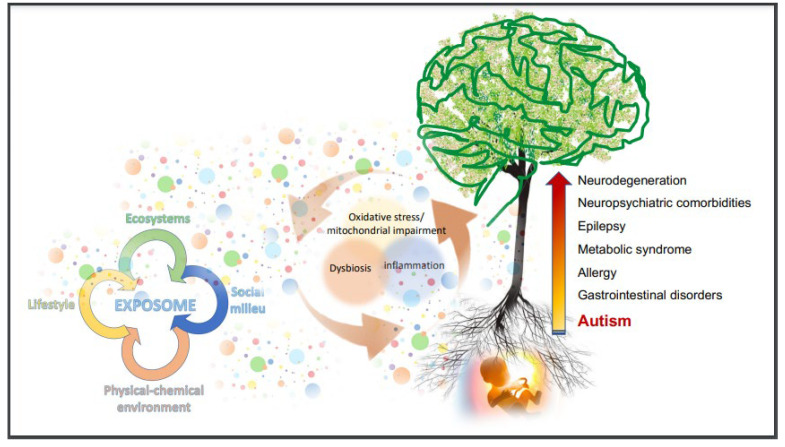
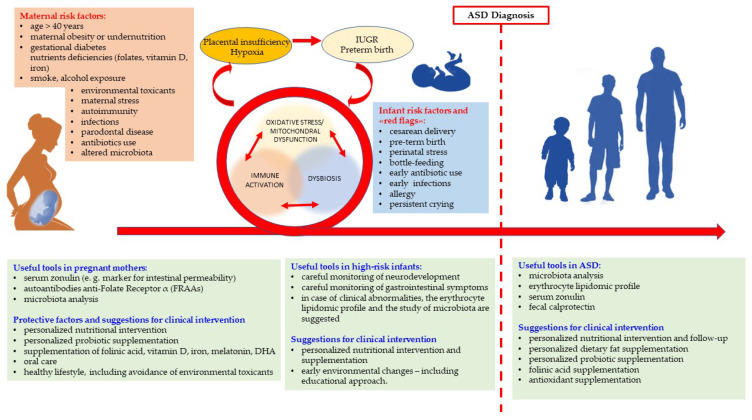
The first step for a harmonious bio-psycho-social framework in approaching autism spectrum disorders (ASD) is overcoming the conflict between the biological and the psychosocial perspective. Biological research can provide clues for a correct approach to clinical practice, assuming that it would lead to the conceptualization of a pathogenetic paradigm able to account for epidemiologic and clinical findings. The upward trajectory in ASD prevalence and the systemic involvement of other organs besides the brain suggest that the epigenetic paradigm is the most plausible one. The embryo-fetal period is the crucial window of opportunity for keeping neurodevelopment on the right tracks, suggesting that women's health in pregnancy should be a priority. Maladaptive molecular pathways beginning in utero, in particular, a vicious circle between the immune response, oxidative stress/mitochondrial dysfunction, and dysbiosis-impact neurodevelopment and brain functioning across the lifespan and are the basis for progressive multisystemic disorders that account for the substantial health loss and the increased mortality in ASD. Therefore, the biological complexity of ASD and its implications for health requires the enhancement of clinical skills on these topics, to achieve an effective multi-disciplinary healthcare model. Well-balanced training courses could be a promising starting point to make a change.
Keywords: autism; comorbidities; epigenetics; healthcare; microbiota; mitochondrial impairment; multi-disciplinarity; neuroinflammation; oxidative stress; prevention.
Conflict of interest statement
The authors declare no conflict of interest.
Figures
References
-
- American Psychiatric Association . Diagnostic and Statistical Manual of Mental Disorders (DSM-5) 5th ed. American Psychiatric Association; Arlington, VA, USA: 2013.
-
- Bölte S., Mahdi S., de Vries P.J., Granlund M., Robison J.E., Shulman C., Swedo S., Tonge B., Wong V., Zwaigenbaum L., et al. The Gestalt of functioning in autism spectrum disorder: Results of the international conference to develop final consensus International Classification of Functioning, Disability and Health core sets. Autism. 2019;23:449–467. doi: 10.1177/1362361318755522. - DOI - PMC - PubMed
Publication types
LinkOut - more resources
Full Text Sources
