


One-Day Prostate Cancer Diagnosis: Biparametric Magnetic Resonance Imaging and Digital Pathology by Fluorescence Confocal Microscopy
- PMID: 35204368
- PMCID: PMC8871204
- DOI: 10.3390/diagnostics12020277
One-Day Prostate Cancer Diagnosis: Biparametric Magnetic Resonance Imaging and Digital Pathology by Fluorescence Confocal Microscopy
Abstract
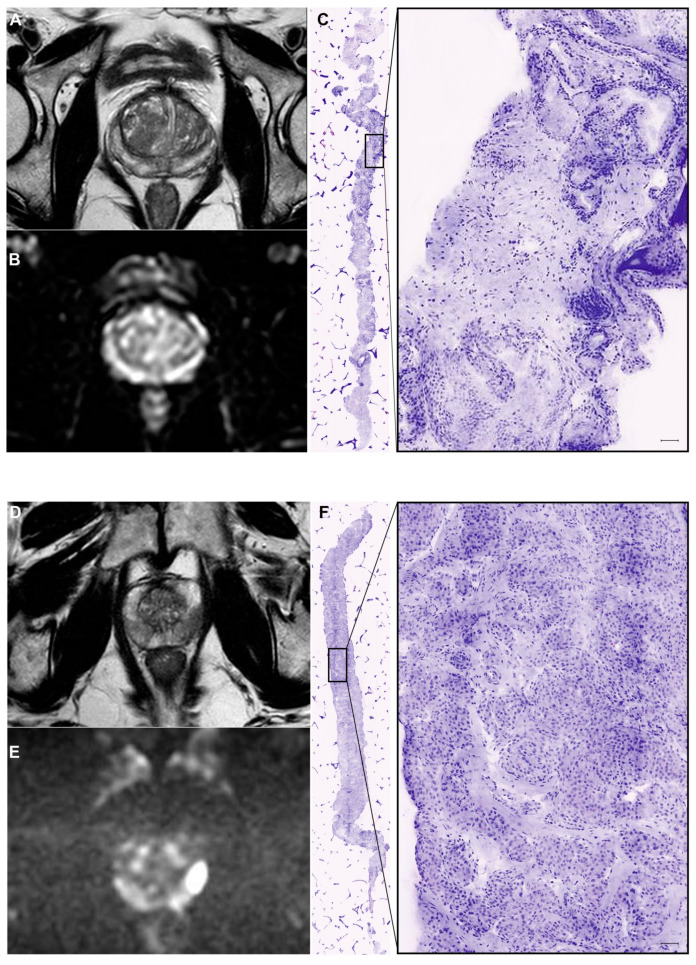
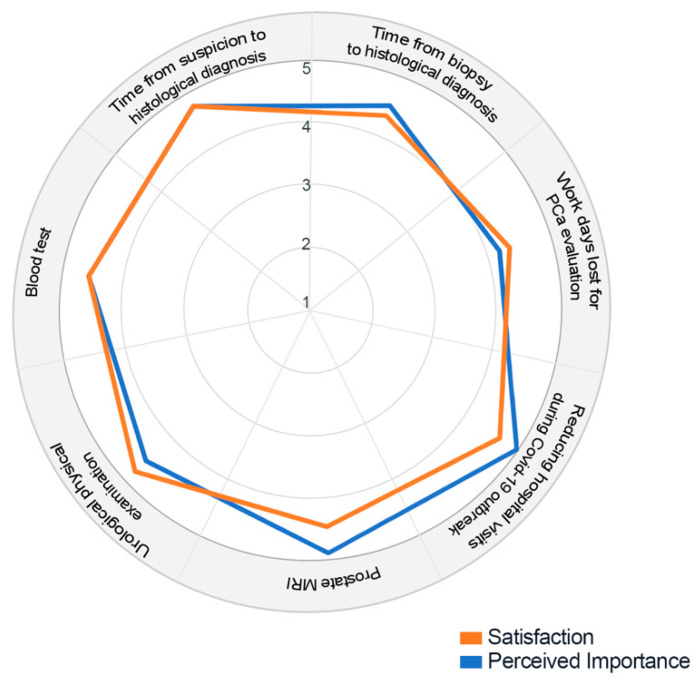
In this prospective observational study, we tested the feasibility and efficacy of a novel one-day PCa diagnosis path based on biparametric magnetic resonance (bpMRI) and digital pathology by fluorescence confocal microscopy (FCM). Patients aged 55-70 years scheduled for PBx due to increased PSA levels (3-10 ng/mL) and/or abnormal digitorectal examination were enrolled. All patients underwent bpMRI and PBx with immediate FCM evaluation of biopsy cores. Patients were asked to fill out a dedicated Patient Satisfaction Questionnaire. Patients' satisfaction rates and concordance between digital pathology and standard HE evaluation were the outcomes of interest. Twelve patients completed our one-day PCa diagnosis path. BpMRI showed suspicious lesions in 7 patients. Digital pathology by FCM identified PCa in 5 (41.7%) of the 12 patients. Standard pathology confirmed the diagnosis made through digital pathology in all the cases. At a per patient level, high concordance between the methods was achieved in Gleason Grading (4 out of 5 patients). The level of agreement in the number of positive cores was lower but did not affect the choice of treatment in any of the 5 PCa cases. At a per core level, the agreement was very high for the diagnosis of anyPCa (96.2%) and csPCa (97.3%), with a k coefficient of 0.90 and 0.92, respectively (near perfect agreement). In conclusion, one-day PCa diagnosis by FCM represents a feasible, reliable, and fast diagnostic method that provides significant advantages in optimizing time and resources, leading to patients having a higher quality standard of care perception.
Keywords: biparametric magnetic resonance imaging; digital pathology; fluorescence confocal microscopy; prostate cancer.
Conflict of interest statement
The authors declare no conflict of interest.
Figures
References
-
- US Preventive Services Task Force. Grossman D.C., Curry S.J., Owens D.K., Bibbins-Domingo K., Caughey A.B., Davidson K.W., Doubeni C.A., Ebell M., Epling J.W., Jr., et al. Screening for Prostate Cancer: US Preventive Services Task Force Recommendation Statement. JAMA. 2018;319:1901–1913. doi: 10.1001/jama.2018.3710. - DOI - PubMed
-
- Mottet N., van den Bergh R.C.N., Briers E., Cornford P., De Santis M., Fanti S., Gillessen S., Grummet J., Henry A.M., Lam T.B., et al. European Association of Urology Guidelines. 2020th ed. European Association of Urology Guidelines Office; Arnhem, The Netherlands: 2020. EAU-ESTRO-ESUR-SIOG Guidelines on Prostate Cancer 2020. Volume Presented at the EAU Annual Congress Amsterdam 2020.
LinkOut - more resources
Full Text Sources
Research Materials
Miscellaneous
