


Genotype-Phenotype Correlations of Pathogenic COCH Variants in DFNA9: A HuGE Systematic Review and Audiometric Meta-Analysis
- PMID: 35204720
- PMCID: PMC8961530
- DOI: 10.3390/biom12020220
Genotype-Phenotype Correlations of Pathogenic COCH Variants in DFNA9: A HuGE Systematic Review and Audiometric Meta-Analysis
Abstract
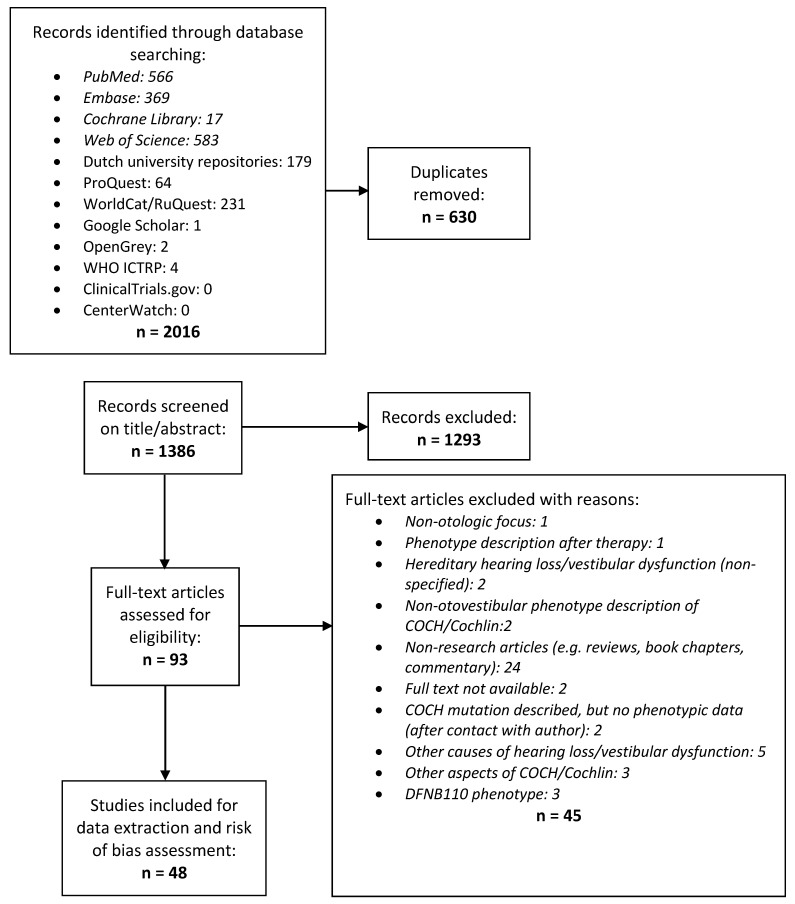
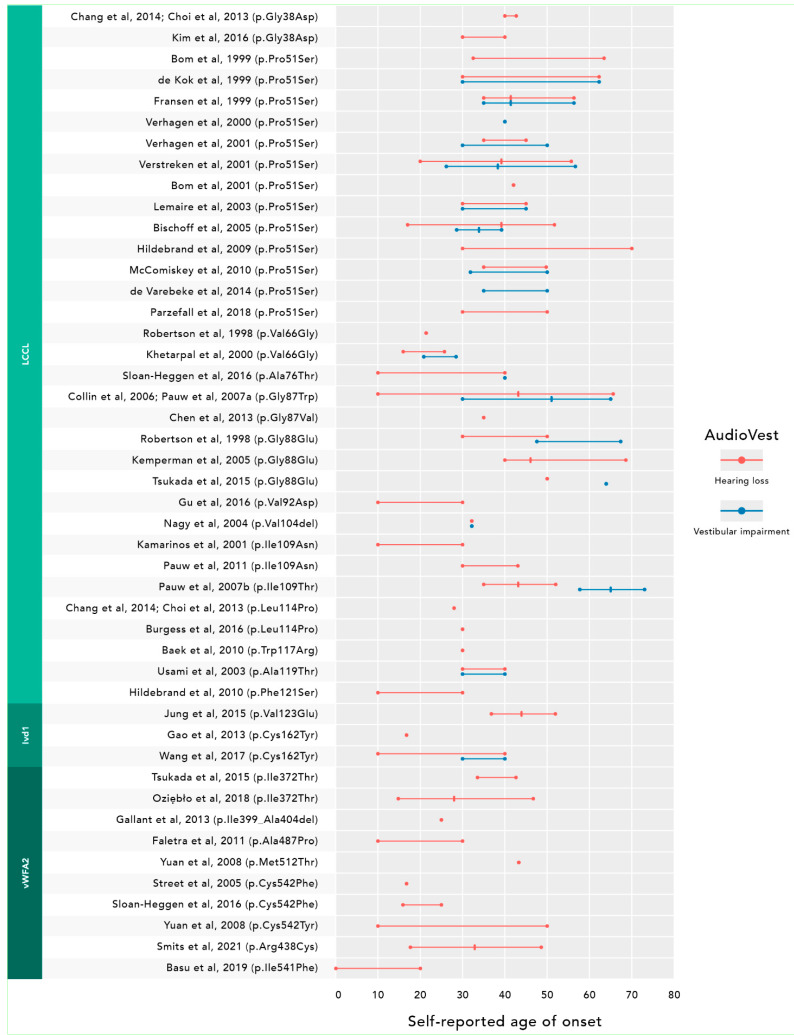
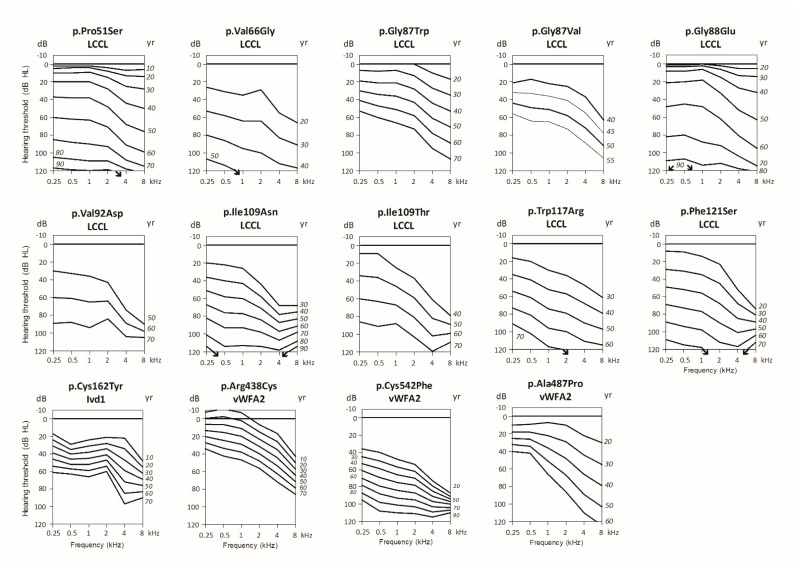
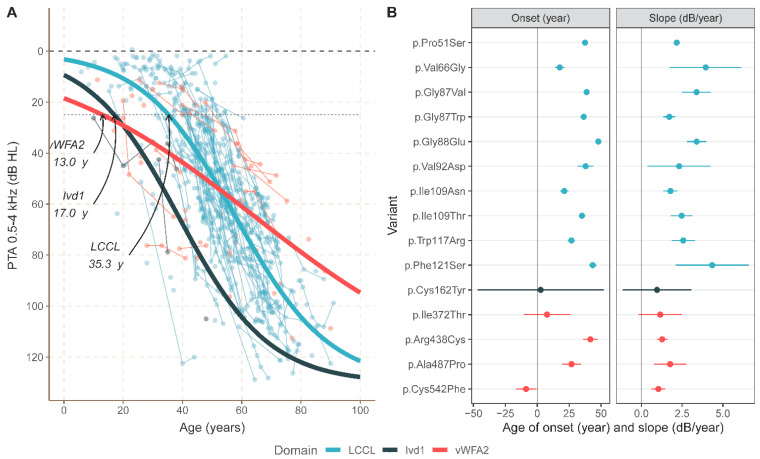
Pathogenic missense variants in COCH are associated with DFNA9, an autosomal dominantly inherited type of progressive sensorineural hearing loss with or without vestibular dysfunction. This study is a comprehensive overview of genotype-phenotype correlations using the PRISMA and HuGENet guidelines. Study characteristics, risk of bias, genotyping and data on the self-reported age of onset, symptoms of vestibular dysfunction, normative test results for vestibular function, and results of audiovestibular examinations were extracted for each underlying pathogenic COCH variant. The literature search yielded 48 studies describing the audiovestibular phenotypes of 27 DFNA9-associated variants in COCH. Subsequently, meta-analysis of audiometric data was performed by constructing age-related typical audiograms and by performing non-linear regression analyses on the age of onset and progression of hearing loss. Significant differences were found between the calculated ages of onset and progression of the audiovestibular phenotypes of subjects with pathogenic variants affecting either the LCCL domain of cochlin or the vWFA2 and Ivd1 domains. We conclude that the audiovestibular phenotypes associated with DFNA9 are highly variable. Variants affecting the LCCL domain of cochlin generally lead to more progression of hearing loss when compared to variants affecting the other domains. This review serves as a reference for prospective natural history studies in anticipation of mutation-specific therapeutic interventions.
Keywords: COCH; DFNA9; autosomal dominant hearing loss; genotype-phenotype correlations; systematic review; vestibular diseases.
Conflict of interest statement
The authors declare no conflict of interest.
Figures
References
-
- World Health Organization Deafness and Hearing Loss. [(accessed on 1 February 2021)]; Available online: http://www.who.int/news-room/fact-sheets/detail/deafness-and-hearing-loss.
-
- Oonk A.M., Leijendeckers J.M., Lammers E.M., Weegerink N.J., Oostrik J., Beynon A.J., Huygen P.L., Kunst H.P., Kremer H., Snik A.F., et al. Progressive hereditary hearing impairment caused by a MYO6 mutation resembles presbyacusis. Hear. Res. 2013;299:88–98. doi: 10.1016/j.heares.2012.12.015. - DOI - PubMed
-
- O’Neill M.E., Marietta J., Nishimura D., Wayne S., Van Camp G., Van Laer L., Negrini C., Wilcox E.R., Chen A., Fukushima K., et al. A gene for autosomal dominant late-onset progressive non-syndromic hearing loss, DFNA10, maps to chromosome 6. Hum. Mol. Genet. 1996;5:853–856. doi: 10.1093/hmg/5.6.853. - DOI - PubMed
Publication types
MeSH terms
Substances
LinkOut - more resources
Full Text Sources
Molecular Biology Databases
