


You Cannot Hit Snooze on OSA: Sequelae of Pediatric Obstructive Sleep Apnea
- PMID: 35204981
- PMCID: PMC8870274
- DOI: 10.3390/children9020261
You Cannot Hit Snooze on OSA: Sequelae of Pediatric Obstructive Sleep Apnea
Abstract
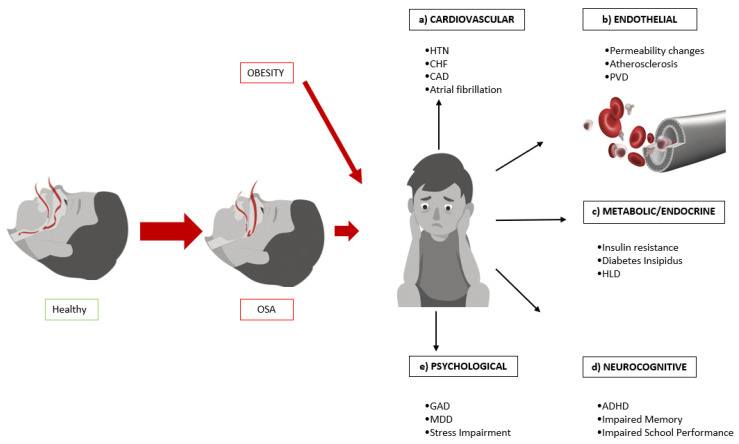
Pediatric obstructive sleep apnea (OSA) has been shown to not only affect the quality of sleep, but also overall health in general. Untreated or inadequately treated OSA can lead to long-term sequelae involving cardiovascular, endothelial, metabolic, endocrine, neurocognitive, and psychological consequences. The physiological effects of pediatric OSA eventually become pathological. As the complex effects of pediatric OSA are discovered, they must be identified early so that healthcare providers can be better equipped to treat and even prevent them. Ultimately, adequate management of OSA improves overall quality of life.
Keywords: cardiovascular disease; continuous positive airway pressure; endothelial dysfunction; intermediate mechanisms; metabolic dysfunction; neurocognitive impairment; obstructive sleep apnea sequelae; pediatric obstructive sleep apnea; psychosomatic syndromes; sleep-disordered breathing.
Conflict of interest statement
The authors declare no conflict of interest.
Figures
References
-
- Di Mauro P., Cocuzza S., Maniaci A., Ferlito S., Rasà D., Anzivino R., Vicini C., Iannella G., La Mantia I. The Effect of Adenotonsillectomy on Children’s Behavior and Cognitive Performance with Obstructive Sleep Apnea Syndrome: State of the Art. Children. 2021;8:921. doi: 10.3390/children8100921. - DOI - PMC - PubMed
Publication types
LinkOut - more resources
Full Text Sources
Research Materials
