


Timely Palliative Care: Personalizing the Process of Referral
- PMID: 35205793
- PMCID: PMC8870673
- DOI: 10.3390/cancers14041047
Timely Palliative Care: Personalizing the Process of Referral
Abstract
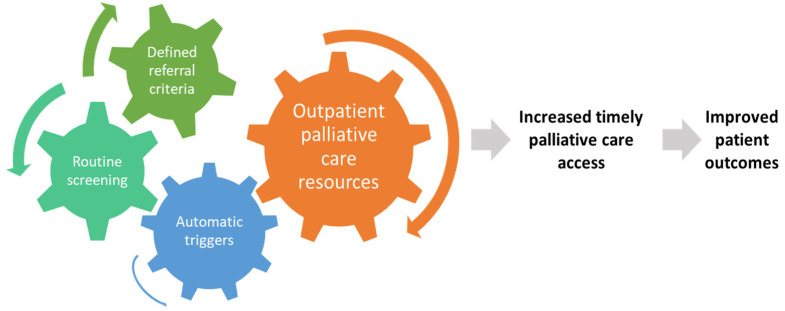
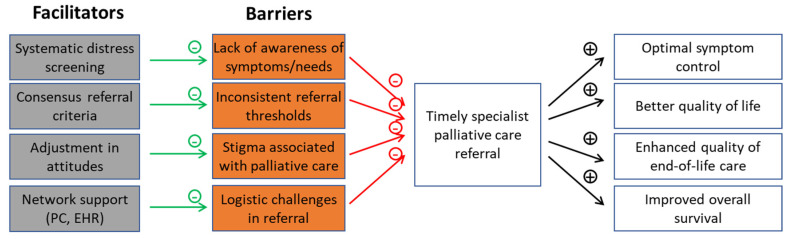
Timely palliative care is a systematic process to identify patients with high supportive care needs and to refer these individuals to specialist palliative care in a timely manner based on standardized referral criteria. It requires four components: (1) routine screening of supportive care needs at oncology clinics, (2) establishment of institution-specific consensual criteria for referral, (3) a system in place to trigger a referral when patients meet criteria, and (4) availability of outpatient palliative care resources to deliver personalized, timely patient-centered care aimed at improving patient and caregiver outcomes. In this review, we discuss the conceptual underpinnings, rationale, barriers and facilitators for timely palliative care referral. Timely palliative care provides a more rational use of the scarce palliative care resource and maximizes the impact on patients who are offered the intervention. Several sets of referral criteria have been proposed to date for outpatient palliative care referral. Studies examining the use of these referral criteria consistently found that timely palliative care can lead to a greater number of referrals and earlier palliative care access than routine referral. Implementation of timely palliative care at each institution requires oncology leadership support, adequate palliative care infrastructure, integration of electronic health record and customization of referral criteria.
Keywords: access and evaluation; delivery of health care; health care quality; hospital; implementation; outpatient clinics; palliative care; patient-centered care; psychological distress; randomized controlled trial; referral and consultation; supportive care; symptom assessment.
Conflict of interest statement
The authors declare no conflict of interest. The funders had no role in the design of the study; in the collection, analyses, or interpretation of data; in the writing of the manuscript, or in the decision to publish the results.
Figures
References
-
- Mo L., Urbauer D.L., Bruera E., Hui D. Recommendations for supportive care and best supportive care in NCCN clinical practice guidelines for treatment of cancer: Differences between solid tumor and hematologic malignancy guidelines. Support. Care Cancer. 2021;29:7385–7392. doi: 10.1007/s00520-021-06245-2. - DOI - PMC - PubMed
-
- Davis M.P., Bruera E., Morganstern D. Early integration of palliative and supportive care in the cancer continuum; Proceedings of the American Society of Clinical Oncology Annual Meeting 2013; Chicago, IL, USA. 31 May–4 June 2013. - PubMed
Publication types
LinkOut - more resources
Full Text Sources
