


The Relationship between Dental Fear and Anxiety, General Anxiety/Fear, Sensory Over-Responsivity, and Oral Health Behaviors and Outcomes: A Conceptual Model
- PMID: 35206566
- PMCID: PMC8872083
- DOI: 10.3390/ijerph19042380
The Relationship between Dental Fear and Anxiety, General Anxiety/Fear, Sensory Over-Responsivity, and Oral Health Behaviors and Outcomes: A Conceptual Model
Abstract
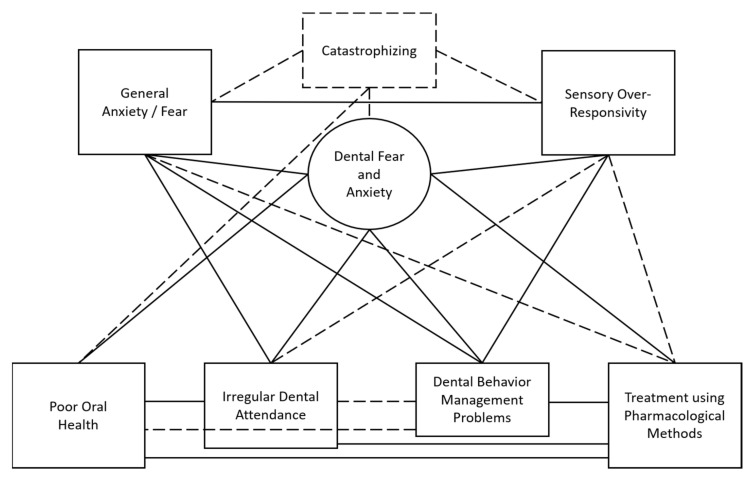
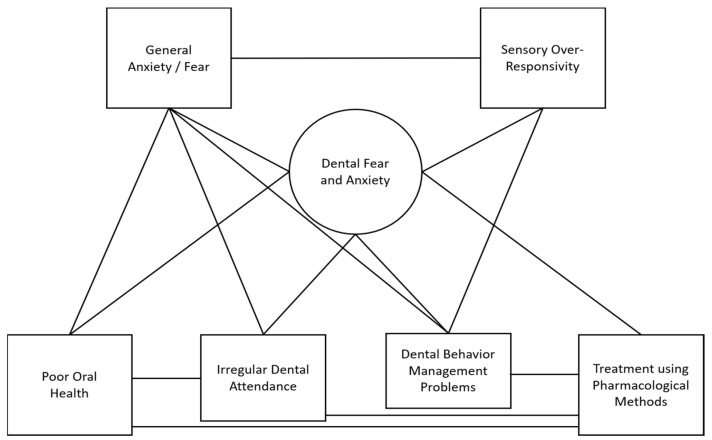
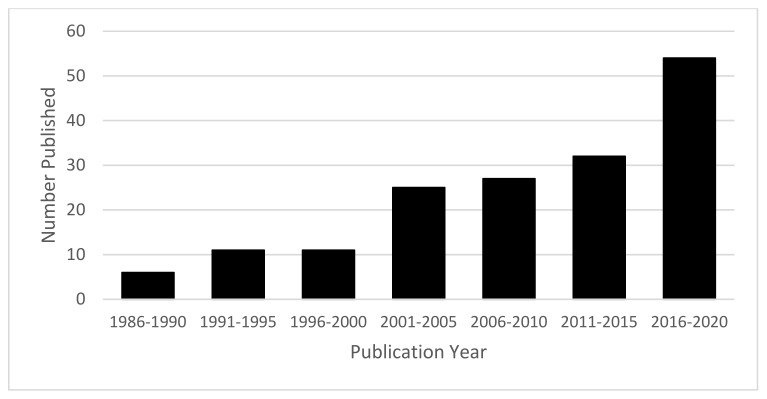
Dental fear and anxiety (DFA) is common across the lifespan and represents a barrier to proper oral health behaviors and outcomes. The aim of this study is to present a conceptual model of the relationships between DFA, general anxiety/fear, sensory over-responsivity (SOR), and/or oral health behaviors and outcomes. Two rounds of literature searches were performed using the PubMed database. Included articles examined DFA, general anxiety/fear, SOR, catastrophizing, and/or oral health behaviors and outcomes in typically developing populations across the lifespan. The relationships between the constructs were recorded and organized into a conceptual model. A total of 188 articles were included. The results provided supporting evidence for relationships between DFA and all other constructs included in the model (general anxiety/fear, SOR, poor oral health, irregular dental attendance, dental behavior management problems [DBMP], and need for treatment with pharmacological methods). Additionally, SOR was associated with general anxiety/fear and DBMP; general anxiety/fear was linked to poor oral health, irregular attendance, and DBMP. This model provides a comprehensive view of the relationships between person factors (e.g., general anxiety/fear, SOR, and DFA) and oral health behaviors and outcomes. This is valuable in order to highlight connections between constructs that may be targeted in the development of new interventions to improve oral health behaviors and outcomes as well as the experience of DFA.
Keywords: dental anxiety; dental behavior management problems; dental fear; general anxiety; oral health behaviors; sensory over-responsivity.
Conflict of interest statement
The authors declare no conflict of interest. The funders had no role in the design of the study; in the collection, analyses, or interpretation of data; in the writing of the manuscript; or in the decision to publish the results.
Figures
References
-
- Armfield J.M. How do we measure dental fear and what are we measuring anyway? Oral Health Prev. Dent. 2010;8:107–115. - PubMed
-
- Cianetti S., Lombardo G., Lupatelli E., Pagano S., Abraha I., Montedori A., Caruso S., Gatto R., De Giorgio S. Dental fear/anxiety among children and adolescents. A systematic review. Eur. J. Paediatr. Dent. 2017;18:121–130. - PubMed
Publication types
MeSH terms
Grants and funding
LinkOut - more resources
Full Text Sources
Medical
