


Associations between RNA-Binding Motif Protein 3, Fibroblast Growth Factor 21, and Clinical Outcome in Patients with Stroke
- PMID: 35207221
- PMCID: PMC8875775
- DOI: 10.3390/jcm11040949
Associations between RNA-Binding Motif Protein 3, Fibroblast Growth Factor 21, and Clinical Outcome in Patients with Stroke
Abstract
Background: RNA-binding motif protein 3 (RBM3) is a cold-induced marker of good functional outcome of ischemic stroke that is promising as a protective target. Fibroblast growth factor 21 (FGF21) is an obesity- and temperature-related hormone that upregulates the expression of RBM3, which is beneficial as a recombinant treatment and has been tested under different experimental pathological conditions, including stroke. However, the interaction between RBM3 and FGF21 has not yet been tested for clinical stroke conditions.
Methods: In a sample of 66 stroke patients, we analyzed the associations between the FGF21 and RBM3 serum concentrations on admission and at 72 h, body weight, maximum temperature during the first 24 h, and the outcome of patients at 3 months. We also analyzed their association with biomarkers of obesity (adiponectin and leptin) and inflammation (interleukin-6 (IL-6) and interleukin (IL-10)).
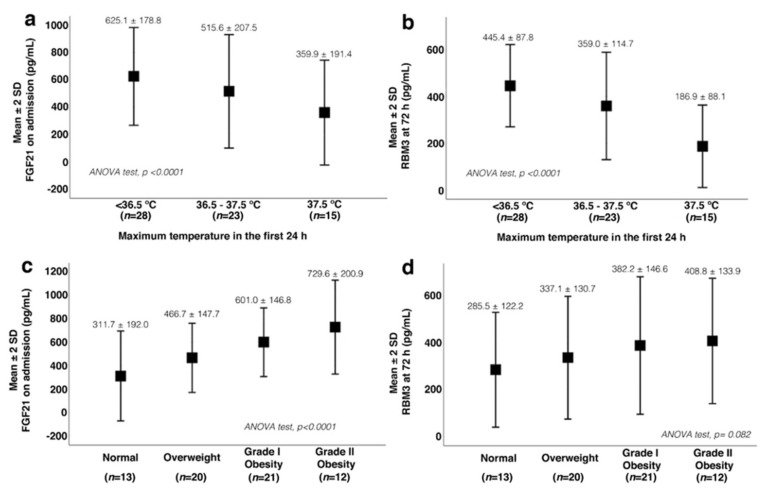
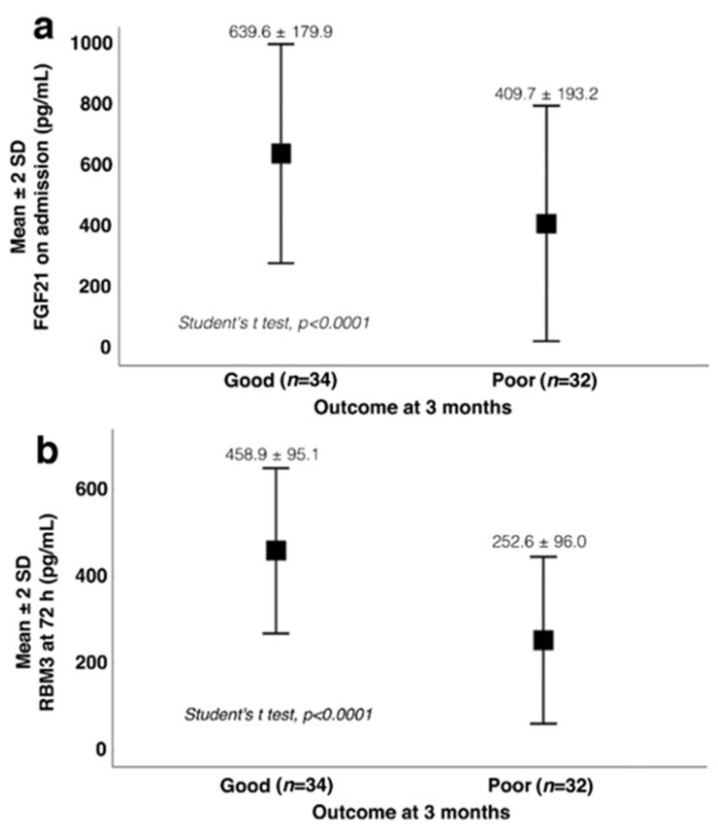
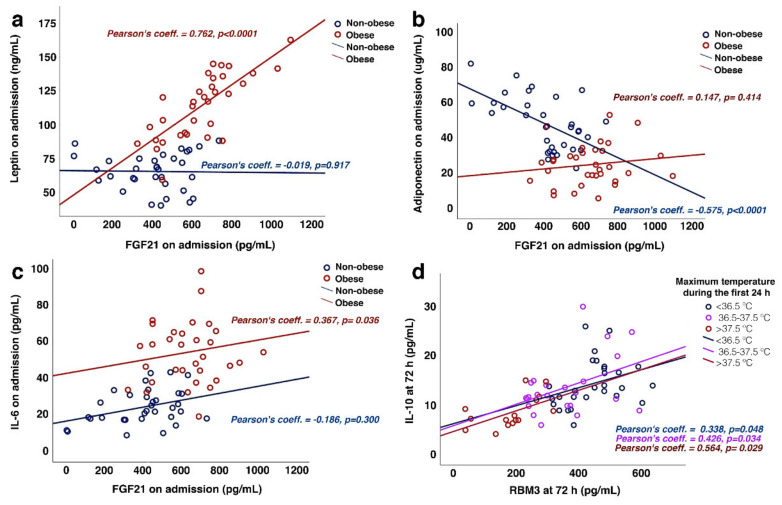
Results: Higher concentrations of FGF21 on admission and RBM3 at 72 h were associated with good outcomes. Serum FGF21 and RBM3 were directly related to body mass index and inversely related to the maximum temperature during the first 24 h. We found a positive association between the FGF21 concentrations in obese patients with leptin and a negative correlation with adiponectin in non-obese participants.
Conclusions: This clinical study demonstrates the association between RBM3 and FGF21 levels and the outcome of stroke patients. Although further investigations are required, these data support the pharmacological induction of RBM3 as a promising protective therapy.
Keywords: FGF21; RBM3; body weight; clinical outcome; stroke; temperature.
Conflict of interest statement
The authors declare no conflict of interest.
Figures
References
-
- Vieites-Prado A., Iglesias-Rey R., Fernandez-Susavila H., da Silva-Candal A., Rodriguez-Castro E., Grohn O.H., Wellmann S., Sobrino T., Castillo J., Campos F. Protective Effects and Magnetic Resonance Imaging Temperature Mapping of Systemic and Focal Hypothermia in Cerebral Ischemia. Stroke. 2016;47:2386–2396. doi: 10.1161/STROKEAHA.116.014067. - DOI - PubMed
Grants and funding
LinkOut - more resources
Full Text Sources
