


Correlation between Bruxism and Gastroesophageal Reflux Disorder and Their Effects on Tooth Wear. A Systematic Review
- PMID: 35207380
- PMCID: PMC8879082
- DOI: 10.3390/jcm11041107
Correlation between Bruxism and Gastroesophageal Reflux Disorder and Their Effects on Tooth Wear. A Systematic Review
Abstract
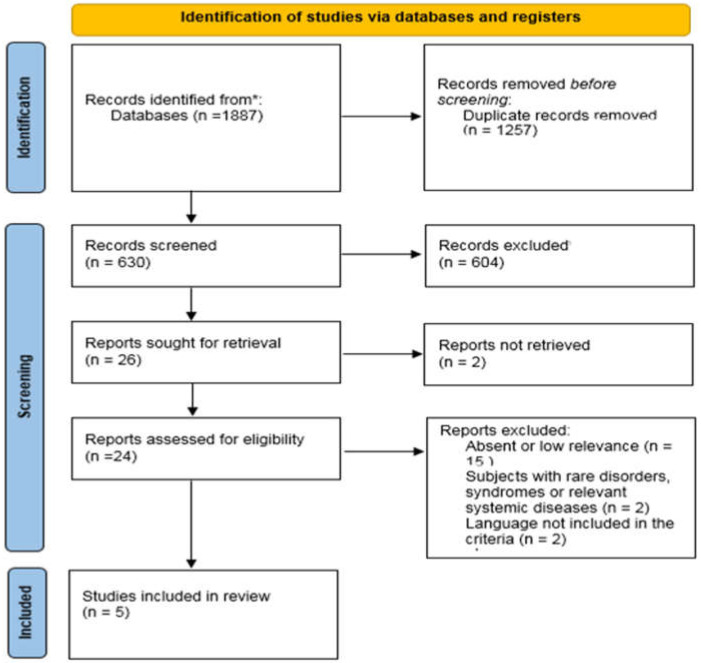
Bruxism and gastroesophageal reflux (GERD) can lead to wear of the dental tissues. Wear has a mechanical or chemical origin, and it is of extrinsic or intrinsic type. Bruxism and GERD are two etiological factors of dental wear. The intrinsic mechanical wear (abfraction) of Bruxism and intrinsic chemical wear (erosion) of GERD are both involved in sleep disorders; indeed, they could have associations and act in synergy in dental wear. The purpose of this review was to find out the possible associations between bruxism and GERD and their effects on tooth wear. The research was conducted on PubMed and the Cochrane Library using the following Keywords/Mesh Terms: Tooth wear, Bruxism, Sleep Bruxism, Sleep Disorders, or GERD. Only systematic reviews and clinical studies performed exclusively on human subjects were included in the review. Initially, the research gave more than 630 results on dental wear, bruxism and GERD and after application of the inclusion criteria irrelevant studies were excluded, and 5 studies were finally included in this review. It was possible to observe the presence of some associations between the two problems (reflux and GERD) and hypothesize negative effects on tooth wear. This research revealed the presence of an interconnection between these three problems (reflux, GERD and tooth wear) that can further act in synergy by attacking the hard dental tissues both from a chemical (reflux) and mechanical (bruxism) point of view. The dentist could play a role of "sentinel" in a multidisciplinary team, intercepting these problems early in order to treat them in the most appropriate way. PROSPERO Registration Number: CRD42021234209.
Keywords: awake bruxism; enamel wear; gastroesophageal reflux; review; sleep bruxism; sleep disorders; tooth abrasion.
Conflict of interest statement
The authors declare no conflict of interest.
References
Publication types
LinkOut - more resources
Full Text Sources
