


Using Halothermal Time Model to Describe Barley (Hordeumvulgare L.) Seed Germination Response to Water Potential and Temperature
- PMID: 35207497
- PMCID: PMC8878096
- DOI: 10.3390/life12020209
Using Halothermal Time Model to Describe Barley (Hordeumvulgare L.) Seed Germination Response to Water Potential and Temperature
Abstract
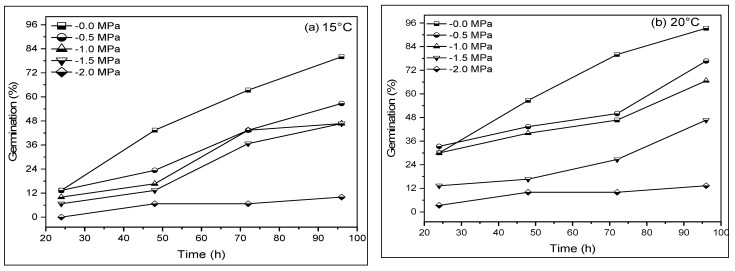
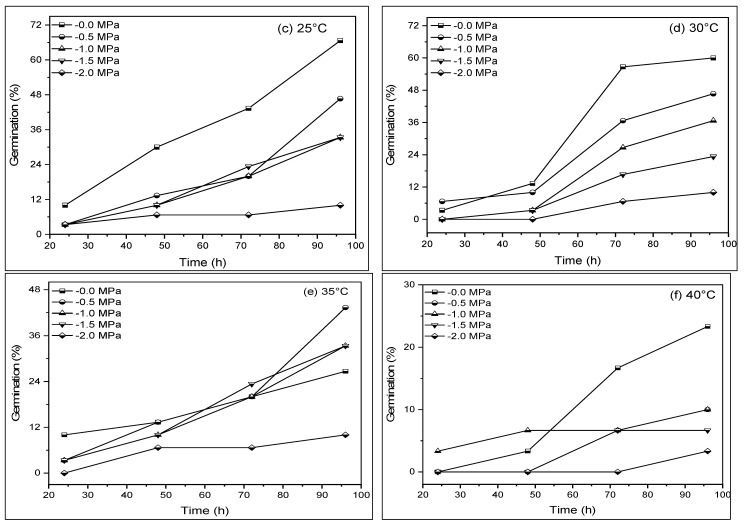
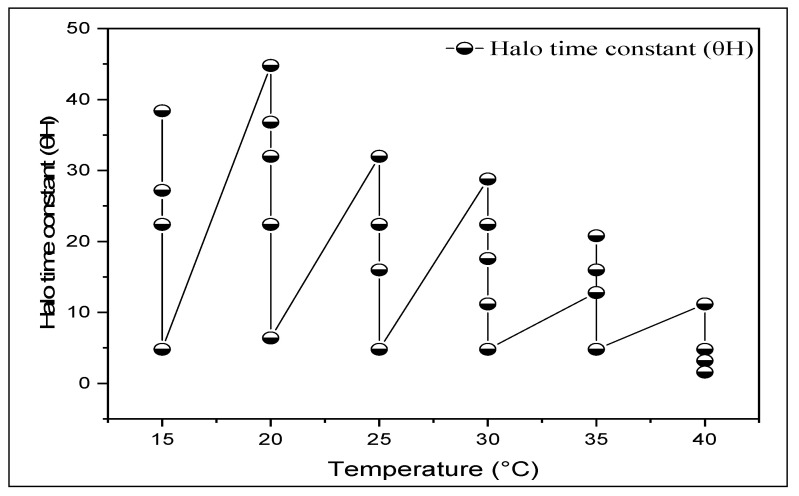
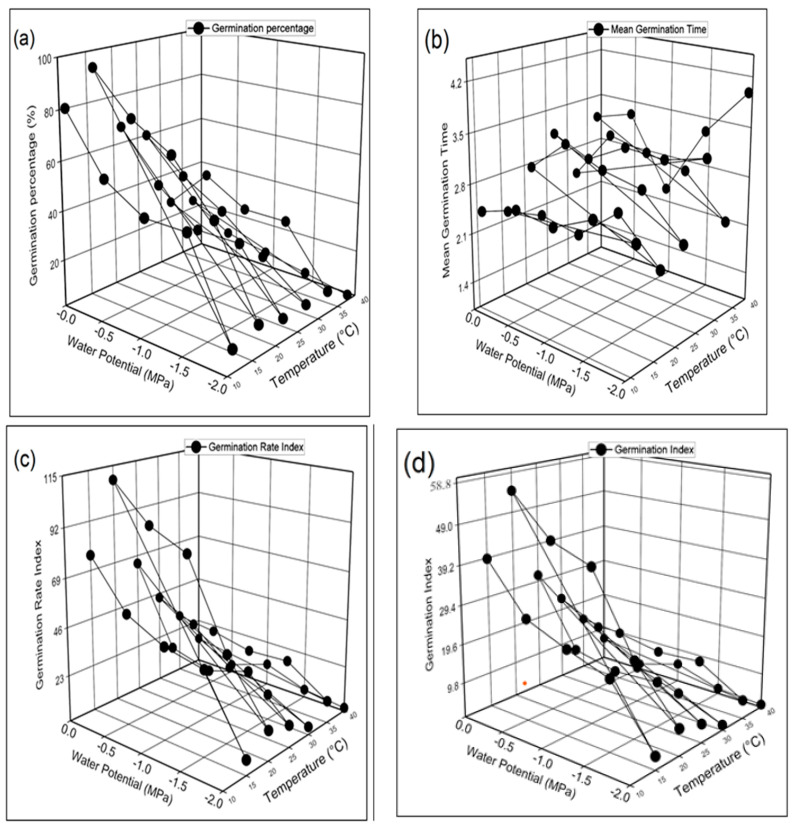
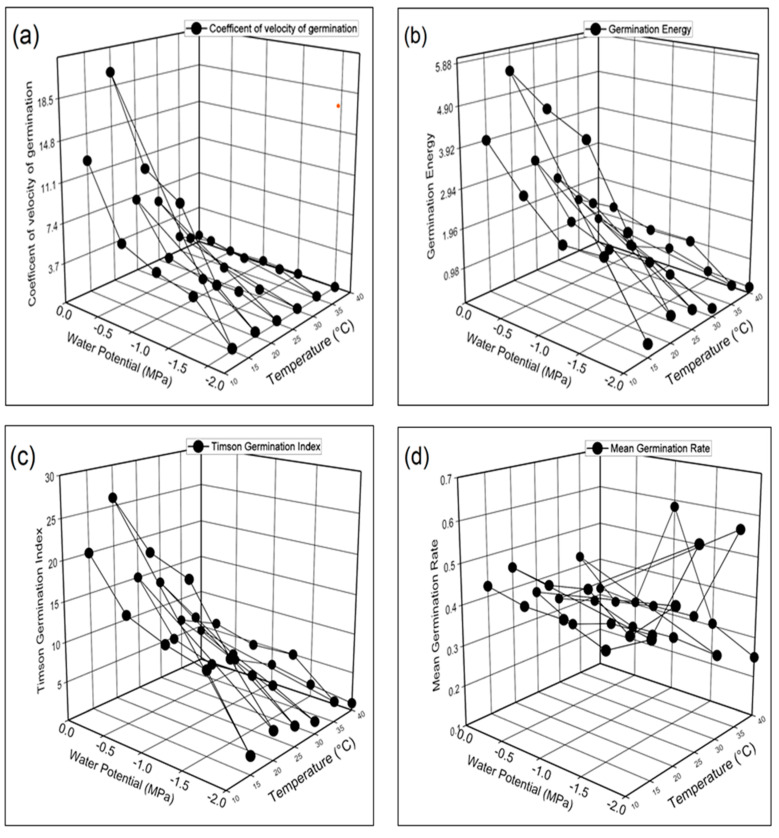
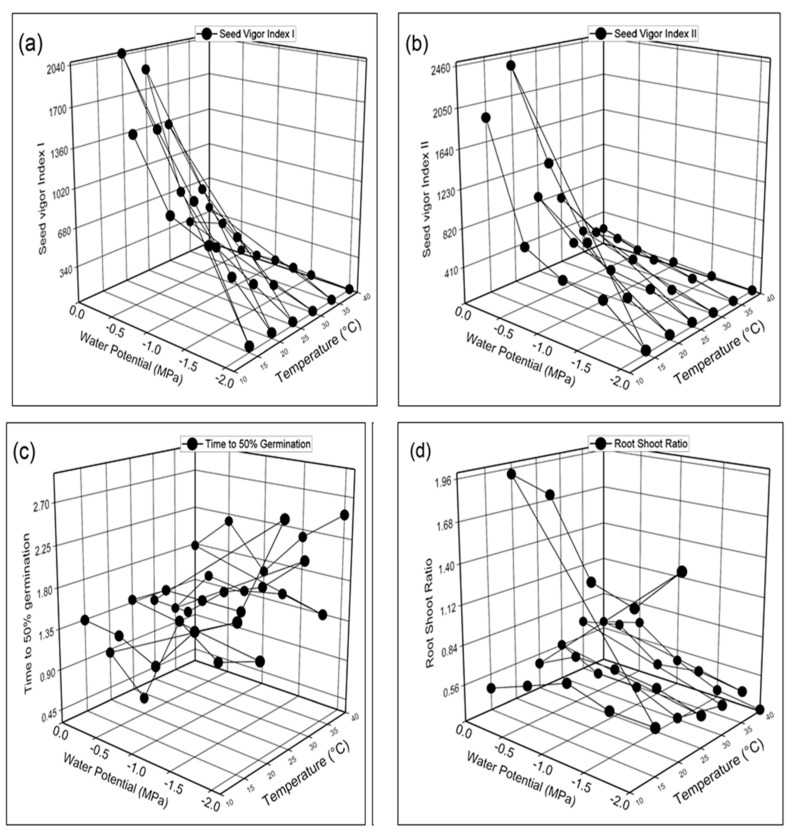
Barley (Hordeum vulgare L.) is a salt-tolerant crop with considerable economic value in salinity-affected arid and semiarid areas. In the laboratory experiment, the halothermal time (HaloTT) model was used to examine barley seed germination (SG) at six constant cardinal temperatures (Ts) of 15, 20, 25, 30, 35, and 40 °C under five different water potentials (ψs) of 0, -0.5, -1.5, -1.0, and -2.0 MPa. Results showed that at optimum moisture (0 MPa), the highest germination percentage (GP) was recorded at 20 °C and the lowest at 40 °C. Moreover, GP increased with the accelerated aging period (AAP) and significantly (p ≤ 0.05) decreased with high T. In addition, with a decrease of ψ from 0 to -0.5, -1, 1.5, and -2.0 MPa, GP decreased by 93.33, 76.67, 46.67, and 33.33%, respectively, in comparison with 0 MPa. The maximum halftime constant (θHalo) and coefficient of determination (R2) values were recorded at 20 °C and 30 °C, respectively. The optimum temperature (To) for barley is 20 °C, base Ψ of 50th percentile (Ψb (50)) is -0.23 Mpa, and standard deviation of Ψb (σΨb) is 0.21 MPa. The cardinal Ts for germination is 15 °C (Tb), 20 °C (To), and 40 °C (Tc). The GP, germination rate index (GRI), germination index (GI), coefficient of the velocity of germination (CVG), germination energy (GE), seed vigor index I and II (SVI-I & II), Timson germination index (GI), and root shoot ratio (RSR) were recorded maximum at 0 MPa at 20 °C and minimum at -2.0 MPa at 40 °C. Mean germination time (MGT) and time to 50% germination (T 50%) were maximum at -2 MPa at 40 °C, and minimum at 20 °C, respectively. In conclusion, the HaloTT model accurately predicted the germination time course of barley in response to T, Ψ, or NaCl. Therefore, barley can be regarded as a salt-tolerant plant and suitable for cultivation in arid and semi-arid regions due to its high resistance to salinity.
Keywords: barley; cardinal temperatures; halothermal time model; seed germination; water potential.
Conflict of interest statement
Authors have no conflict of interest.
Figures
References
-
- Khan S., Hussain W., Shah S., Hussain H., Altyar A.E., Ashour M.L., Pieroni A. Overcoming Tribal Boundaries: The Biocultural Heritage of Foraging and Cooking Wild Vegetables among Four Pathan Groups in the Gadoon Valley, NW Pakistan. Biology. 2021;10:537. doi: 10.3390/biology10060537. - DOI - PMC - PubMed
-
- Sadras V.O., Calderini D. Crop Physiology Case Histories for Major Crops. Academic Press; Cambridge, MA, USA: 2020.
-
- Giraldo P., Benavente E., Manzano-Agugliaro F., Gimenez E. Worldwide research trends on wheat and barley: A bibliometric comparative analysis. Agronomy. 2019;9:352. doi: 10.3390/agronomy9070352. - DOI
-
- Al-Karaki G.N. Germination, sodium, and potassium concentrations of barley seeds as influenced by salinity. J. Plant Nutr. 2001;24:511–522. doi: 10.1081/PLN-100104976. - DOI
Grants and funding
LinkOut - more resources
Full Text Sources
Miscellaneous
