


Precision Medicine for Hepatocellular Carcinoma: Clinical Perspective
- PMID: 35207638
- PMCID: PMC8879044
- DOI: 10.3390/jpm12020149
Precision Medicine for Hepatocellular Carcinoma: Clinical Perspective
Abstract
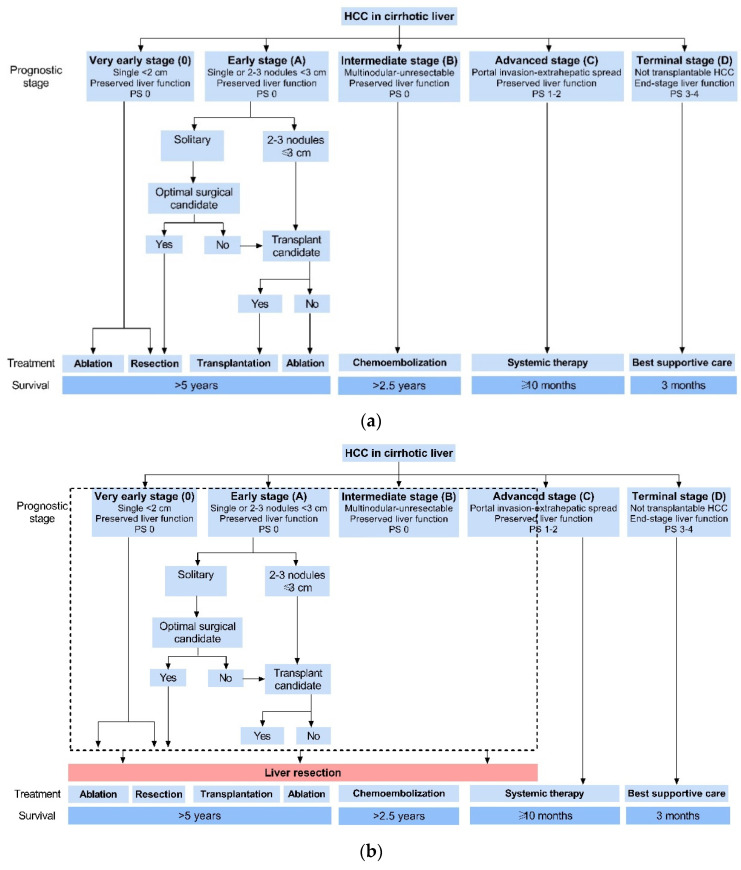
Hepatocellular carcinoma (HCC) is one of the major malignant diseases worldwide, characterized by growing incidence and high mortality rates despite apparent improvements in surveillance programs, diagnostic and treatment procedures, molecular therapies, and numerous research initiatives. Most HCCs occur in patients with liver cirrhosis, and the competing mortality risks from the tumor and the cirrhosis should be considered. Presently, previously identified risk factors, such as hepatitis virus infection, hepatic inflammation and fibrosis, and metabolic syndrome, may be used as chemoprevention targets. The application of precision medicine for HCC management challenges the one-size-fits-all concept; moreover, patients should no longer be treated entirely according to the histology of their tumor but based on molecular targets specific to their tumor biology. Next-generation sequencing emphasizes HCC molecular heterogeneity and aids our comprehension of possible vulnerabilities that can be exploited. Moreover, genetic sequencing as part of a precision medicine concept may work as a promising tool for postoperative cancer monitoring. The use of genetic and epigenetic markers to identify therapeutic vulnerability could change the diagnosis and treatment of HCC, which so far was based on Barcelona clinic liver cancer (BCLC) staging. In daily clinical practice, the shift from a stage-oriented to a therapeutic-oriented approach is needed to direct the choice of HCC treatment toward the potentially most effective option on an individual basis. The important factor in precision medicine is the promotion of patient management based on the individual approach, knowing that the final decision must be approved by a multidisciplinary expert team.
Keywords: hepatocellular carcinoma; personalized treatment; precision medicine; targeted therapy.
Conflict of interest statement
The authors declare no conflict of interest.
Figures

References
-
- Galle P.R., Forner A., Llovet J.M., Mazzaferro V., Piscaglia F., Raoul J.L., Schirmacher P., Vilgrain V., European Association for the Study of the Liver EASL Clinical Practice Guidelines: Management of hepatocellular carcinoma. J. Hepatol. 2019;70:817. doi: 10.1016/j.jhep.2018.03.019. - DOI - PubMed
Publication types
LinkOut - more resources
Full Text Sources
