Review
. 2022 Feb 7;12(2):154.
doi: 10.3390/metabo12020154.

Metabolomics and the Multi-Omics View of Cancer

Affiliations
Review

Metabolomics and the Multi-Omics View of Cancer

David Wishart. Metabolites. .

Abstract

Cancer is widely regarded to be a genetic disease. Indeed, over the past five decades, the genomic perspective on cancer has come to almost completely dominate the field. However, this genome-only view is incomplete and tends to portray cancer as a disease that is highly heritable, driven by hundreds of complex genetic interactions and, consequently, difficult to prevent or treat. New evidence suggests that cancer is not as heritable or purely genetic as once thought and that it really is a multi-omics disease. As highlighted in this review, the genome, the exposome, and the metabolome all play roles in cancer's development and manifestation. The data presented here show that >90% of cancers are initiated by environmental exposures (the exposome) which lead to cancer-inducing genetic changes. The resulting genetic changes are, then, propagated through the altered DNA of the proliferating cancer cells (the genome). Finally, the dividing cancer cells are nourished and sustained by genetically reprogrammed, cancer-specific metabolism (the metabolome). As shown in this review, all three "omes" play roles in initiating cancer. Likewise, all three "omes" interact closely, often providing feedback to each other to sustain or enhance tumor development. Thanks to metabolomics, these multi-omics feedback loops are now much more evident and their roles in explaining the hallmarks of cancer are much better understood. Importantly, this more holistic, multi-omics view portrays cancer as a disease that is much more preventable, easier to understand, and potentially, far more treatable.

Keywords: cancer; exposome; genome; metabolome; metabolomics; metabotypes; oncometabolites.


Conflict of interest statement

The authors declare no conflict of interest.

Figures
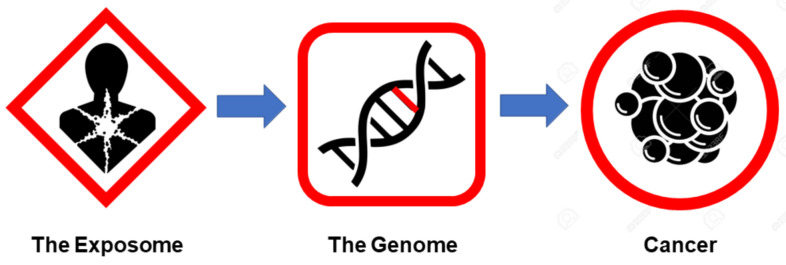
Figure 1
Figure 1
A simplified depiction of how the somatic mutation theory (SMT) and the genomic view of cancer explain oncogenesis. Environmental exposures (the exposome) lead to mutations in the genome which lead to tumor development.
Figure 2
Figure 2
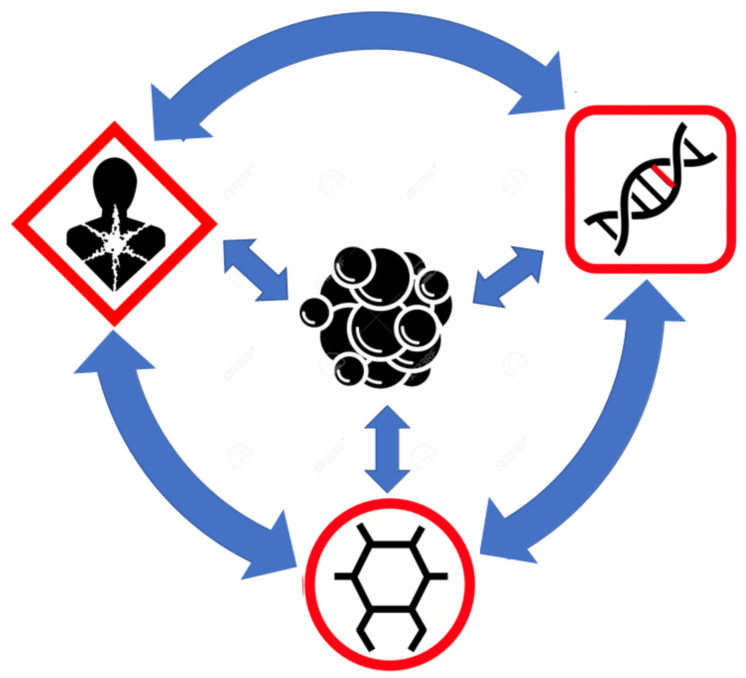
An interconnected, multi-omics view of cancer. In this view the exposome, the genome, and the metabolome all contribute individually to the development of cancer (arrows pointing inward). Any of these three “omes” is capable of initiating oncogenic transformation. Once transformed, the growing tumor also modifies the surrounding metabolome, exposome, and genome through its own altered metabolism and its own altered tumor microenvironment (arrows pointing outward). This constant feedback seems to amplify many of the genetic/metabolic drivers of cancer and helps manifest most of the hallmarks of cancer. The arrows connecting the genome with the exposome, and the metabolome are intended to show that each of these “omes” impacts the other. The genome can affect the exposome (or one’s proclivity to certain lifestyles or exposures), the exposome can impact the genome (through mutagenesis or ROS induced modifications). Likewise, the metabolome can alter the exposome (via chemical or enzymatic processes), while the exposome can also impact the metabolome (via catabolic or anabolic processes on exposure agents). Finally, the metabolome can affect the genome through epigenetic and direct genetic modifications, while the genome can alter the metabolome through genetically driven metabolic reprogramming.

References

    1. Brown G. Oncogenes, Proto-oncogenes, and lineage restriction of cancer stem cells. Int. J. Mol. Sci. 2021;22:9667. doi: 10.3390/ijms22189667. - DOI - PMC - PubMed
    1. Mukherjee S. The Emperor of All Maladies. Fourth Estate; London, UK: 2011.
    1. Hadju S.I. Thoughts about the cause of cancer. Cancer. 2006;106:1643–1649. doi: 10.1002/cncr.21807. - DOI - PubMed
    1. Faguet G.B. A brief history of cancer: Age-old milestones underlying our current knowledge database. Int. J. Cancer. 2015;136:2022–2036. doi: 10.1002/ijc.29134. - DOI - PubMed
    1. Carrel A., Ebeling A.H. The transformation of monocytes into fibroblasts through the action of Rous virus. J. Exp. Med. 1926;43:461–468. doi: 10.1084/jem.43.4.461. - DOI - PMC - PubMed