


Probiotic Combination CBLEB Alleviates Streptococcus pneumoniae Infection Through Immune Regulation in Immunocompromised Rats
- PMID: 35210807
- PMCID: PMC8857997
- DOI: 10.2147/JIR.S348047
Probiotic Combination CBLEB Alleviates Streptococcus pneumoniae Infection Through Immune Regulation in Immunocompromised Rats
Abstract
Background: Streptococcus pneumoniae (SP) is the most common cause of bacterial pneumonia, especially for people with immature or compromised immune systems. In addition to vaccination and antibiotics, immune regulation through microbial intervention has emerged in recent anti-SP infection research. This study investigated the therapeutic effect of a combination of live Bifidobacterium, Lactobacillus, Enterococcus, and Bacillus (CBLEB), a widely used probiotic drug, on SP infection in rats.
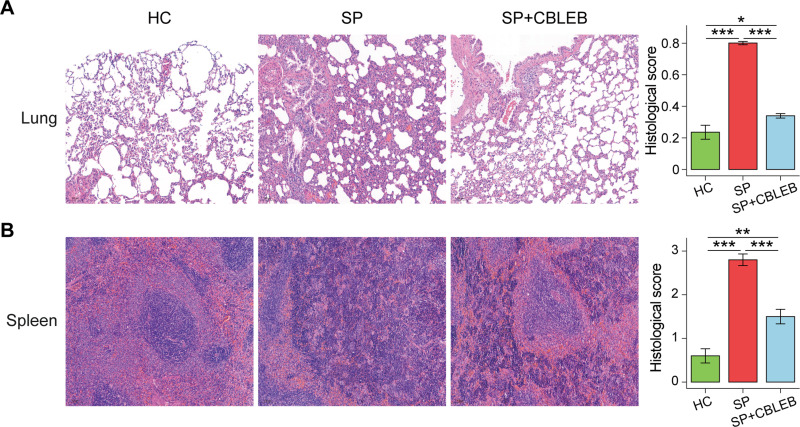
Methods: An immunocompromised SP-infection rat model was established by intraperitoneal injection of cyclophosphamide and nasal administration of SP strain ATCC49619. Samples from SP-infected, SP-infected and CBLEB-treated, and healthy rats were collected to determine blood indicators, serum cytokines, gut microbiota, faecal and serum metabolomes, lung- and colon-gene transcriptions, and histopathological features.
Results: CBLEB treatment alleviated weight loss, inflammation, organ damage, increase in basophil percentage, red cell distribution width, and RANTES levels and decrease in total protein and albumin levels of immunocompromised SP-infection rats. Furthermore, CBLEB treatment alleviated dysbiosis in gut microbiota, including altered microbial composition and the aberrant abundance of opportunistic pathogenic bacterial taxa such as Eggerthellaceae, and disorders in gut and serum metabolism, including altered metabolomic profiles and differentially enriched metabolites such as 2,4-di-tert-butylphenol in faeces and L-tyrosine in serum. The transcriptome analysis results indicated that the underlying mechanism by which CBLEB fights SP infection is mainly attributed to its regulation of immune-related pathways such as TLR and NLR signalling in the lungs and infection-, inflammation- or metabolism-related pathways such as TCR signalling in the colon.
Conclusion: The present study shows a potential value of CBLEB in the treatment of SP infection.
Keywords: Streptococcus pneumonia infection; metabolism; microbiota; probiotics; transcriptome.
© 2022 Lv et al.
Conflict of interest statement
The authors declare that the research was conducted in the absence of any commercial or financial relationships that could be construed as a potential conflict of interest.
Figures



References
-
- WHO fact sheet on pneumonia provides key facts and information on causes, presenting features, economic costs, treatment, prevention and WHO response. Available from: https://www.who.int/news-room/fact-sheets/detail/pneumonia. Accessed February 1, 2022.
-
- O’Brien KL, Wolfson LJ, Watt JP, et al. Burden of disease caused by Streptococcus pneumoniae in children younger than 5 years: global estimates. Lancet. 2009;374(9693):893–902. - PubMed
LinkOut - more resources
Full Text Sources
Molecular Biology Databases
