


Efficacy of Freeze-Dried Amnion Grafts on Cytokines in Uterine Exudates Following Hysteroscopic Adhesiolysis of Severe Intrauterine Adhesions
- PMID: 35210839
- PMCID: PMC8858765
- DOI: 10.2147/IJGM.S333836
Efficacy of Freeze-Dried Amnion Grafts on Cytokines in Uterine Exudates Following Hysteroscopic Adhesiolysis of Severe Intrauterine Adhesions
Abstract
Background: Intrauterine adhesions (IUAs) are a benign uterine disorder that results in intrauterine adhesions and scarring. This study was conducted to assess the effects of freeze-dried amnion grafts on the concentrations of adhesion-related cytokines in uterine exudates following hysteroscopic adhesiolysis of IUAs.
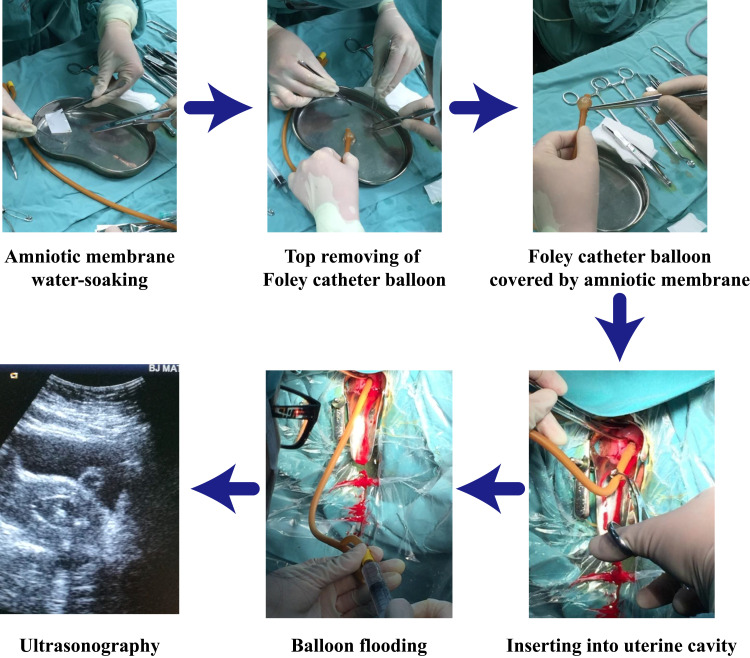
Materials and methods: This study was a prospective randomized controlled trial. Thirty patients who underwent hysteroscopic adhesiolysis for severe IUAs were enrolled. They were randomly divided into a study group (with freeze-dried amnion graft treatment after surgery, N = 15) and a control group (without a graft, N = 15). After complete separation of adhesions, a Foley balloon containing a freeze-dried amnion graft was inserted into the uterine cavity in the study group, while a Foley balloon with no graft was placed in the control group. Enzyme-linked immunosorbent assays were performed to test adhesion-related cytokine concentrations in uterine exudates, including IL-1β, TNF-α, and VEGF, at different time intervals after surgery. Second-look hysteroscopy was conducted three months after the surgery. On the basis of the American Fertility Society (AFS) scoring system, the level of adhesions was evaluated during hysteroscopy.
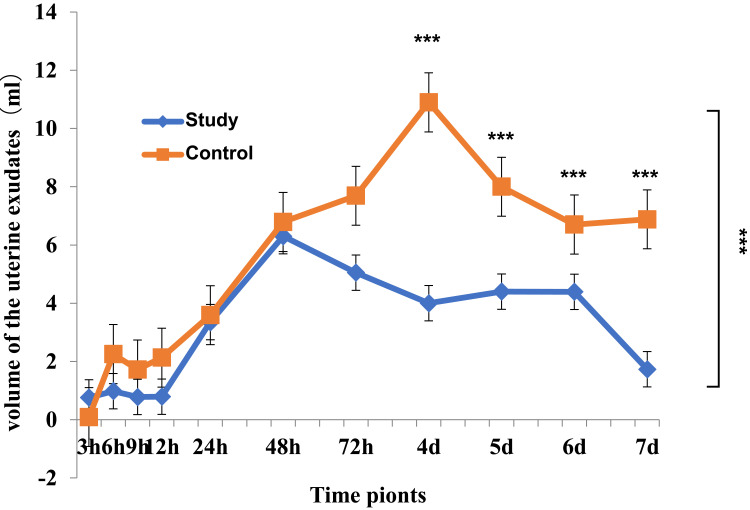
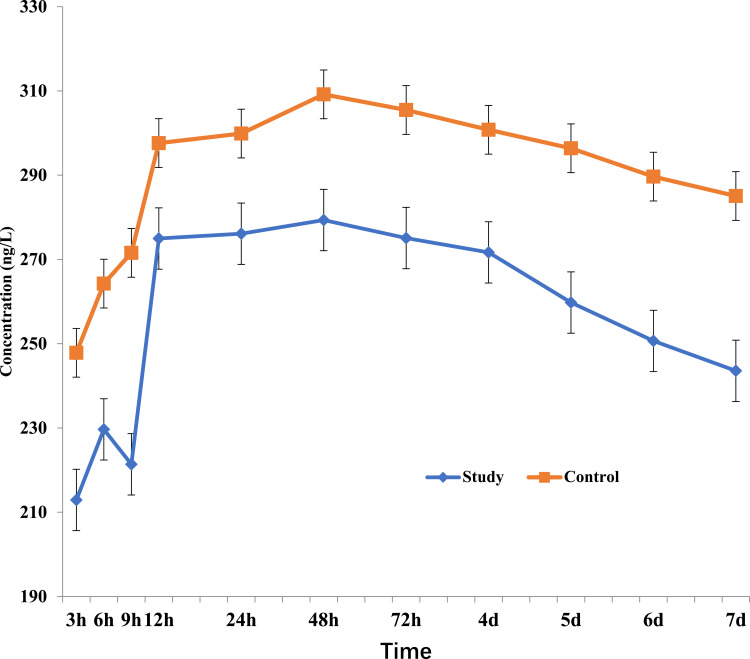
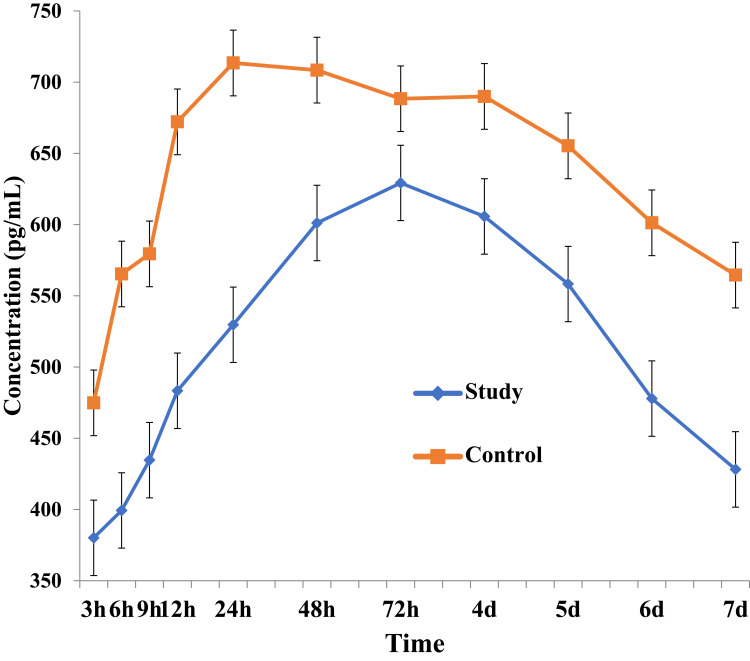
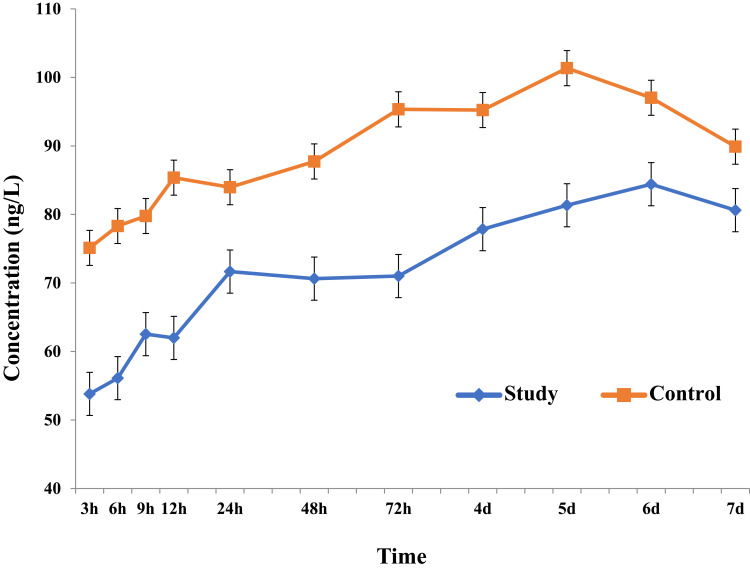
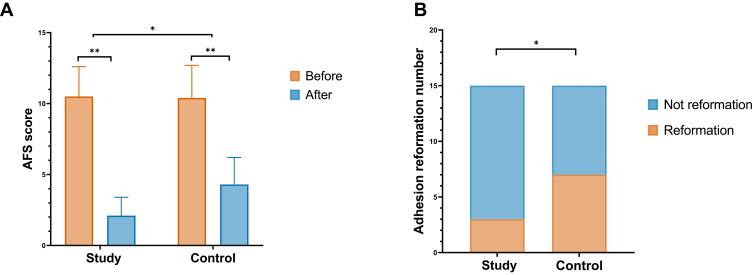
Results: The postoperative volume of the uterine exudates in the study group was significantly lower than that of the control group (P < 0.05). The adhesion-related cytokine concentrations of TNF-α, VEGF, and IL-1β significantly increased after surgery in both groups. Their concentrations were significantly lower in the study group than in the control group (P < 0.05). Moreover, IL-1β exhibited a long-lasting effect in the study group. AFS scores and readhesion rates were significantly lower in the study group than in the control group after hysteroscopic adhesiolysis of severe IUAs.
Conclusion: The application of freeze-dried amnion grafts is beneficial to the postoperative recovery of patients with severe IUAs and may reduce the readhesion rate after hysteroscopic adhesiolysis by lowering adhesion-related cytokines, including TNF-α, VEGF, and IL-1β.
Keywords: freeze-dried amnion graft; interleukin-1 beta; intrauterine adhesions; tumour necrosis factor-α; vascular endothelial growth factor.
© 2022 Wang et al.
Conflict of interest statement
The authors report no conflicts of interest in this work.
Figures
References
-
- Tao Z, Duan H. [Expression of adhesion-related cytokines in the uterine fluid after transcervical resection of adhesion]. Zhonghua Fu Chan Ke Za Zhi. 2012;47(10):734–737. Chinese. - PubMed
LinkOut - more resources
Full Text Sources
