Review
. 2022 Apr;47(4):82.
doi: 10.3892/or.2022.8293. Epub 2022 Feb 25.

Molecular mechanisms of platinum‑based chemotherapy resistance in ovarian cancer (Review)

Affiliations
Review

Molecular mechanisms of platinum‑based chemotherapy resistance in ovarian cancer (Review)

Ling Yang et al. Oncol Rep. 2022 Apr.

Abstract

Cisplatin is one of the most effective chemotherapy drugs for ovarian cancer, but resistance is common. The initial response to platinum‑based chemotherapy is as high as 80%, but in most advanced patients, final relapse and death are caused by acquired drug resistance. The development of resistance to therapy in ovarian cancer is a significant hindrance to therapeutic efficacy. The resistance of ovarian cancer cells to chemotherapeutic mechanisms is rather complex and includes multidrug resistance, DNA damage repair, cell metabolism, oxidative stress, cell cycle regulation, cancer stem cells, immunity, apoptotic pathways, autophagy and abnormal signaling pathways. The present review provided an update of recent developments in our understanding of the mechanisms of ovarian cancer platinum‑based chemotherapy resistance, discussed current and emerging approaches for targeting these patients and presented challenges associated with these approaches, with a focus on development and overcoming resistance.

Keywords: molecular mechanisms; ovarian cancer; platinum‑based chemotherapy resistance.


Conflict of interest statement

The authors declare that they have no competing interests.

Figures
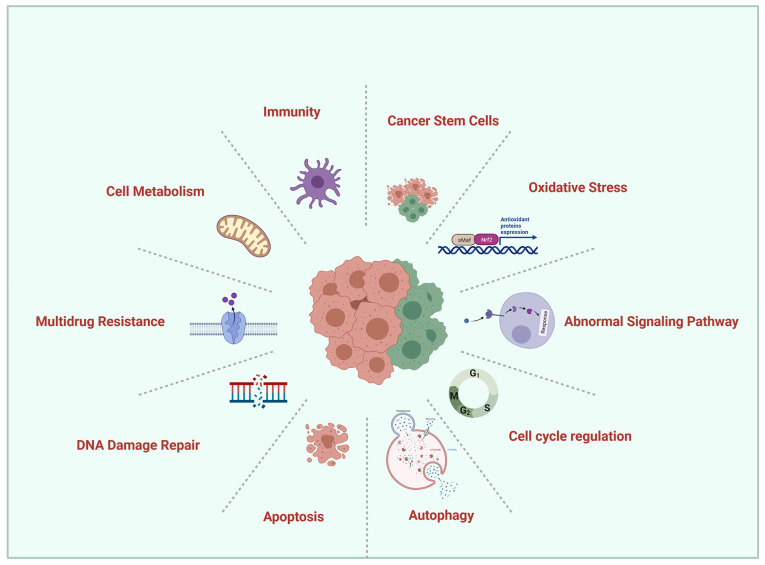
Figure 1.
Figure 1.
Schematic overview of the mechanisms of platinum-based chemotherapy resistance in ovarian cancer.
Figure 2.
Figure 2.
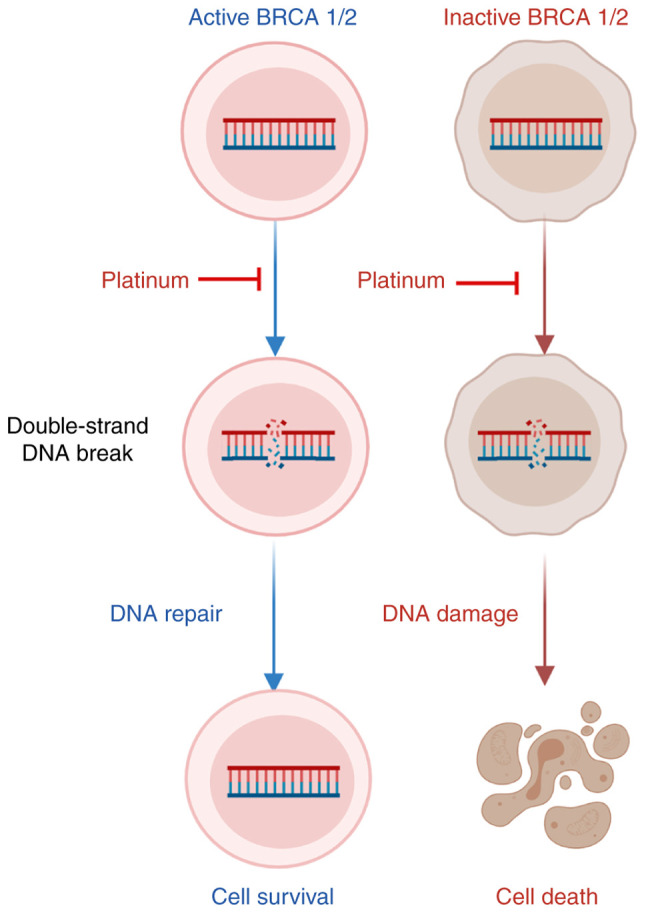
BRCA1/2 activity in ovarian cancer is associated with the response to platinum chemotherapy. BRCA1/2 functions in activating the repair of double-strand breaks and initiating homologous recombination, linking the maintenance of genomic integrity to tumor suppression. BRCA1/2 active cells can repair the platinum drug-caused double-strand DNA damage by homologous recombination, while BRCA1/2 inactive cells cannot, thus tumor cells with BRCA gene mutation are more sensitive to platinum drugs.
Figure 3.
Figure 3.
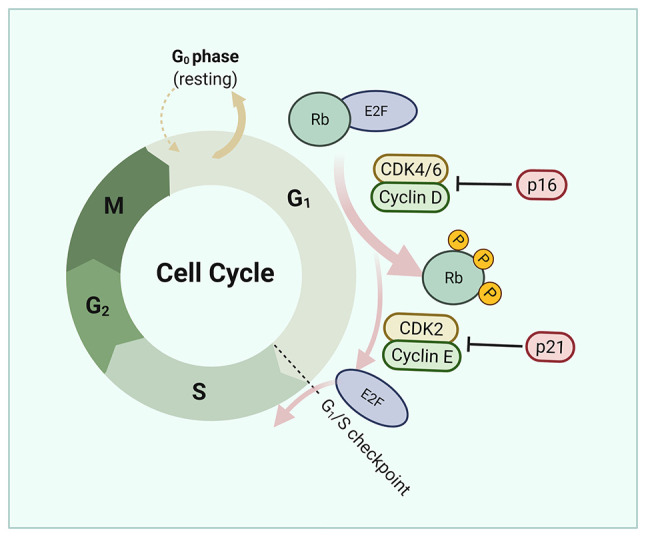
Regulation of the cell cycle by platinum treatment in ovarian cancer. CCNE1 and RB are cyclins associated to cell cycle transition in the G1-S phase. CCNE1 is essential for CDK2 activation and its overexpression can lead to premature entry into the S phase, abrogating DNA repair during the G1 phase and leading to increased levels of replication stress. Inhibition of CDK6 increases the sensitivity of epithelial ovarian cancers cells to platinum by increasing apoptosis.
Figure 4.
Figure 4.
CSCs are more resistant to chemotherapy. The persistence of quiescent cancer cells that are hard to be eliminated by chemotherapy and these residual tumors are enriched in CSCs, which are more resistant to chemotherapy. CSCs are a unique cell population that causes tumor recurrence and metastasis, leading to the formation of new tumors. CSCs, cancer stem cells.
Figure 5.
Figure 5.
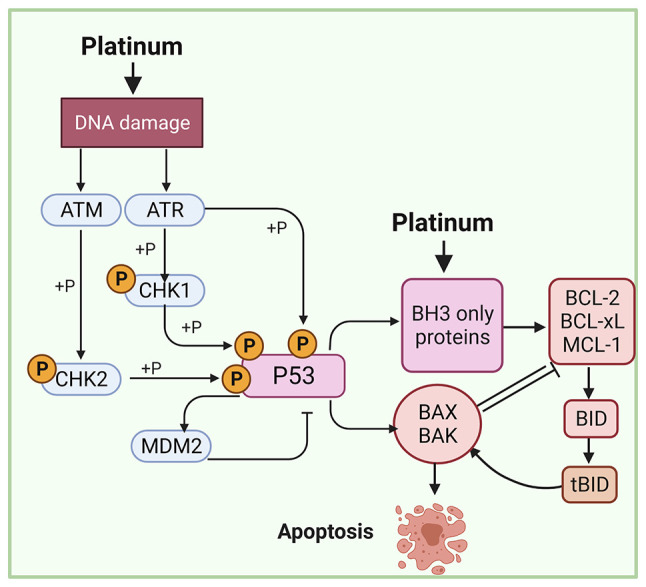
Effectiveness of chemotherapy strongly depends on the ability of ovarian cancer cells to undergo drug-induced apoptosis. Inactivation of p53 increase resistance to platinum-based chemotherapy by reducing the sensitivity of cells to activate apoptotic responses. The balance of proapoptotic and antiapoptotic proteins of the Bcl-2 family is a key factor to promote the sensitivity of platinum-based chemotherapy.

References

    1. Bray F, Ferlay J, Soerjomataram I, Siegel RL, Torre LA, Jemal A. Global cancer statistics 2018: GLOBOCAN estimates of incidence and mortality worldwide for 36 cancers in 185 countries. CA Cancer J Clin. 2018;68:394–424. doi: 10.3322/caac.21492. - DOI - PubMed
    1. Matulonis UA, Sood AK, Fallowfield L, Howitt BE, Sehouli J, Karlan BY. Ovarian cancer. Nat Rev Dis Primers. 2016;2:16061. doi: 10.1038/nrdp.2016.61. - DOI - PMC - PubMed
    1. Orr B, Edwards RP. Diagnosis and treatment of ovarian cancer. Hematol Oncol Clin North Am. 2018;32:943–964. doi: 10.1016/j.hoc.2018.07.010. - DOI - PubMed
    1. Gershenson DM, Bodurka DC, Lu KH, Nathan LC, Milojevic L, Wong KK, Malpica A, Sun CC. Impact of age and primary disease site on outcome in women with low-grade serous carcinoma of the ovary or peritoneum: Results of a large single-institution registry of a rare tumor. J Clin Oncol. 2015;33:2675–2682. doi: 10.1200/JCO.2015.61.0873. - DOI - PMC - PubMed
    1. Grisham RN, Sylvester BE, Won H, McDermott G, DeLair D, Ramirez R, Yao Z, Shen R, Dao F, Bogomolniy F, et al. Extreme outlier analysis identifies occult mitogen-activated protein kinase pathway mutations in patients with low-grade serous ovarian cancer. J Clin Oncol. 2015;33:4099–4105. doi: 10.1200/JCO.2015.62.4726. - DOI - PMC - PubMed

MeSH terms