


Prevalence of COVID-19 Infection among Patients with Diabetes and Their Vaccination Coverage Status in Saudi Arabia: A Cross-Sectional Analysis from a Hospital-Based Diabetes Registry
- PMID: 35214769
- PMCID: PMC8878518
- DOI: 10.3390/vaccines10020310
Prevalence of COVID-19 Infection among Patients with Diabetes and Their Vaccination Coverage Status in Saudi Arabia: A Cross-Sectional Analysis from a Hospital-Based Diabetes Registry
Abstract
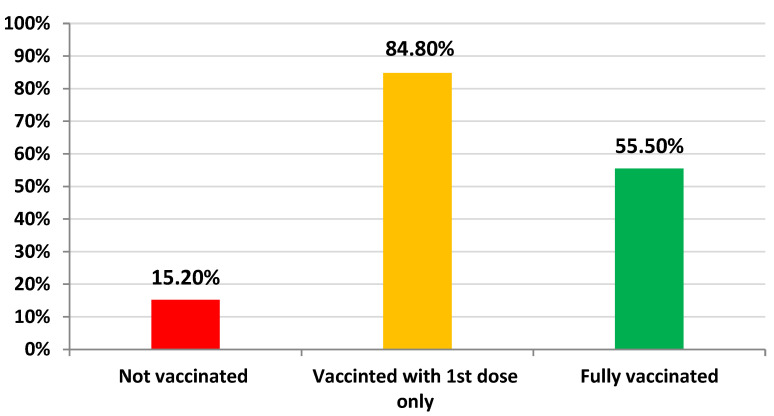
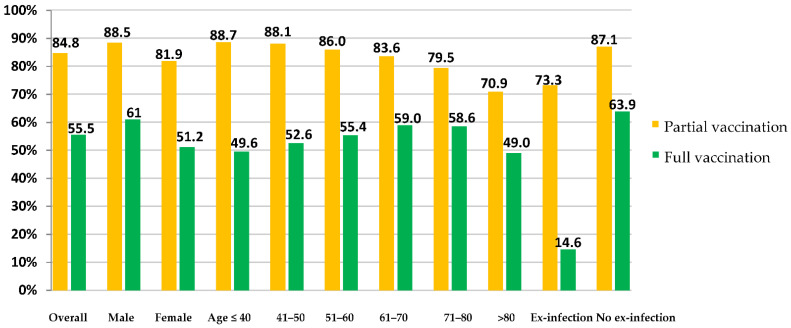
Patients with diabetes have a higher risk of severe infection and mortality due to COVID-19. Considering the current limited effective pharmacological treatments, vaccination remains one of the most effective means to control the pandemic. The current study aimed to determine the prevalence of COVID-19 infection and the rate of COVID-19 vaccination coverage among patients with type 2 diabetes mellitus. The patients were identified from a diabetes hospital registry at Prince Sultan Military Medical City, Riyadh, Saudi Arabia in July 2021. The history of COVID-19 infection and the vaccination status were retrieved from the National Health Electronic Surveillance Network (HESN) program and the Seha platform, respectively. A total of 11,573 patients were included in this study (representing 99.5% of all patients in the registry). A total of 1981 patients (17.1%) had a history of confirmed COVID-19 infection. The rate of vaccination with a 1st dose was 84.8% (n = 9811), while the rate of full vaccination with the 2nd dose was 55.5% (n = 6422). The analysis showed that a higher proportion of male patients were fully vaccinated than female patients (61.0% versus 51.2%, p < 0.001). There were statistically significant differences among the age groups, with the full vaccination rate ranging from 59.0% for the 61-70-year-old age group to 49.0% for the > 80-year-old age group (p < 0.001). The patients with no previous history of COVID-19 infection were more likely to get fully vaccinated than those with a previous history of the infection (63.9% versus 14.6%, respectively, p < 0.001). The factors associated with a higher likelihood of unvaccinated status included the female gender (adjusted odds ratio (aOR) = 1.705 (95% confidence interval (CI): 1.528-1.902)), elderly patients in the age group of 61-70 (aOR (95% CI) = 1.390 (1.102-1.753)), the age group of 71-80 (aOR (95% CI) = 1.924 (1.499-2.470)) and the age group of >80 (aOR (95% CI) = 3.081 (2.252-4.214), and prior history of COVID-19 infection (aOR (95% CI) = 2.501 (2.223-2.813)). In conclusion, a considerable proportion of patients with type 2 diabetes had confirmed COVID-19 infection. Continued targeted efforts are needed to accelerate vaccination coverage rates among patients with diabetes in general and the particular subgroups identified in this study.
Keywords: COVID-19; diabetes; infections; vaccination; vaccine hesitancy; vaccines.
Conflict of interest statement
The authors declare no conflict of interest.
Figures
References
-
- Trentini F., Marziano V., Guzzetta G., Tirani M., Cereda D., Poletti P., Piccarreta R., Barone A., Preziosi G., Arduini F., et al. The pressure on healthcare system and intensive care utilization during the COVID-19 outbreak in the Lombardy region: A retrospective observational study on 43,538 hospitalized patients. Am. J. Epidemiol. 2021;191:137–146. doi: 10.1093/aje/kwab252. - DOI - PMC - PubMed
LinkOut - more resources
Full Text Sources
