


Zoonotic Episodes of Scabies: A Global Overview
- PMID: 35215156
- PMCID: PMC8877739
- DOI: 10.3390/pathogens11020213
Zoonotic Episodes of Scabies: A Global Overview
Abstract
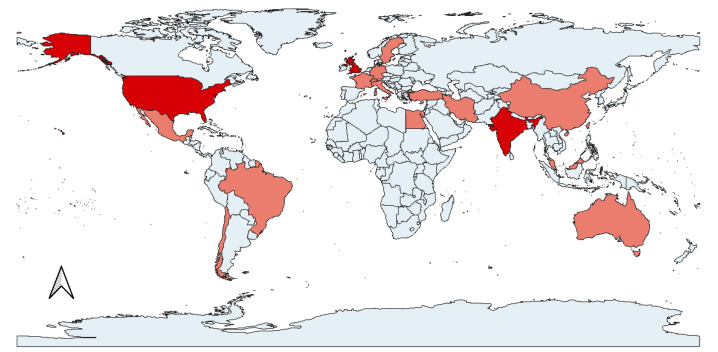
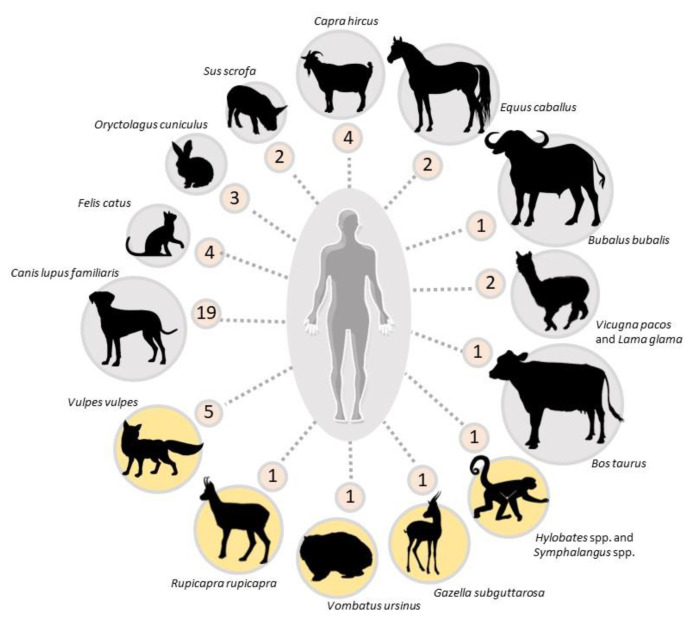
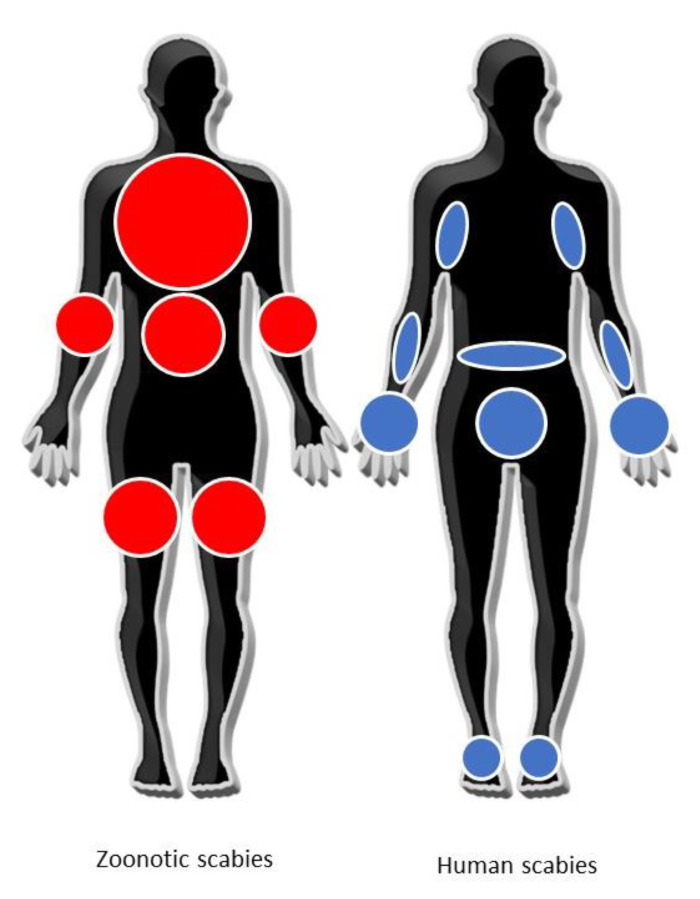
Zoonotic scabies (ZS), also referred to as "pseudoscabies", is considered a self-limiting disease with a short incubation period and transient clinical skin signs. It is commonly thought that Sarcoptes scabiei mites from animals are unable to successfully reproduce and persist on human skin; however, several ZS case reports have mentioned the persistence of symptoms and occasionally mites for weeks. The aim of this review was to collect and organize the sparse literature explicitly referring to S. scabiei zoonotic transmission, focusing on the source of the outbreak, the circumstances leading to the transmission of the parasite, the diagnosis including the identification of the Sarcoptes "strain" involved, and the applied treatments. A total of 46 articles, one conference abstract and a book were collected describing ZS cases associated with twenty animal hosts in five continents. Dogs were by far the most common source among pet owners, while diverse livestock and wildlife contributed to the caseload as an occupational disease. Genetic epidemiological studies of ZS outbreaks are still limited in number, but tools are available to fill this knowledge gap in the near future. Further research is also needed to understand the apparent heterogeneity in the morbidity, disease severity and timing of the response to treatment among people infected with different animal-derived strains.
Keywords: Sarcoptes scabiei; animals; pseudoscabies; sarcoptic mange; zoonosis; zoonotic scabies.
Conflict of interest statement
The authors declare no conflict of interest.
Figures
References
-
- Karimkhani C., Colombara D.V., Drucker A.M., Norton S.A., Hay R., Engelman D., Steer A., Whitfeld M., Naghavi M., Dellavalle R.P. The global burden of scabies: A cross-sectional analysis from the Global Burden of Disease Study 2015. Lancet Infect. Dis. 2015;17:1247–1254. doi: 10.1016/S1473-3099(17)30483-8. - DOI - PMC - PubMed
-
- Rehmus W.E., Prendiville J.S. Scabies and Pseudoscabies. In: Hoeger P., Kinsler V., Yan A., Harper J., Oranje A., Bodemer C., Larralde M., Luk D., Mendiratta V., Purvis D., editors. Harper’s Textbook of Pediatric Dermatology. John Wiley& Sons Ltd.; Hoboken, NJ, USA: 2019. pp. 711–722. - DOI
-
- Burgess I. Sarcoptes scabiei and scabies. Adv. Parasitol. 1993;33:235. - PubMed
Publication types
LinkOut - more resources
Full Text Sources
Miscellaneous
