


N-acetylcysteine (NAC) and Its Role in Clinical Practice Management of Cystic Fibrosis (CF): A Review
- PMID: 35215328
- PMCID: PMC8879903
- DOI: 10.3390/ph15020217
N-acetylcysteine (NAC) and Its Role in Clinical Practice Management of Cystic Fibrosis (CF): A Review
Abstract
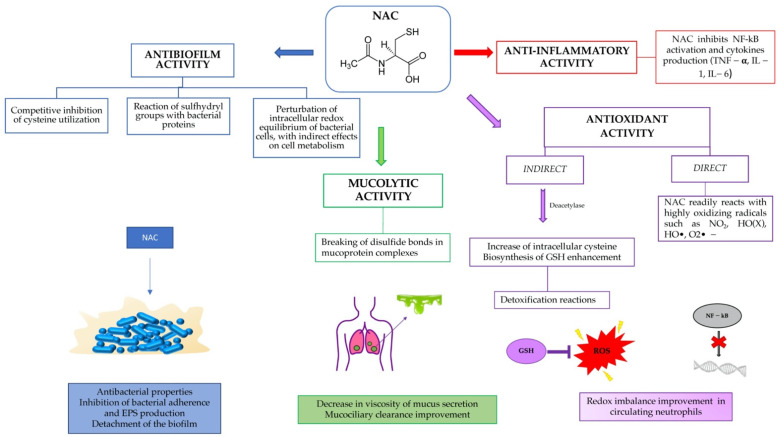
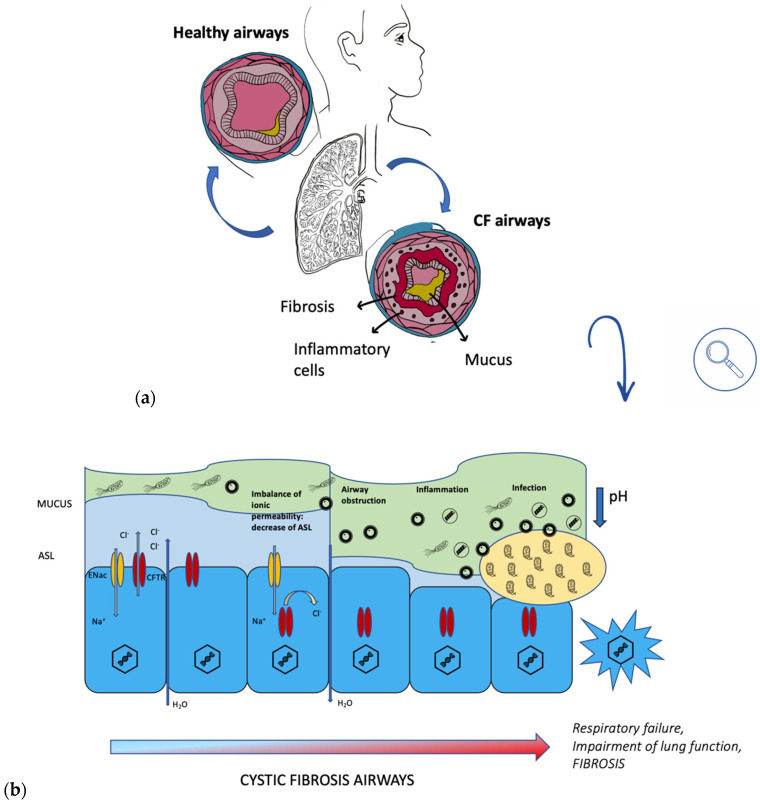
N-acetylcysteine is the acetylated form of the amino acid L-cysteine and a precursor to glutathione (GSH). It has been known for a long time as a powerful antioxidant and as an antidote for paracetamol overdose. However, other activities related to this molecule have been discovered over the years, making it a promising drug for diseases such as cystic fibrosis (CF). Its antioxidant activity plays a key role in CF airway inflammation and redox imbalance. Furthermore, this molecule appears to play an important role in the prevention and eradication of biofilms resulting from CF airway infections, in particular that of Pseudomonas aeruginosa. The aim of this review is to provide an overview of CF and the role that NAC could play in preventing and eliminating biofilms, as a modulator of inflammation and as an antioxidant, restoring the redox balance within the airways in CF patients. To do this, NAC can act alone, but it can also be used as an adjuvant molecule to known drugs (antibiotics/anti-inflammatories) to increase their activity.
Keywords: N-acetylcysteine; biofilm; cystic fibrosis; lung diseases; oxidative stress; pseudomonas aeruginosa.
Conflict of interest statement
The authors declare no conflict of interest.
Figures
References
Publication types
LinkOut - more resources
Full Text Sources
Molecular Biology Databases
