


The mechanism of HMGB1 secretion and release
- PMID: 35217834
- PMCID: PMC8894452
- DOI: 10.1038/s12276-022-00736-w
The mechanism of HMGB1 secretion and release
Abstract
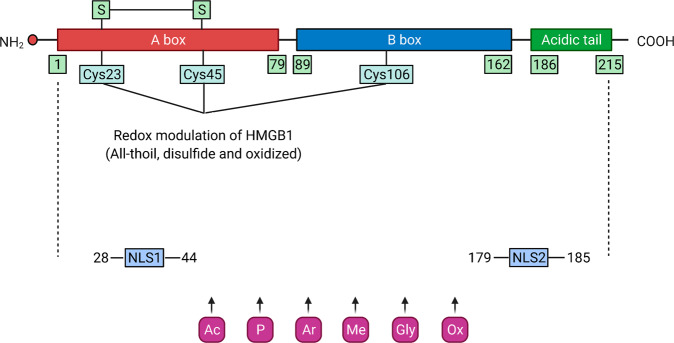
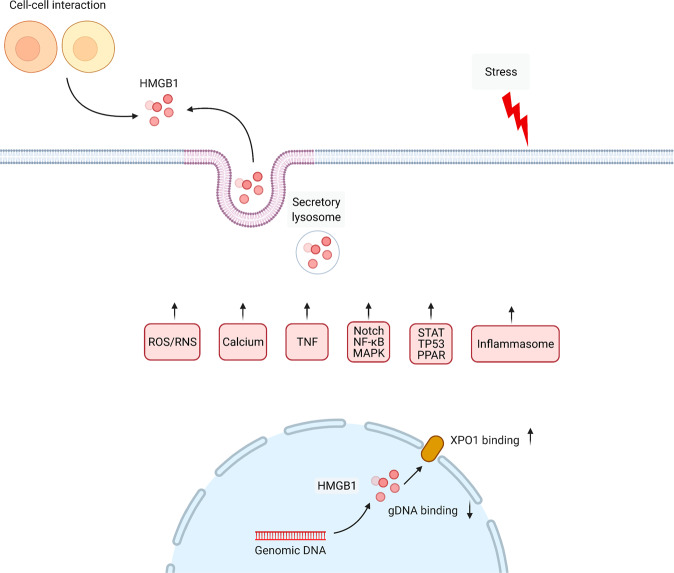
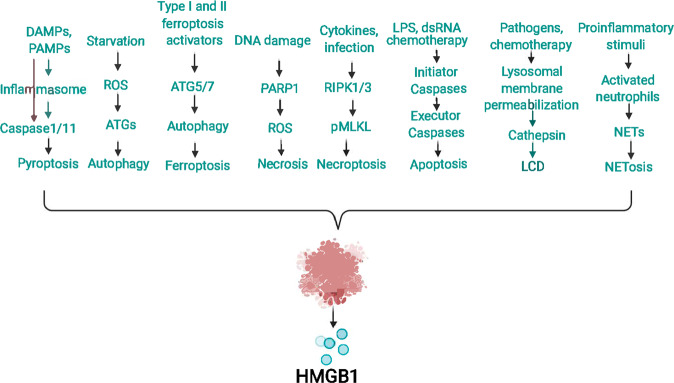
High mobility group box 1 (HMGB1) is a nonhistone nuclear protein that has multiple functions according to its subcellular location. In the nucleus, HMGB1 is a DNA chaperone that maintains the structure and function of chromosomes. In the cytoplasm, HMGB1 can promote autophagy by binding to BECN1 protein. After its active secretion or passive release, extracellular HMGB1 usually acts as a damage-associated molecular pattern (DAMP) molecule, regulating inflammation and immune responses through different receptors or direct uptake. The secretion and release of HMGB1 is fine-tuned by a variety of factors, including its posttranslational modification (e.g., acetylation, ADP-ribosylation, phosphorylation, and methylation) and the molecular machinery of cell death (e.g., apoptosis, pyroptosis, necroptosis, alkaliptosis, and ferroptosis). In this minireview, we introduce the basic structure and function of HMGB1 and focus on the regulatory mechanism of HMGB1 secretion and release. Understanding these topics may help us develop new HMGB1-targeted drugs for various conditions, especially inflammatory diseases and tissue damage.
© 2022. The Author(s).
Conflict of interest statement
The authors declare no competing interests.
Figures
References
-
- Goodwin GH, Johns EW. Isolation and characterisation of two calf-thymus chromatin non-histone proteins with high contents of acidic and basic amino acids. Eur. J. Biochem. 1973;40:215–219. - PubMed
-
- Thomas JOHMG. I and 2 architectural DNA-binding proteins. Biochem. Soc. Trans. 2001;4:395–401. - PubMed
-
- Wang HC, et al. HMG-1 as a late mediator of endotoxin lethality in mice. Science. 1999;285:248–251. - PubMed
Publication types
MeSH terms
Substances
LinkOut - more resources
Full Text Sources
