


Predicting the Impact of Alcohol Taxation Increases on Mortality-A Comparison of Different Estimation Techniques
- PMID: 35217852
- PMCID: PMC9270989
- DOI: 10.1093/alcalc/agac003
Predicting the Impact of Alcohol Taxation Increases on Mortality-A Comparison of Different Estimation Techniques
Abstract
Aims: To examine how standard analytical approaches to model mortality outcomes of alcohol use compare to the true results using the impact of the March 2017 alcohol taxation increase in Lithuania on all-cause mortality as an example.
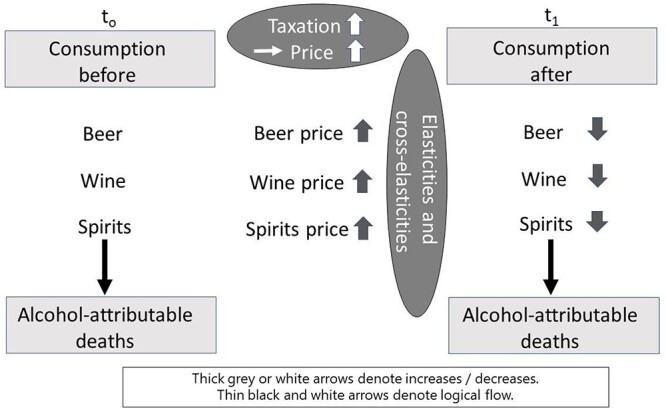
Methods: Four methodologies were used: two direct methodologies: (a) interrupted time-series on mortality and (b) comparing predictions based on time-series modeling with the real number of deaths for the year following the implementation of the tax increase; and two indirect methodologies: (c) combining a regression-based estimate for the impact of taxation on alcohol consumption with attributable-fraction methodology and (d) using price elasticities from meta-analyses to estimate the impact on alcohol consumption before applying attributable-fraction methodology.
Results and conclusions: While all methodologies estimated reductions in all-cause mortality, especially for men, there was substantial variability in the level of mortality reductions predicted. The indirect methodologies had lower predictions as the meta-analyses on elasticities and risk relations seem to underestimate the true values for Lithuania. Directly estimated effects of taxation based on the actual mortalities seem to best represent the true reductions in alcohol-attributable mortality. A significant increase in alcohol excise taxation had a marked impact on all-cause mortality in Lithuania.
© The Author(s) 2022. Medical Council on Alcohol and Oxford University Press. All rights reserved.
Figures
References
-
- Babor TF, Casswell S, Graham Ket al. (2022(forthcoming)) Alcohol: No Ordinary Commodity. Research and Public Policy. Oxford, UK: Oxford University Press.
-
- Beard E, Marsden J, Brown Jet al. (2019) Understanding and using time series analyses in addiction research. Addiction 114:1866–84. - PubMed
-
- Carvalho AF, Heilig M, Perez Aet al. (2019) Alcohol use disorders. The Lancet 394:781–92. - PubMed
-
- Chisholm D, Moro D, Bertram Met al. (2018) Are the "best buys" for alcohol control still valid? An update on the comparative cost-effectiveness of alcohol control strategies at the global level. J Stud Alcohol Drugs 79:514–22. - PubMed
-
- Churchill S, Angus C, Purshouse Ret al. (2020) Expanding attributable fraction applications to outcomes wholly attributable to a risk factor. Stat Methods Med Res 29:2637–46. - PubMed
