


In it together: Candida-bacterial oral biofilms and therapeutic strategies
- PMID: 35218311
- PMCID: PMC8957517
- DOI: 10.1111/1758-2229.13053
In it together: Candida-bacterial oral biofilms and therapeutic strategies
Abstract
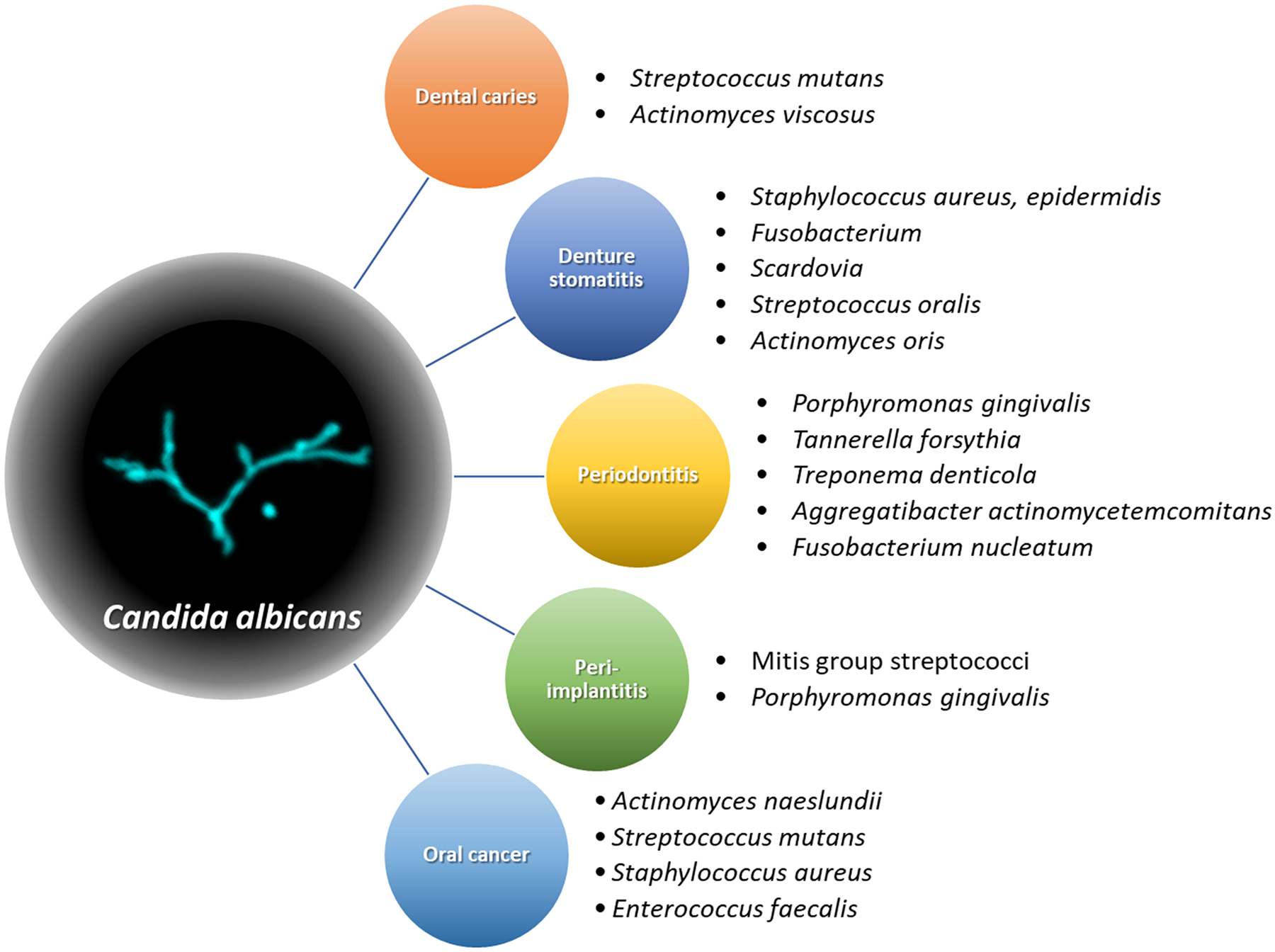
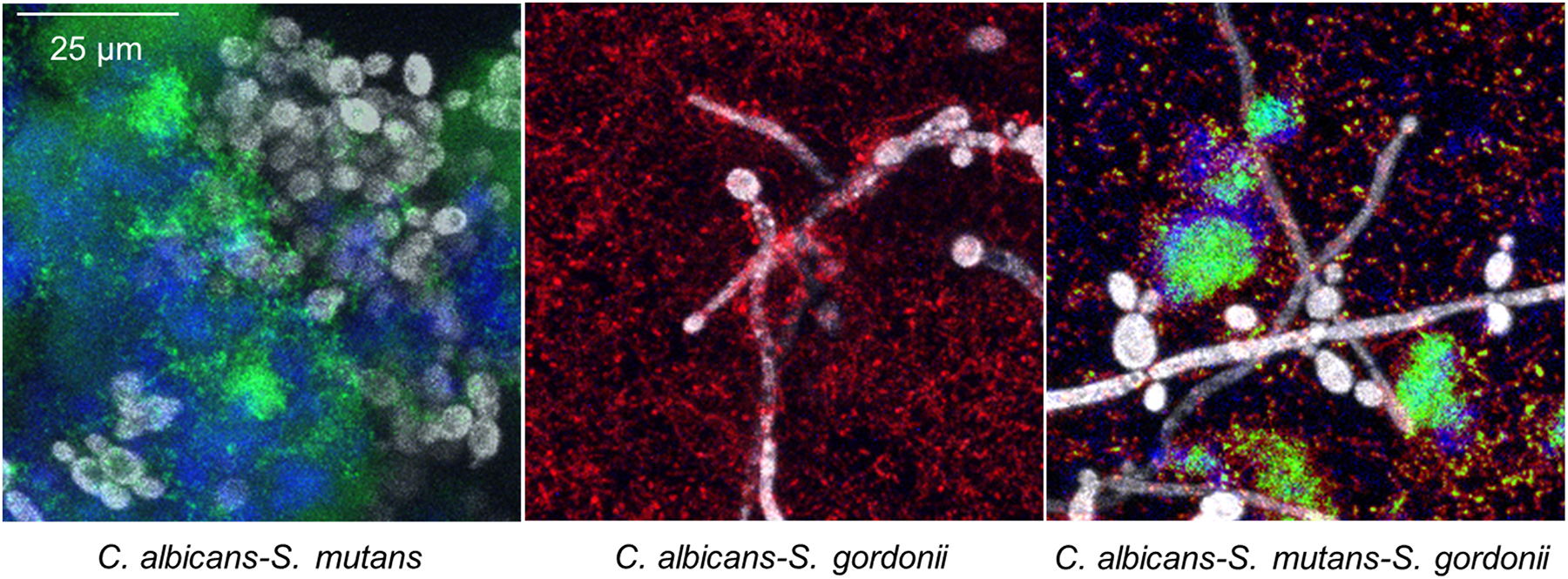
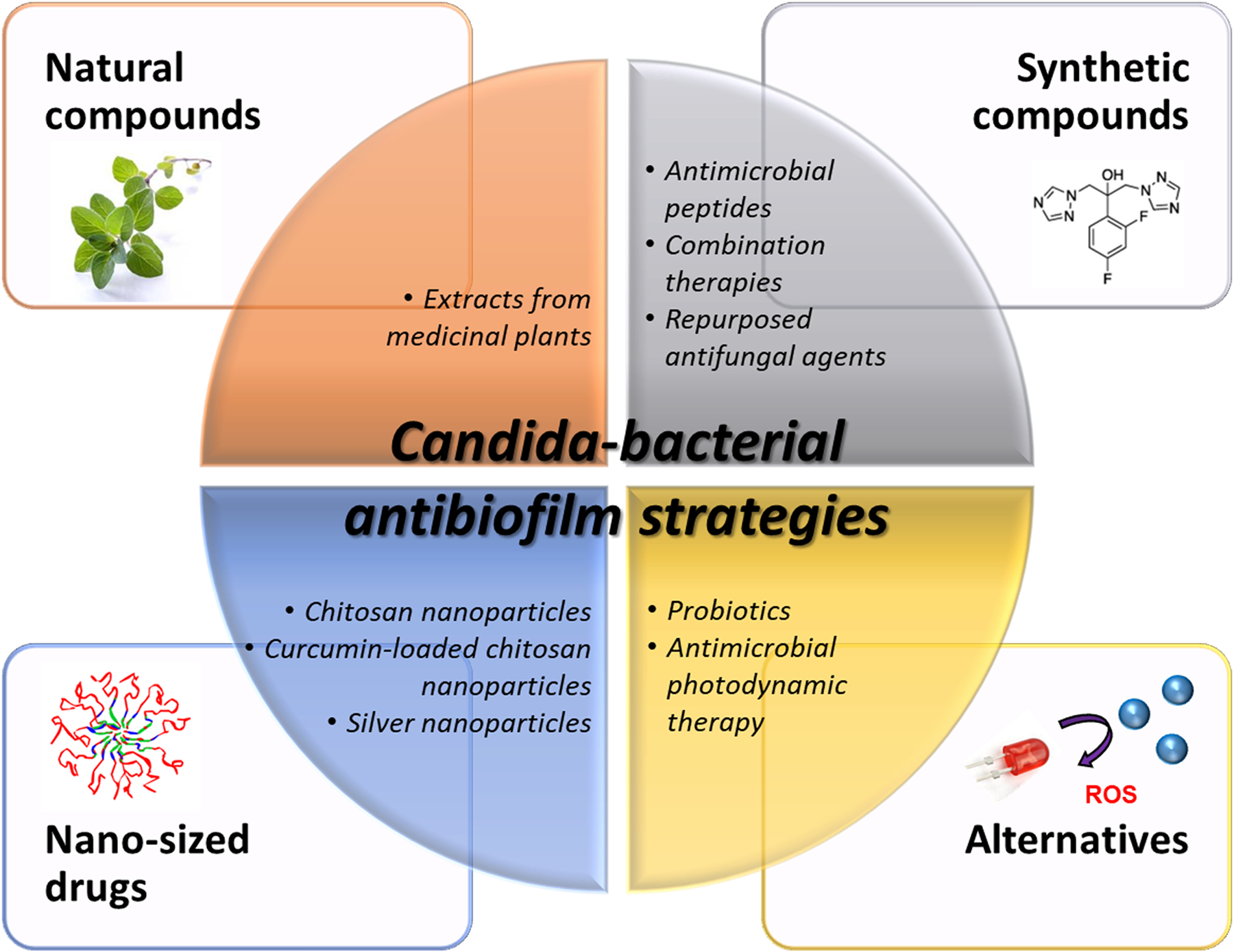
Under natural environmental settings or in the human body, the majority of microorganisms exist in complex polymicrobial biofilms adhered to abiotic and biotic surfaces. These microorganisms exhibit symbiotic, mutualistic, synergistic, or antagonistic relationships with other species during biofilm colonization and development. These polymicrobial interactions are heterogeneous, complex and hard to control, thereby often yielding worse outcomes than monospecies infections. Concerning fungi, Candida spp., in particular, Candida albicans is often detected with various bacterial species in oral biofilms. These Candida-bacterial interactions may induce the transition of C. albicans from commensal to pathobiont or dysbiotic organism. Consequently, Candida-bacterial interactions are largely associated with various oral diseases, including dental caries, denture stomatitis, periodontitis, peri-implantitis, and oral cancer. Given the severity of oral diseases caused by cross-kingdom consortia that develop hard-to-remove and highly drug-resistant biofilms, fundamental research is warranted to strategically develop cost-effective and safe therapies to prevent and treat cross-kingdom interactions and subsequent biofilm development. While studies have shed some light, targeting fungal-involved polymicrobial biofilms has been limited. This mini-review outlines the key features of Candida-bacterial interactions and their impact on various oral diseases. In addition, current knowledge on therapeutic strategies to target Candida-bacterial polymicrobial biofilms is discussed.
© 2022 Society for Applied Microbiology and John Wiley & Sons Ltd.
Figures
Similar articles
-
Intervening in Symbiotic Cross-Kingdom Biofilm Interactions: a Binding Mechanism-Based Nonmicrobicidal Approach.mBio. 2021 May 18;12(3):e00651-21. doi: 10.1128/mBio.00651-21. mBio. 2021. PMID: 34006656 Free PMC article.
-
Candida-Bacterial Biofilms and Host-Microbe Interactions in Oral Diseases.Adv Exp Med Biol. 2019;1197:119-141. doi: 10.1007/978-3-030-28524-1_10. Adv Exp Med Biol. 2019. PMID: 31732939 Review.
-
Biofilm Interactions of Candida albicans and Mitis Group Streptococci in a Titanium-Mucosal Interface Model.Appl Environ Microbiol. 2020 Apr 17;86(9):e02950-19. doi: 10.1128/AEM.02950-19. Print 2020 Apr 17. Appl Environ Microbiol. 2020. PMID: 32111586 Free PMC article.
-
Bacterial GtfB Augments Candida albicans Accumulation in Cross-Kingdom Biofilms.J Dent Res. 2017 Sep;96(10):1129-1135. doi: 10.1177/0022034517714414. Epub 2017 Jun 12. J Dent Res. 2017. PMID: 28605597 Free PMC article.
-
Living together: The role of Candida albicans in the formation of polymicrobial biofilms in the oral cavity.Yeast. 2023 Aug;40(8):303-317. doi: 10.1002/yea.3855. Epub 2023 May 16. Yeast. 2023. PMID: 37190878 Review.
Cited by
-
Biotechnological applications of biofilms formed by osmotolerant and halotolerant yeasts.Appl Microbiol Biotechnol. 2023 Jul;107(14):4409-4427. doi: 10.1007/s00253-023-12589-y. Epub 2023 May 26. Appl Microbiol Biotechnol. 2023. PMID: 37233754 Review.
-
Novel Approaches for Treatment of Intraoral Microbial Infections.J Dent Res. 2025 Jun;104(6):584-593. doi: 10.1177/00220345251317494. Epub 2025 Mar 12. J Dent Res. 2025. PMID: 40071291 Free PMC article. Review.
-
A Novel Sugar-Free Probiotic Oral Rinse Influences Oral Candida albicans in Children with Down Syndrome Post Complete Oral Rehabilitation: A Pilot Randomized Clinical Trial with 6-Month Follow-Up.Probiotics Antimicrob Proteins. 2025 Mar 19. doi: 10.1007/s12602-025-10511-8. Online ahead of print. Probiotics Antimicrob Proteins. 2025. PMID: 40102321
-
Photobiomodulation of Gingival Cells Challenged with Viable Oral Microbes.J Dent Res. 2024 Jul;103(7):745-754. doi: 10.1177/00220345241246529. Epub 2024 May 3. J Dent Res. 2024. PMID: 38700089 Free PMC article.
-
Corynebacterial membrane vesicles disrupt cariogenic interkingdom assemblages.Appl Environ Microbiol. 2024 Nov 20;90(11):e0088524. doi: 10.1128/aem.00885-24. Epub 2024 Oct 31. Appl Environ Microbiol. 2024. PMID: 39480093 Free PMC article.
References
-
- Alcoforado GA, Rams TE, Feik D and Slots J (1991). Microbial aspects of failing osseointegrated dental implants in humans. J Parodontol 10(1): 11–18. - PubMed
-
- Amaya Arbeláez MI, de Paula ESACA, Navegante G, Valente V, Barbugli PA and Vergani CE (2021). Proto-Oncogenes and Cell Cycle Gene Expression in Normal and Neoplastic Oral Epithelial Cells Stimulated With Soluble Factors From Single and Dual Biofilms of Candida albicans and Staphylococcus aureus. Front Cell Infect Microbiol 11: 627043. - PMC - PubMed
-
- Arciola CR, Campoccia D and Montanaro L (2018). Implant infections: adhesion, biofilm formation and immune evasion. Nat Rev Microbiol 16(7): 397–409. - PubMed
-
- Arias LS, Delbem ACB, Fernandes RA, Barbosa DB and Monteiro DR (2016). Activity of tyrosol against single and mixed-species oral biofilms. J Appl Microbiol 120(5): 1240–1249. - PubMed
Publication types
MeSH terms
Grants and funding
LinkOut - more resources
Full Text Sources
Medical
Miscellaneous
