


Gnas Loss Causes Chondrocyte Fate Conversion in Cranial Suture Formation
- PMID: 35220829
- PMCID: PMC9266356
- DOI: 10.1177/00220345221075215
Gnas Loss Causes Chondrocyte Fate Conversion in Cranial Suture Formation
Abstract
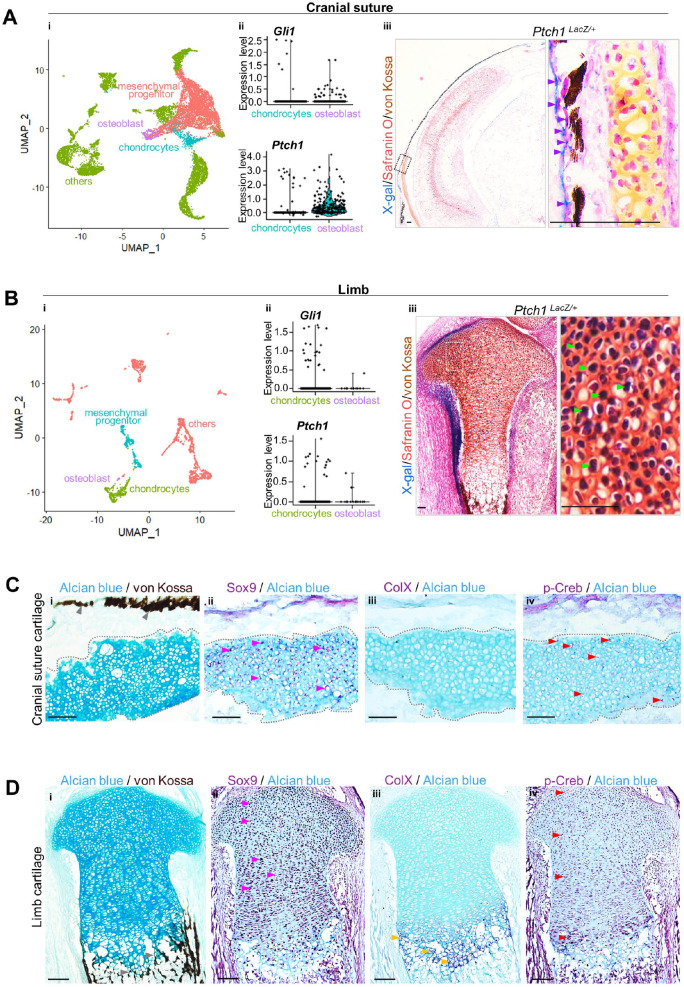
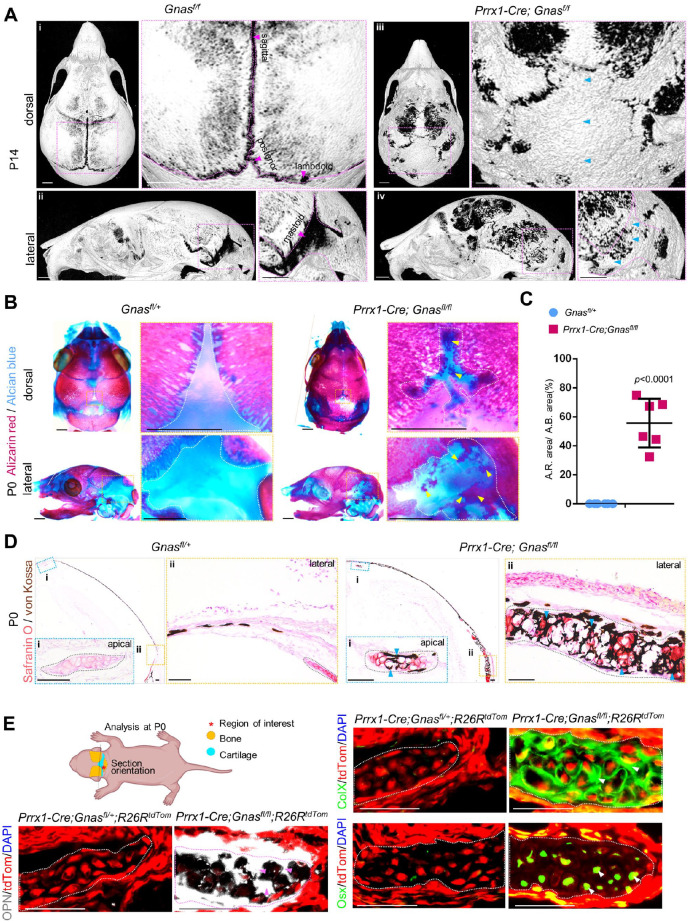
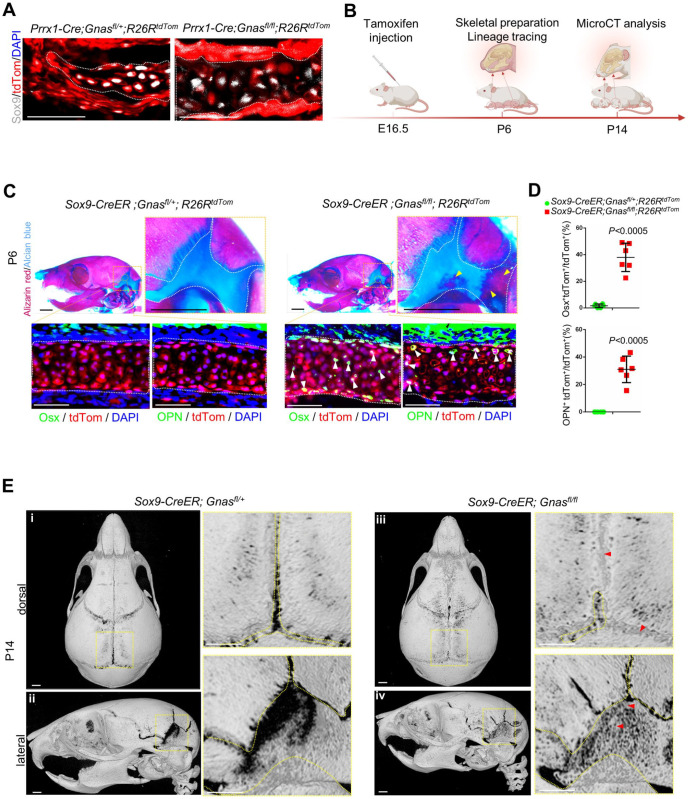
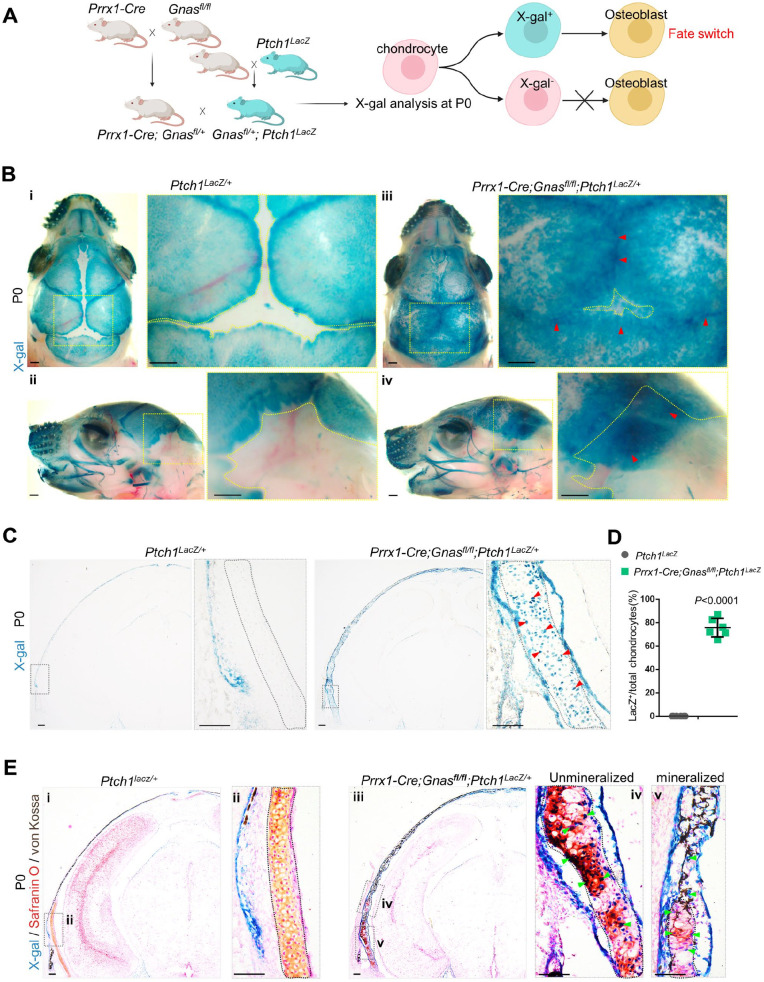
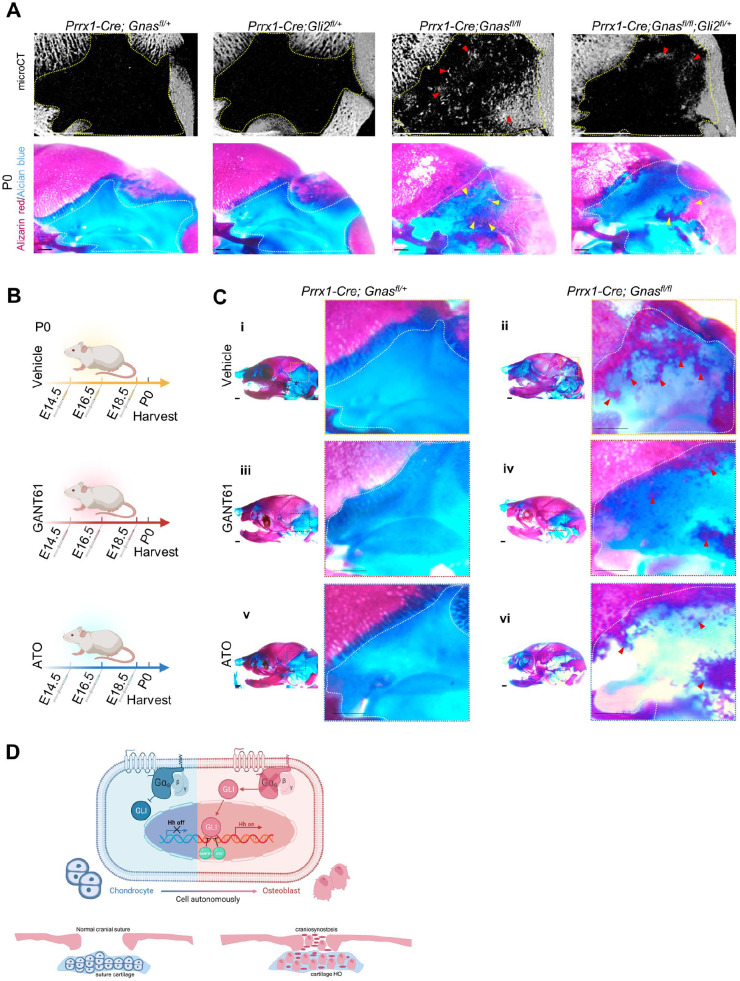
Calvaria development is distinct from limb formation. Craniosynostosis is a skull deformity characterized by premature cranial suture fusion due to the loss of the GNAS gene and, consequently, its encoded protein Gαs. This birth defect requires surgery, with potential lethal consequences. So far, hardly any early-stage nonsurgical interventions for GNAS loss-related craniosynostosis are available. Here, we investigated the role of the Gnas gene in mice in guarding the distinctiveness of intramembranous ossification and how loss of Gnas triggered endochondral-like ossification within the cranial sutures. Single-cell RNA sequencing (scRNA-seq) of normal neonatal mice cranial suture chondrocytes showed a Hedgehog (Hh) inactivation pattern, which was associated with Gαs signaling activation. Loss of Gnas evoked chondrocyte-to-osteoblast fate conversion and resulted in cartilage heterotopic ossification (HO) within cranial sutures and fontanels of the mouse model, leading to a skull deformity resembling craniosynostosis in patients with loss of GNAS. Activation of ectopic Hh signaling within cranial chondrocytes stimulated the conversion of cell identity through a hypertrophy-like stage, which shared features of endochondral ossification in vivo. Reduction of Gli transcription activity by crossing with a loss-of-function Gli2 allele or injecting GLI1/2 antagonist hindered the progression of cartilage HO in neonatal stage mice. Our study uncovered the role of Gαs in maintaining cranial chondrocyte identity during neonatal calvaria development in mice and how reduction of Hh signaling could be a nonsurgical intervention to reduce skull deformity in craniosynostosis due to loss of GNAS.
Keywords: cell differentiation; craniofacial anomalies; craniofacial biology/genetics; developmental biology; signal transduction; translational medicine.
Conflict of interest statement
Figures
References
-
- Bai CB, Auerbach W, Lee JS, Stephen D, Joyner AL. 2002. Gli2, but not Gli1, is required for initial Shh signaling and ectopic activation of the Shh pathway. Development. 129(20):4753–4761. - PubMed
-
- Cong Q, Xu R, Yang Y. 2019. Gαs signaling in skeletal development, homeostasis and diseases. Curr Top Dev Biol. 133:281–307. - PubMed
-
- Corrales JD, Blaess S, Mahoney EM, Joyner AL. 2006. The level of sonic hedgehog signaling regulates the complexity of cerebellar foliation. Development. 133(9):1811–1821. - PubMed
Publication types
MeSH terms
Substances
Grants and funding
LinkOut - more resources
Full Text Sources
