


Concurrent Evolution of Biomechanical and Physiological Parameters With Running-Induced Acute Fatigue
- PMID: 35222081
- PMCID: PMC8874325
- DOI: 10.3389/fphys.2022.814172
Concurrent Evolution of Biomechanical and Physiological Parameters With Running-Induced Acute Fatigue
Abstract
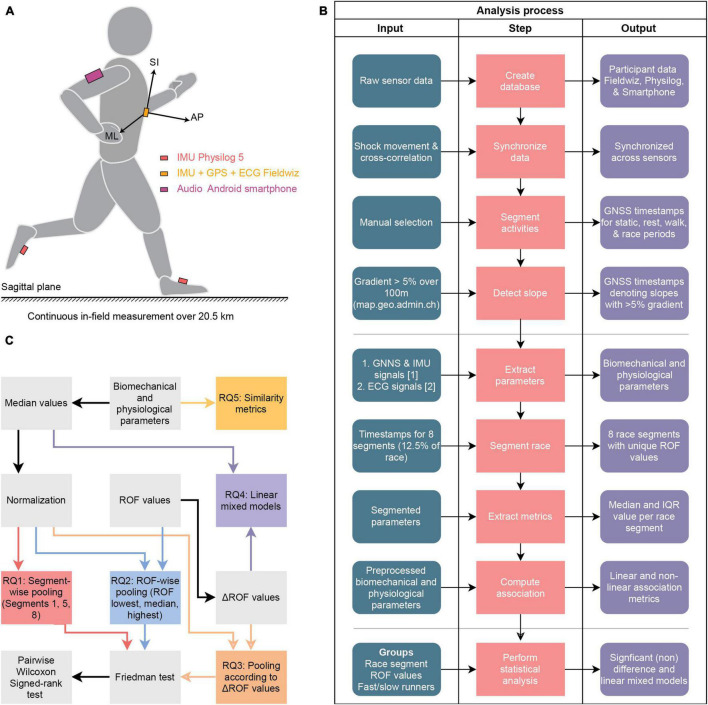
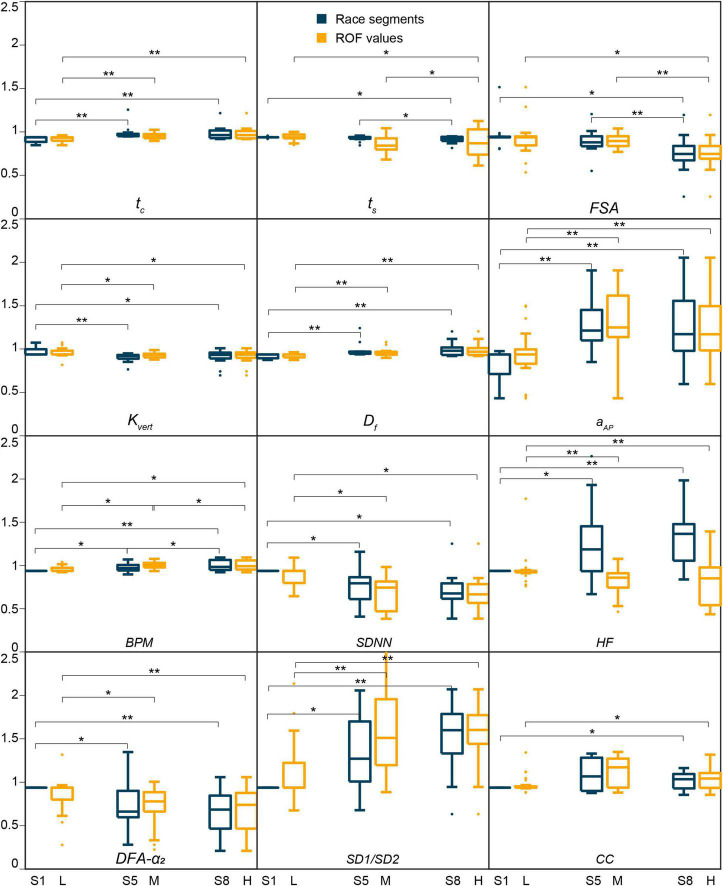
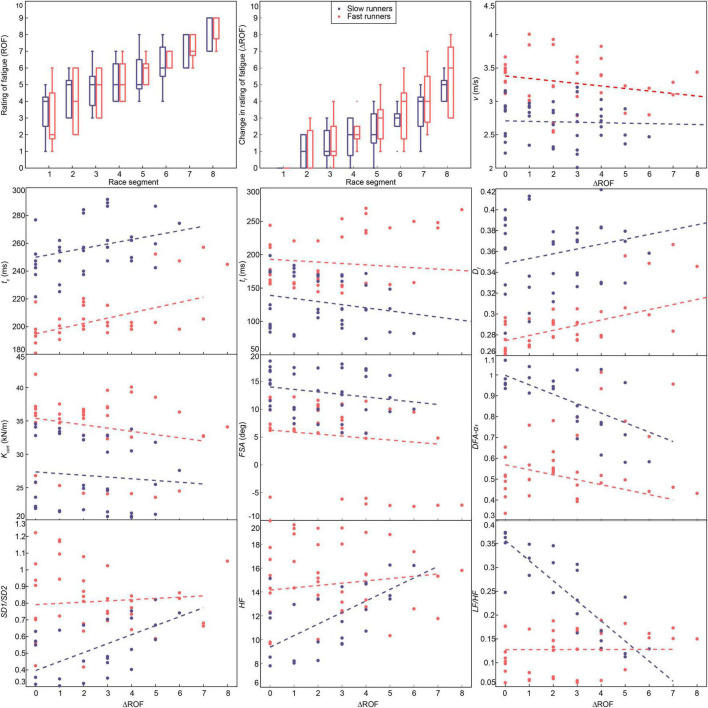
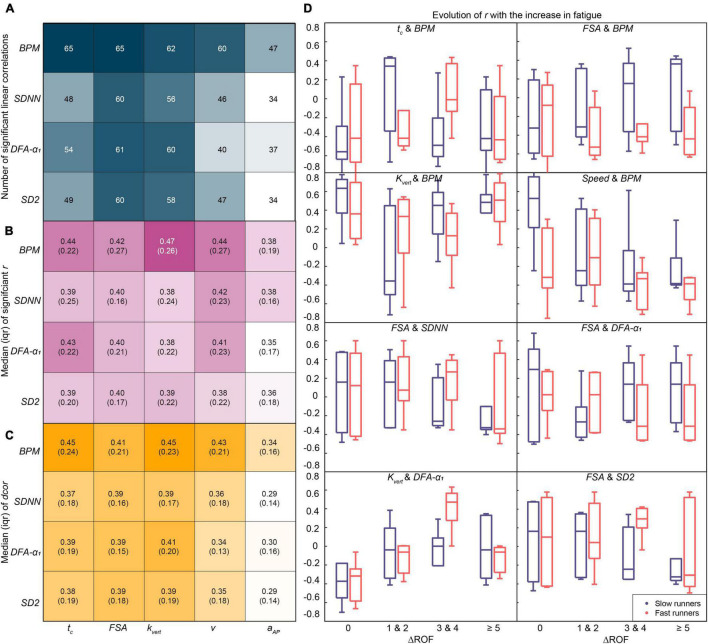
Understanding the influence of running-induced acute fatigue on the homeostasis of the body is essential to mitigate the adverse effects and optimize positive adaptations to training. Fatigue is a multifactorial phenomenon, which influences biomechanical, physiological, and psychological facets. This work aimed to assess the evolution of these three facets with acute fatigue during a half-marathon. 13 recreational runners were equipped with one inertial measurement unit (IMU) on each foot, one combined global navigation satellite system-IMU-electrocardiogram sensor on the chest, and an Android smartphone equipped with an audio recording application. Spatio-temporal parameters for the running gait, along with the heart rate, its variability and complexity were computed using validated algorithms. Perceived fatigability was assessed using the rating-of-fatigue (ROF) scale at every 10 min of the race. The data was split into eight equal segments, corresponding to at least one ROF value per segment, and only level running parts were retained for analysis. During the race, contact time, duty factor, and trunk anteroposterior acceleration increased, and the foot strike angle and vertical stiffness decreased significantly. Heart rate showed a progressive increase, while the metrics for heart rate variability and complexity decreased during the race. The biomechanical parameters showed a significant alteration even with a small change in perceived fatigue, whereas the heart rate dynamics altered at higher changes. When divided into two groups, the slower runners presented a higher change in heart rate dynamics throughout the race than the faster runners; they both showed similar trends for the gait parameters. When tested for linear and non-linear correlations, heart rate had the highest association with biomechanical parameters, while the trunk anteroposterior acceleration had the lowest association with heart rate dynamics. These results indicate the ability of faster runners to better judge their physiological limits and hint toward a higher sensitivity of perceived fatigue to neuromuscular changes in the running gait. This study highlights measurable influences of acute fatigue, which can be studied only through concurrent measurement of biomechanical, physiological, and psychological facets of running in real-world conditions.
Keywords: biomechanics; perceived fatigue; physiology; running; wearable sensors.
Copyright © 2022 Prigent, Apte, Paraschiv-Ionescu, Besson, Gremeaux and Aminian.
Conflict of interest statement
The authors declare that the research was conducted in the absence of any commercial or financial relationships that could be construed as a potential conflict of interest. The reviewer GM declared a shared affiliation with several of the authors CB and VG to the handling editor at the time of review.
Figures
References
-
- Abdi H. (2007). “The Kendall rank correlation coefficient,” in Encyclopedia of Measurement and Statistics, ed. Salkind N. J. (Thousand Oaks, CA: Sage; ), 508–510.
LinkOut - more resources
Full Text Sources
