


The Effect of Endometrial Thickness on Pregnancy, Maternal, and Perinatal Outcomes of Women in Fresh Cycles After IVF/ICSI: A Systematic Review and Meta-Analysis
- PMID: 35222264
- PMCID: PMC8874279
- DOI: 10.3389/fendo.2021.814648
The Effect of Endometrial Thickness on Pregnancy, Maternal, and Perinatal Outcomes of Women in Fresh Cycles After IVF/ICSI: A Systematic Review and Meta-Analysis
Abstract
Background: Thin endometrium on ovulation triggering day is associated with impaired pregnancy outcomes in women after in vitro fertilization/intracytoplasmic sperm injection (IVF/ICSI), but the role of thick endometrium on pregnancy outcomes remains controversial. Moreover, there has been insufficient evidence currently to analyze the influence of endometrial thickness (EMT) on obstetric complications and perinatal outcomes. Thus, we performed this meta-analysis to evaluate the effect of EMT on pregnancy, maternal, and perinatal outcomes in an enlarged sample size.
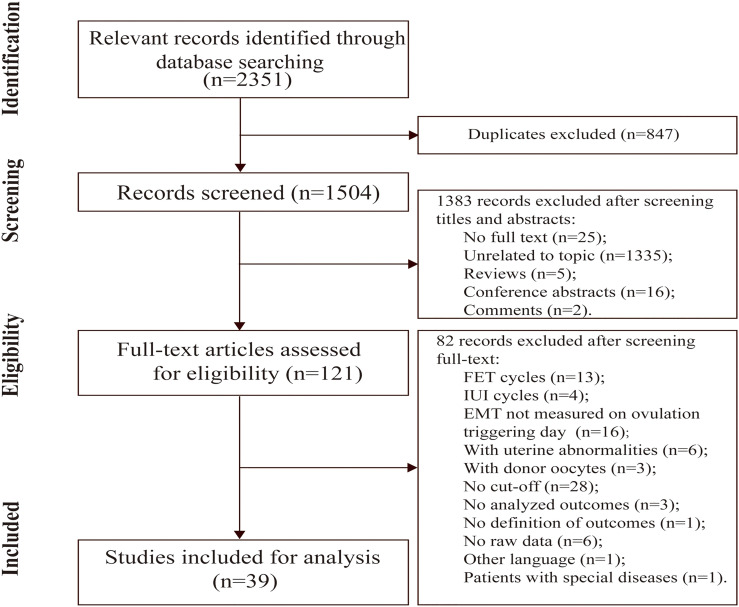
Methods: The databases Pubmed, Embase, Cochrane Libraries, and Web of Science were searched for English articles evaluating the correlation between EMT and pregnancy, maternal, or perinatal outcomes in women who underwent IVF/ICSI. We included studies that depicted a clear definition of outcomes and EMT grouping on ovulation triggering day. The EMT effect was analyzed in fresh cycle. Qualities of studies were assessed by the Newcastle-Ottawa Scale (NOS). Odds ratios (ORs) and weighted mean difference (WMD) with 95% confidence intervals (CIs) were calculated for analyzing dichotomous and continuous outcomes respectively, under a fixed or random effect model.
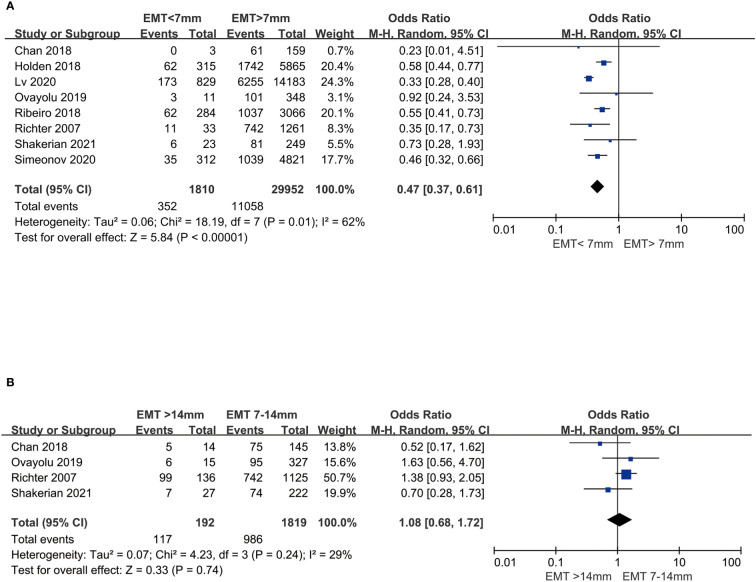
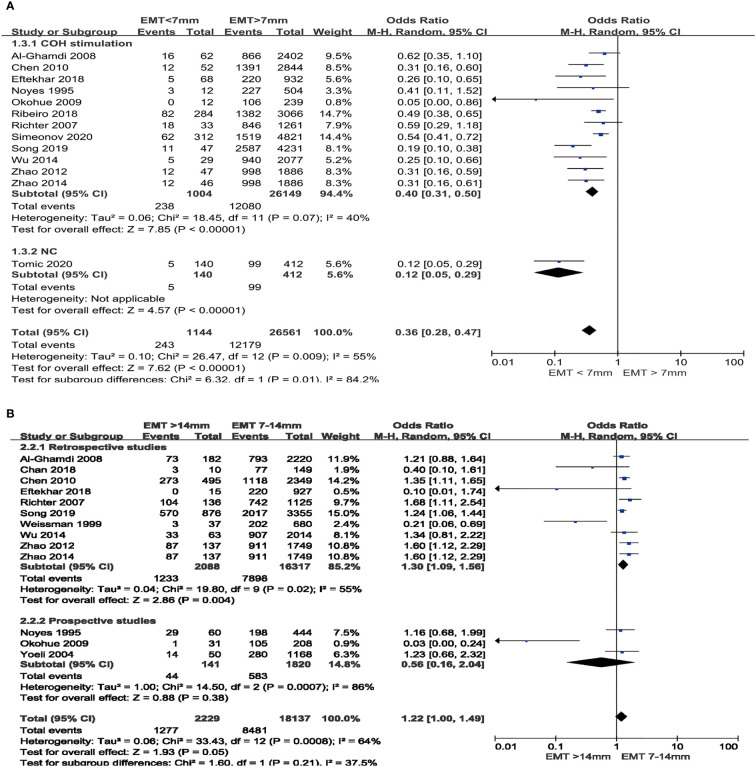
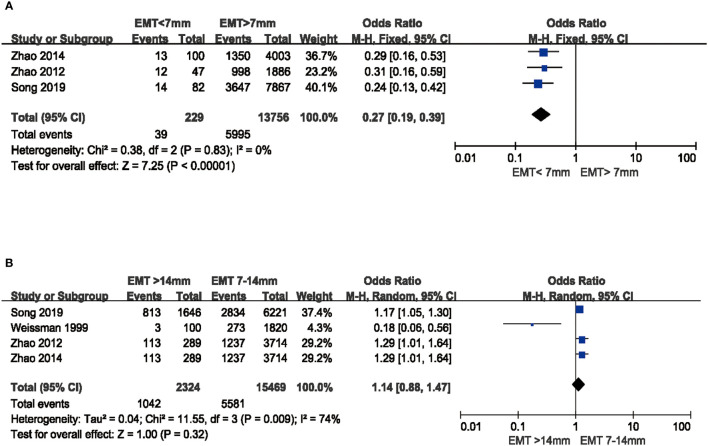
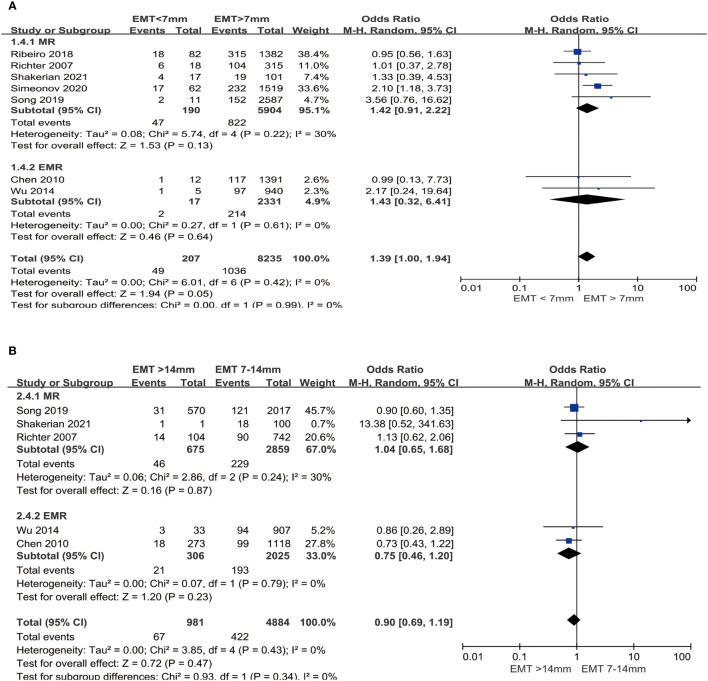
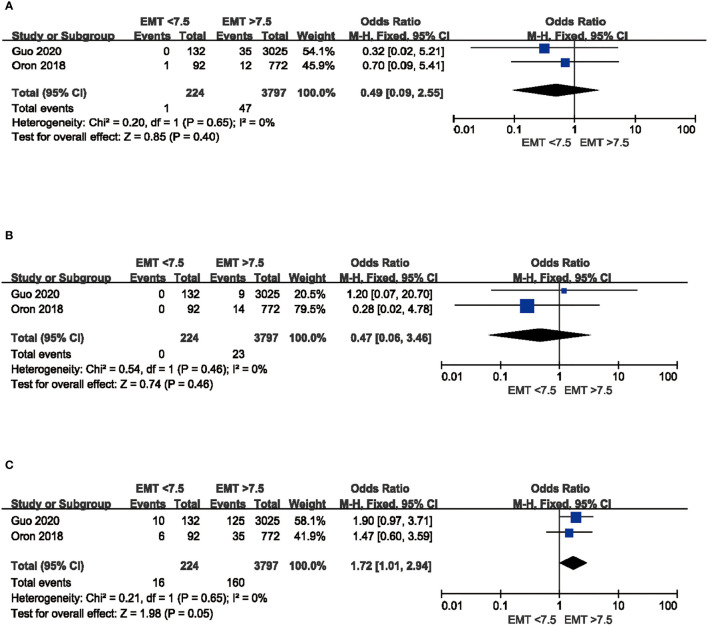
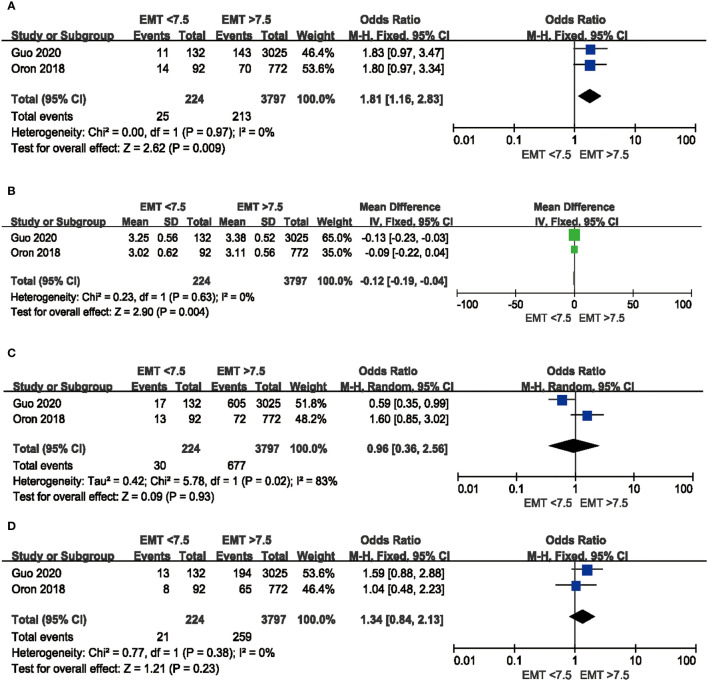
Results: A total of 22 pieces of literature were included for the final meta-analysis. A decreased trend towards pregnancy outcomes was observed, such as live birth rate (LBR), clinical pregnancy rate (CPR), and implantation rate (IR) in the thin endometrium groups (EMT <7 mm). In contrast, thick endometrium (EMT >14 mm) had no effect on pregnancy outcomes compared to medium EMT groups (EMT 7-14 mm). Moreover, thin endometrium (EMT <7.5 mm) enhanced the incidence of hypertensive disorders of pregnancy (HDP) and small-for-gestational-age (SGA) infants, and decreased the birthweight (BW) of babies.
Conclusions: Our studies indicated that thin endometrium not only had detrimental effect on pregnancy outcomes, but also increased the risk of HDP in women and SGA of babies, or decreased BW of babies. The thick endometrium does not have an adverse effect on IVF outcomes. Therefore, patients need to be informed on possible obstetric complications and perinatal outcomes caused by thin endometrium and are encouraged to actively cooperate with perinatal care.
Systematic review registration: (https://www.crd.york.ac.uk/PROSPERO/display_record.php?RecordID=242637), identifier CRD42021242637.
Keywords: endometrium; in vitro fertilization; intracytoplasmic sperm injection; pregnancy complications; pregnancy rate.
Copyright © 2022 Liao, Liu, Cai, Shen, Sui, Zhang and Qian.
Conflict of interest statement
The authors declare that the research was conducted in the absence of any commercial or financial relationships that could be construed as a potential conflict of interest.
Figures
References
-
- Vaegter KK, Lakic TG, Olovsson M, Berglund L, Brodin T, Holte J. Which Factors Are Most Predictive for Live Birth After In Vitro Fertilization and Intracytoplasmic Sperm Injection (IVF/ICSI) Treatments? Analysis of 100 Prospectively Recorded Variables in 8,400 IVF/ICSI Single-Embryo Transfers. Fertil Steril (2017) 107:641–8.e2. doi: 10.1016/j.fertnstert.2016.12.005 - DOI - PubMed
-
- Eftekhar M, Mehrjardi SZ, Molaei B, Taheri F, Mangoli E. The Correlation Between Endometrial Thickness and Pregnancy Outcomes in Fresh ART Cycles With Different Age Groups: A Retrospective Study. Middle East Fertil Soc J (2019) 24:16–20. doi: 10.1186/s43043-019-0013-y - DOI
Publication types
MeSH terms
LinkOut - more resources
Full Text Sources
