


Amputation Predisposes to Higher Cancer-Specific Mortality Than Limb Salvage Surgery in Pediatric Patients With Osteosarcoma of the Limbs: A Propensity Matching Analysis
- PMID: 35223978
- PMCID: PMC8863859
- DOI: 10.3389/fsurg.2022.817051
Amputation Predisposes to Higher Cancer-Specific Mortality Than Limb Salvage Surgery in Pediatric Patients With Osteosarcoma of the Limbs: A Propensity Matching Analysis
Abstract
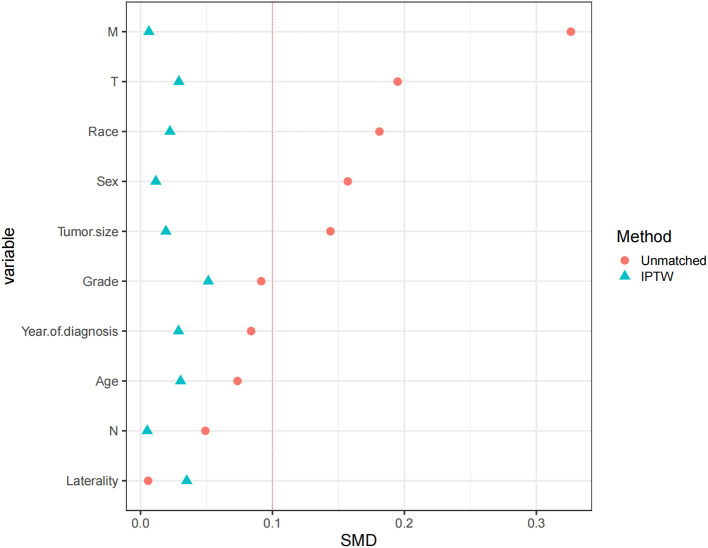
Objective: With the development of osteosarcoma treatment, limb salvage surgery is gradually replacing amputation as the primary surgical option. Most pediatric osteosarcomas of the limbs undergo limb-salvage surgery. We aimed to use propensity score matching (PSM) analysis test the difference in cancer-specific mortality (CSM) between amputation and limb-salvage surgery in pediatric patients with Osteosarcoma of the limbs. PSM is a statistical method used to deal with data from an Observational Study. The PSM method is designed to reduce the influence of biases and confounding variables to make a more reasonable comparison between experimental and control groups.
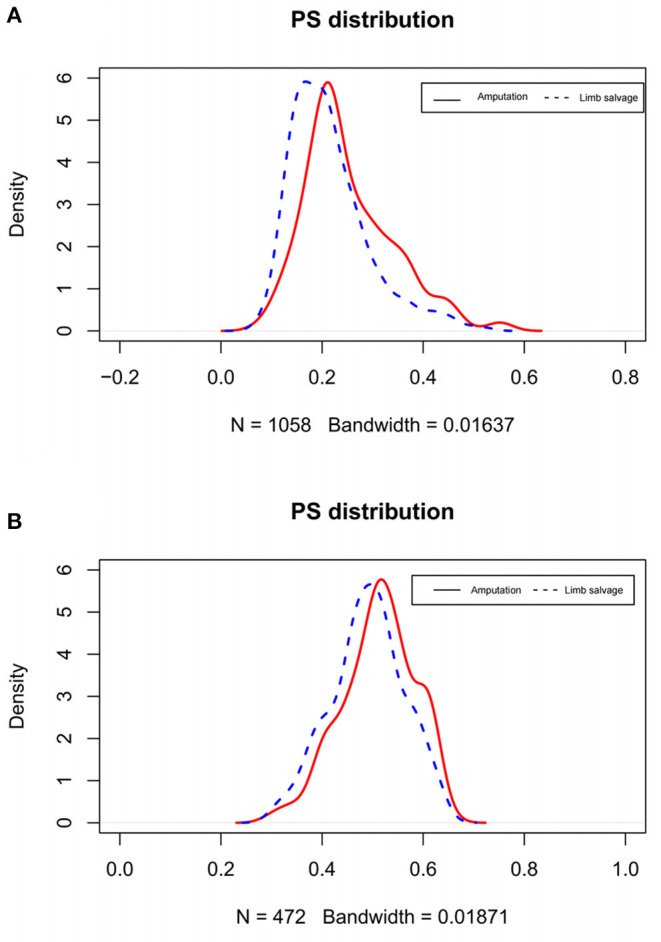
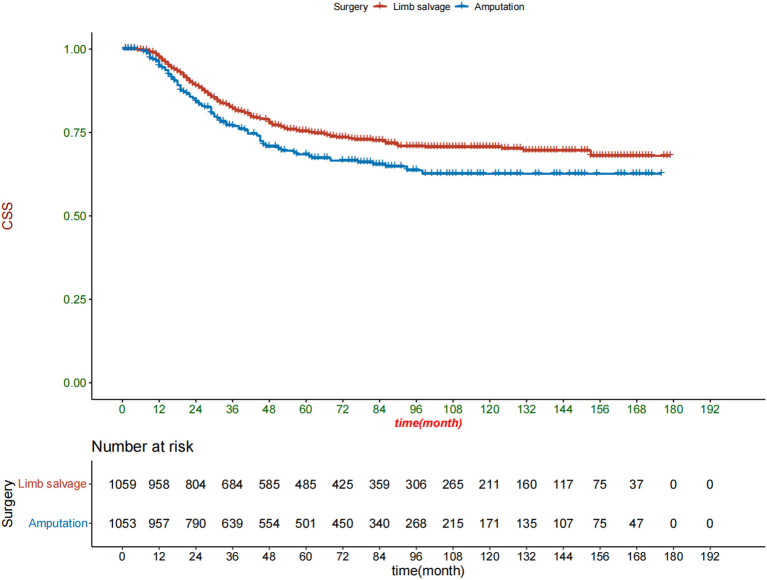
Methods: Patient information was downloaded from the SEER (surveillance, epidemiology, and End Results) database from 2004 to 2018. We included all primary pediatric osteosarcoma patients who underwent limb salvage or amputation. Multivariate logistic regression models were used to explore the factors influencing patient choice of amputation. Differences in CSM and other causes of mortality (OSM) between limb salvage and amputation were analyzed using cumulative incidence plots and competitive risk regression tests after 1:1 proportional propensity score matching.
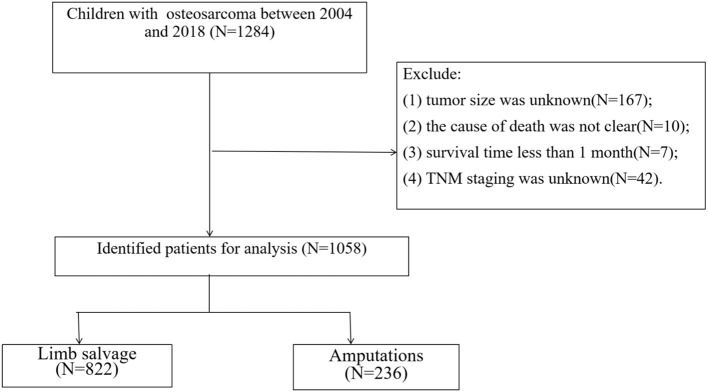
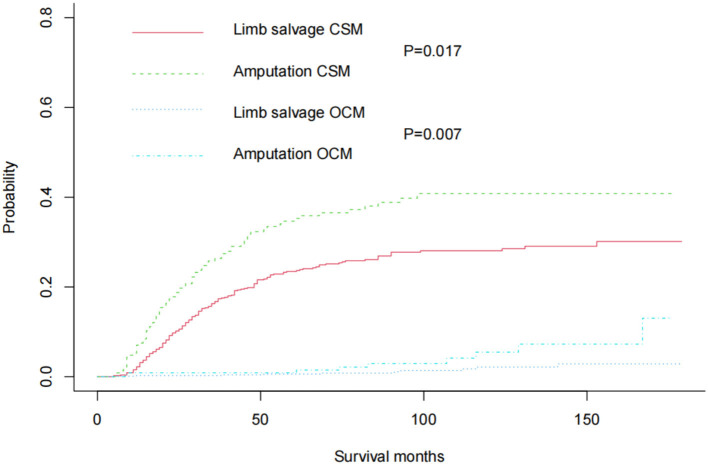
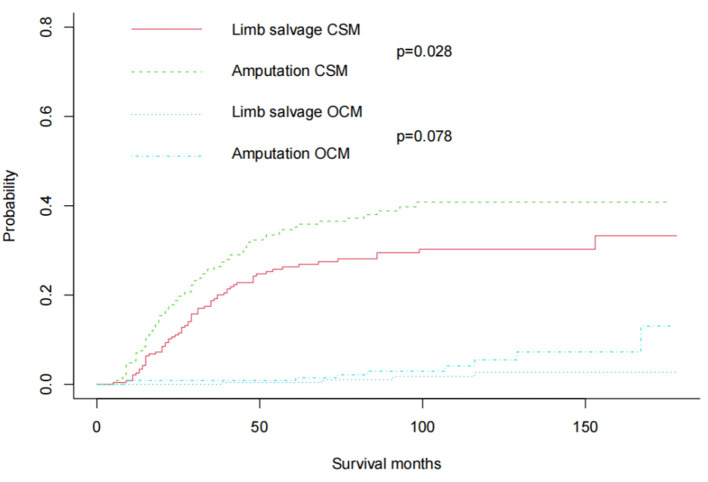
Results: A total of 1,058 pediatric patients with limbs Osteosarcoma were included. Patients who underwent amputations were more likely to be male (OR 1.4, P = 0.024) and more likely to have distant metastasis (OR 2.1, P < 0.001). Before propensity matching, CSM was 1.4 times higher in patients undergoing amputation than in patients undergoing limb salvage (P = 0.017) and 3.4 times higher in OSM (P = 0.007). After adjustment for propensity matching, CSM was 1.5 times higher in patients undergoing amputation than in patients undergoing limb salvage (P = 0.028), but there was no significant difference in OSM (HR 3.2, P = 0.078).
Conclusions: Our results suggested that amputation is associated with a 1.5-fold increase in CSM in pediatric patients with limbs Osteosarcoma. Therefore, in the surgical selection of pediatric patients with Osteosarcoma, limb salvage surgery should be the first choice in the absence of other contraindications.
Keywords: Osteosarcoma; amputation; limb salvage; limbs; mortality.
Copyright © 2022 Wang, Tang, Tan, Zhanghuang, Jin, Li, Zhang, Mi and He.
Conflict of interest statement
The authors declare that the research was conducted in the absence of any commercial or financial relationships that could be construed as a potential conflict of interest.
Figures
References
-
- Qureshi A, Ahmad Z, Azam M, Idrees R. Epidemiological data for common bone sarcomas. Asian Pac J Cancer Prev. (2010) 11:393–5. - PubMed
LinkOut - more resources
Full Text Sources
Miscellaneous
