


Efficacy and Safety of Condoliase Disc Administration as a New Treatment for Lumbar Disc Herniation
- PMID: 35224244
- PMCID: PMC8842352
- DOI: 10.22603/ssrr.2021-0035
Efficacy and Safety of Condoliase Disc Administration as a New Treatment for Lumbar Disc Herniation
Abstract
Introduction: Condoliase is a newly approved drug that improves symptoms associated with lumbar disk herniation (LDH) by intradiscal administration. This study aimed to evaluate the mid-term outcomes of condoliase injection, examine the adverse events, including cases that required surgery after condoliase administration, and verify cases in which condoliase could be effective.
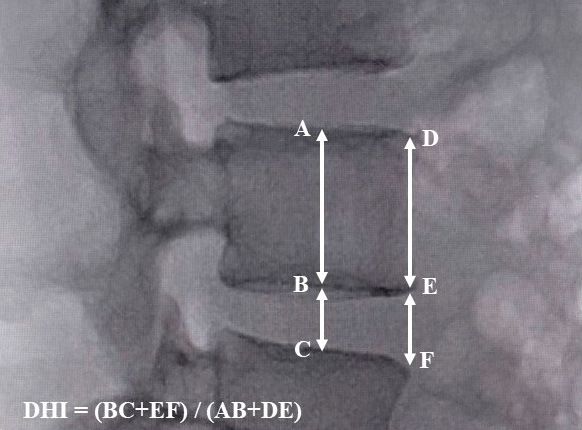
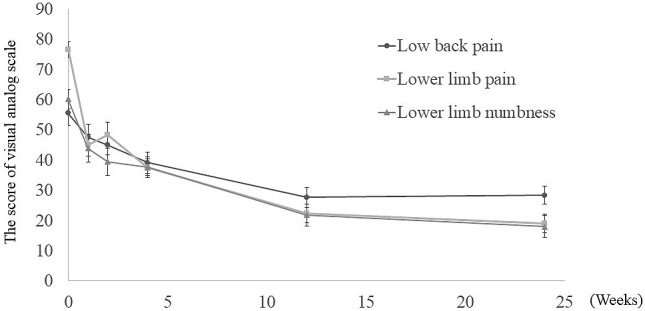
Methods: We enrolled patients with LDH who were treated conservatively for at least six weeks and received condoliase. We assessed the visual analog scale (VAS) score, Japanese Orthopaedic Association Back Pain Evaluation Questionnaire, Oswestry Disability Index, disk height, and disk degeneration for up to 6 months, and we examined the complications. Furthermore, a 50% or more improvement in leg pain VAS score was considered effective. Factors related to symptom improvement were investigated by determining whether lower limb pain improved in six months.
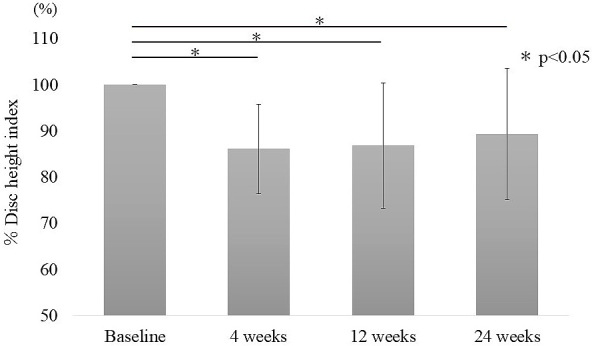
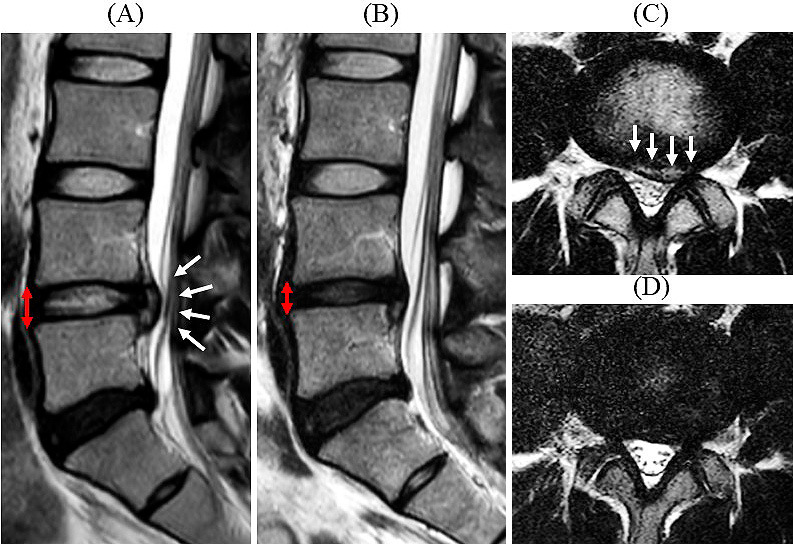
Results: In total, 84 patients were recruited (52 men, 32 women; mean age, 44.2 ± 17.1 [16-86 years]). The duration of illness was 6.7 ± 6.8 (1.5-30) months. All patient-based outcomes significantly improved at 4 weeks after the administration compared with pretreatment. The intervertebral disc height decreased significantly at four weeks after condoliase administration compared with that before administration. Progression of intervertebral disc degeneration occurred in 50% of the patients. Eleven patients underwent herniotomy due to poor treatment effects. Moreover, treatment in 77.4% of the patients was considered effective. A logistic regression analysis revealed that L5/S1 disk administration (p = 0.029; odds ratio, 5.94; 95% confidence interval, 1.20-29.45) were significantly associated with clinical effectiveness.
Conclusions: Condoliase disk administration improved pain and quality of life over time. Condoliase disk administration was more effective in L5/S1 intervertebral administration.
Keywords: Condoliase; conservative therapy; disk administration; disk degeneration; lower limb pain; lumbar disk herniation.
Copyright © 2022 by The Japanese Society for Spine Surgery and Related Research.
Conflict of interest statement
Conflicts of Interest: The authors declare that there are no relevant conflicts of interest.
Figures
References
-
- Wilder DG, Pope MH, Frymoyer JW. The biomechanics of lumbar disc herniation and the effect of overload and instability. J Spinal Disord. 1988;1(1):16-32. - PubMed
-
- Zhang, YG, Zhang F, Sun Z, et al. A controlled case study of the relationship between environmental risk factors and apoptotic gene polymorphism and lumbar disc herniation. Am J Pathol. 2013;182(1):56-63. - PubMed
-
- Komori H, Okawa A, Haro H, et al. Contrast-enhanced magnetic resonance imaging in conservative management of lumbar disc herniation. Spine (Phila Pa 1976). 1998;23(1):67-73. - PubMed
-
- Bush K, Cowan N, Katz DE, et al. The natural history of sciatica associated with disc pathology. A prospective study with clinical and independent radiologic follow-up. Spine (Phila Pa 1976). 1992;17(10):1205-12. - PubMed
LinkOut - more resources
Full Text Sources